
Why Gellért Hill Cave matters.
Gellért Hill Cave is one of Budapest's most evocative sanctuaries, a place where faith, history, and geology intertwine beneath the city's watchful skyline.
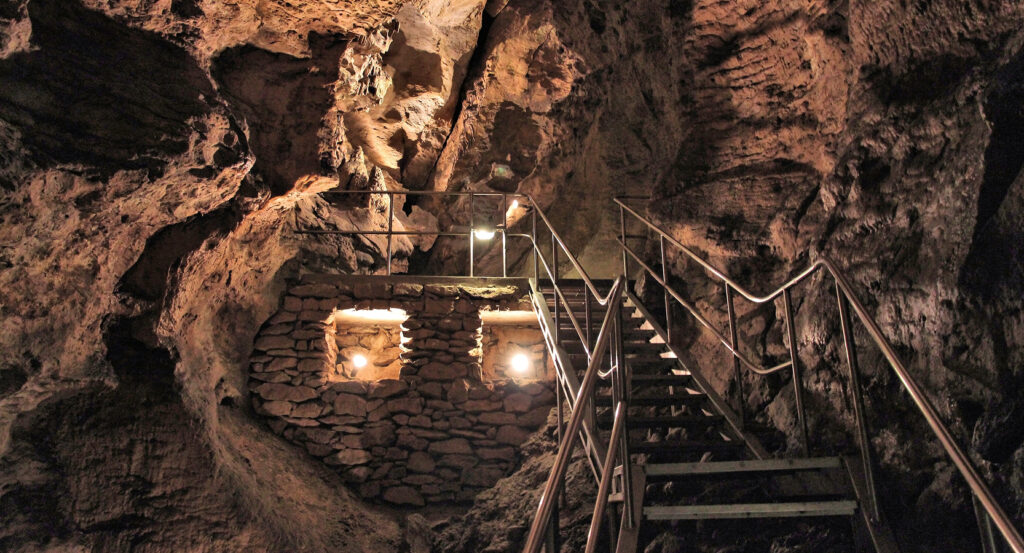
Carved into the side of Gellért Hill, across from the glittering Danube, the cave radiates an atmosphere both mystical and grounding. Its entrance, framed by a stone cross and arched doorway, opens into a world of candlelight and stillness, a chapel within the earth. Inside, the scent of wax and cool limestone mixes in the air, and voices echo softly off the rock walls during mass. It's a rare blend of sacred and natural, where the boundaries between the divine and the elemental seem to dissolve. Outside, the bustle of Liberty Bridge fades to a murmur; inside, time feels suspended. The cave isn't just a site to visit, it's a refuge, a living tribute to Budapest's enduring faith and the quiet power of places carved by both hands and centuries.
What defines Gellért Hill Cave.
The origins of this cave stretch back millions of years, but its spiritual story began in the early 20th century.
Once used as a refuge by monks from the Pauline Order, the cave was transformed into a chapel in the 1920s, modeled after the famous grotto at Lourdes in France. It served as a center for pilgrimage, faith, and healing until World War II, when it became a hidden sanctuary once again, this time for wounded soldiers. During the communist era, the cave was sealed shut with a concrete wall, and its leading priest was executed for defying the regime. It remained closed for over 40 years, its silence heavy with unspoken prayer. When it finally reopened in 1989, the first mass held inside marked both spiritual and political rebirth, a symbol of Hungary's resilience and return to faith. Few realize that the cave continues to be a functioning chapel today, with regular services led by the Pauline monks who once made it home. The temperature inside remains a steady 18°C, and soft electric lighting reveals natural formations that have stood through centuries of change. Gellért Hill Cave isn't a museum, it's a living relic, a sacred echo of Budapest's soul.
How Gellért Hill Cave fits.
Begin at the foot of Gellért Hill, just steps from Liberty Bridge and the Gellért Thermal Bath.
Climb the short path to the cave entrance, where a cross rises above the archway, a quiet landmark easily missed amid the city's grandeur. Step inside respectfully; this is still an active place of worship. You'll find pews carved from wood, statues tucked into stone alcoves, and a faint shimmer of candlelight reflecting off mineral walls. Attend a mass if you can, even if you don't understand Hungarian, the experience transcends language. When you emerge, continue your ascent up the hill to the Liberty Statue viewpoint, watching the Danube stretch wide beneath you. The contrast between the silent cave below and the open air above captures something profoundly human, the dual longing for shelter and freedom. If time allows, end your visit with a soak in the nearby Gellért Baths, where the same geothermal forces that shaped the cave still flow beneath the earth. Gellért Hill Cave isn't just a stop on an itinerary; it's a place to pause, breathe, and remember that even in a city built on beauty, some of its truest light still burns underground.
Where your story begins.
Foresyte Travel reveals places that feel extraordinary long before you arrive.
Enjoy editorial crafted for luxury travelers.
Foresyte may earn a commission when you book.





































































































