
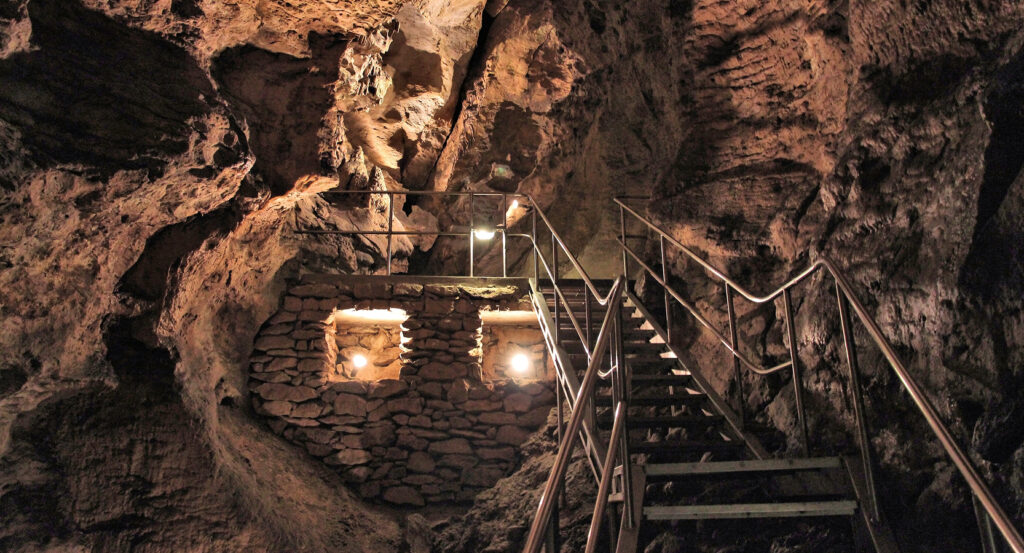
Why you should experience Palvolgyi Cave in Budapest, Hungary.
Palvolgyi Cave is one of Budapest's most unique natural wonders, a cathedral carved not by human hands, but by water and time.
Hidden beneath the city's northern hills, it stretches more than 30 kilometers, making it the longest cave system in Hungary and one of the most extraordinary geological formations in Europe. As you descend into its cool chambers, the air shifts, crisp, echoing, ancient. The walls shimmer with mineral patterns, sculpted by centuries of dripping limestone. Stalactites hang like frozen rain, while stalagmites rise from the ground like slow, breathing sentinels. Every chamber feels like a secret unveiled, narrow passages leading into vast caverns that feel both alien and divine. What makes Pálvölgyi truly special, though, is its duality: you're still within the city limits of Budapest, yet the silence feels untouched by civilization. It's a reminder that the Earth holds entire worlds beneath our feet, wild, patient, and full of quiet majesty.
What you should know about Palvolgyi Cave.
Discovered in 1904 and still being mapped today, Palvolgyi Cave is part of a vast subterranean network that winds beneath the Buda Hills, a landscape shaped by thermal waters that also feed the city's famous baths.
Its chambers were formed over millions of years, as hot mineral-rich water met colder groundwater, dissolving the limestone layer by layer to create surreal formations. Many of its walls glisten with crystals of calcite, giving the cave its signature shine under lamplight. The air inside stays at a steady 11°C year-round, making it a natural refuge in summer and a hidden underworld in winter. Scientists have discovered rare cave-dwelling organisms here, perfectly adapted to eternal darkness, along with fossils that hint at prehistoric climates. Few visitors realize that the Pálvölgyi system connects with the nearby Szemlő-hegyi Cave, together forming a labyrinth that attracts both explorers and geologists from around the world. Even the name, Pálvölgyi, or “Paul Valley”, ties it to the city's topography, where valleys above ground mirror the hollows below. The entire area is protected as part of the Duna-Ipoly National Park, preserving not only its fragile ecosystem but also its profound geological and spiritual significance.
How to fold Palvolgyi Cave into your trip.
Start the journey from Central Budapest and take a short ride to the leafy 2nd District, where the cave entrance hides beneath a modest stone archway.
Join a guided tour, required for entry, and prepare for a 500-meter walk through the illuminated chambers. The route winds through tight passages, spiral staircases, and echoing caverns with names like the Concert Hall and the Great Hall, each revealing new patterns of stone and shadow. Dress warmly and wear sturdy shoes; the ground can be slick, and the air bites pleasantly against your skin. If you crave a deeper adventure, specialized caving tours offer the chance to crawl through untouched sections by headlamp, a humbling reminder of the raw earth beneath the city. After emerging back into daylight, reward yourself with a stroll through the Buda Hills or a visit to nearby Margaret Island, letting the sunlight and open air contrast with the quiet depths you've just explored. Visiting Palvolgyi Cave isn't just about geology, it's about perspective. In a city celebrated for its architecture and thermal baths, it's here, underground, that Budapest reveals its most primal and enduring beauty.
Where your story begins.
Foresyte Travel reveals places that feel extraordinary long before you arrive.
Experience premium editorial crafted for luxury travelers.





































































































