
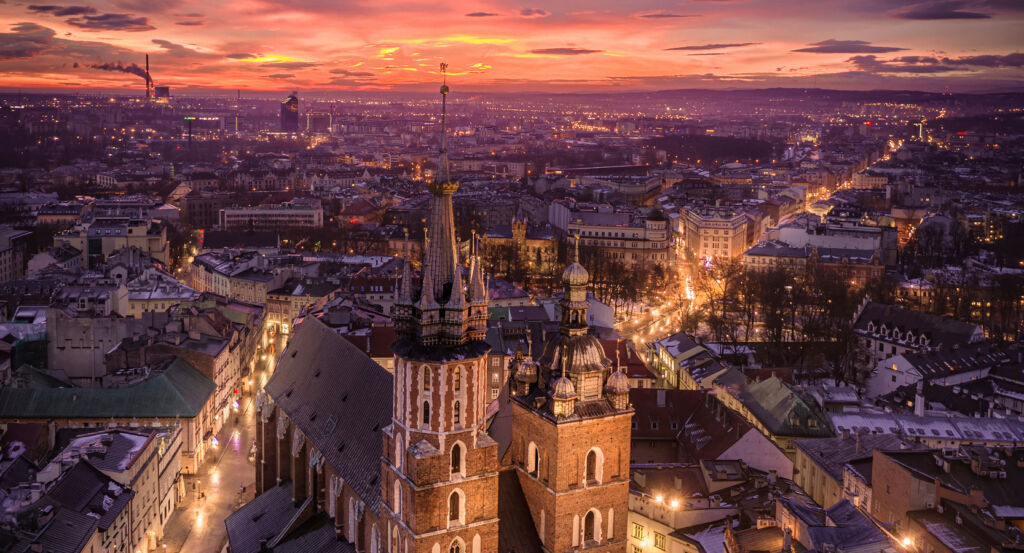
Why you should experience Hotel Copernicus in Kraków, Poland.
Hotel Copernicus is an extraordinary Old Town refuge where Renaissance heritage, quiet refinement, and a sense of historical continuity come together into a stay that feels more like inhabiting a living monument than a typical hotel visit.
Located atop the atmospheric Kanonicza Street, among Kraków's oldest thoroughfares, the property is set within meticulously restored 15th- and 16th-century burgher houses that evoke the city's Golden Age. From the moment you cross the threshold, the architecture speaks: vaulted ceilings, exposed stone, and sculptural proportions that feel both human and ceremonially grand. The lobby unfolds with spatial calm rather than flash, guiding you naturally toward lounges and gathering zones where design restraint meets material tactility. Public spaces are composed for presence: seating arranged for conversation or quiet pause, lighting that supports visibility without performance, and an effortless circulation that avoids cognitive friction. Guest rooms are quietly distinctive. They balance historical character with contemporary comfort, rich timber flooring, carefully integrated original details, generous layouts, and beds designed for deep, uninterrupted rest. Lighting is layered and warm, supporting wakefulness, calm, and evening repose. Many rooms frame views into courtyards, rooftops, or narrow medieval streets, reinforcing a sense of intimate place. Bathrooms are composed with clarity and comfort in mind, pairing tactile surfaces with layouts that support everyday routines. Throughout the hotel, every material and spatial choice supports grounded presence, allowing your attention to stay on Kraków itself rather than on the environment around you. Hotel Copernicus is ideal for travellers who want depth of place, architectural intelligence, and a stay that feels deeply situated in cultural and historical context.
What you should know about Hotel Copernicus.
Hotel Copernicus is best known for a hospitality philosophy that integrates architectural integrity, situational awareness, and experiential restraint rather than rely on thematic theatrics, and this approach fundamentally alters how guests experience both the hotel and the city beyond its doors.
The building's historical structure isn't merely decorative context, it organizes the interior. Spatial sequences follow the logic of the original architecture: corridors flow with dimensional clarity, ceilings and arches are calibrated for human scale, and thresholds occur. Materials are chosen for tactile presence and temporal depth, stone, wood, and plaster that age gracefully and absorb sound. This creates sonic calm rarely found in properties of similar prestige. Natural acoustics allow exterior urban energy to remain perceptible as context rather than intrusive noise, preserving both a sense of place and the quality of rest. Lighting throughout the hotel is designed for human comfort rather than theatrical effect, balancing daylight responsiveness with warm twilight tones that ease visual strain over multi-day stays. Service culture mirrors this thoughtful restraint. Interactions with staff are composed, discreet, and genuinely helpful. Guidance on local dining, historical interpretation, transit logistics, and cultural insight is delivered with specificity and relevance, reducing cognitive load and allowing your focus to remain on meaningful engagement with Kraków. Another subtle but impactful advantage of the hotel's design is how it mediates psychological thresholds, the shift from the city's exterior vibrancy into interior calm, and from active daytime exploration into evening rest. These transitions unfold through layers of acoustics, material gradations, and lighting modulation rather than dramatic boundaries, enabling your body and mind to settle without friction. Over longer stays or tightly packed itineraries, this coherence matters: low-level stressors, the invisible cognitive demands that accumulate unconsciously in overstimulating environments, are significantly reduced. Hotel Copernicus doesn't demand attention; it preserves it, allowing Kraków's history, texture, and rhythm to become the defining context of your visit.
How to fold Hotel Copernicus into your trip.
Hotel Copernicus works as a base for layered exploration rather than as a passive resting point.
Begin your mornings by stepping directly into Old Town's network of historic lanes before crowds gather, letting the active geometry of medieval streets and civic architecture unfold at a human pace. The hotel's immediate proximity to the Main Market Square, Wawel Castle, Planty Park, and cultural museums allows exploration to feel organic. Return midday not merely to rest, but to recalibrate, the hotel's calm interior supports reflection, planning, or simple presence without physical overload, giving you space to recover before heading back out. From there, move outward into Kazimierz's artistic precincts, riverfront promenades, and neighbourhood streets where everyday life unfolds. Mid-afternoon returns are restorative rather than interruptive, preparing you for evening plans. Evenings here can be shaped by depth rather than surface showmanship: classical concerts, local culinary experiences, or twilight walks through the illuminated Old Town before returning to a calm, composed interior that supports wind-down without physical fatigue. For longer stays, this rhythm becomes coherent and sustaining. Days feel like chapters rather than lists of highlights, routines emerge, and Kraków begins to feel inhabited rather than merely visited. Business travellers benefit from the hotel's composed presence and proximity to city centre functions. Leisure travellers gain resonant space that reframes Kraków not as a collection of points on a checklist, but as a living organism, architectural, cultural, and deeply human in scale. Anchoring your stay at Hotel Copernicus doesn't just orient you geographically; it orients you mentally and physically, allowing the city to be encountered with clarity, presence, and meaningful engagement.
Where your story begins.
Foresyte Travel reveals places that feel extraordinary long before you arrive.
Experience premium editorial crafted for luxury travelers.





































































































