
Why Jan Hus Monument matters.
Jan Hus Monument is a sermon cast in bronze.
Towering above Old Town Square, it captures not only the likeness of the 15th-century reformer but the spirit of a people who refused to kneel before tyranny. Hus stands with one hand raised toward the heavens, his robes swirling in the wind, surrounded by figures of exiled Hussites and silent mothers cradling their children, symbols of endurance and loss. The entire composition radiates conviction. At dawn, the monument glows gold against the pastel façades; by dusk, its shadow stretches across the cobblestones like a memory that refuses to fade. To stand before it is to feel the tension between faith and fire, between hope and history. It is one of Prague's most haunting encounters, not of architecture, but of courage.
What defines Jan Hus Monument.
Unveiled on July 6, 1915, the 500th anniversary of Hus's martyrdom, the memorial was designed by Czech sculptor Ladislav Šaloun and funded entirely by public donation.
Its creation was an act of quiet rebellion: at the time, Bohemia was still under Austro-Hungarian rule, and celebrating a figure who defied both papal and imperial authority was a dangerous gesture. Šaloun worked for over a decade on the sculpture, casting it in pieces in his small atelier on Vinohradská Street. The monument's design is steeped in symbolism, the seated figures of despair represent the nation's suffering during persecution, while the standing warriors behind Hus embody moral awakening and resistance. Beneath the main plinth lies an inscription: “Love each other and wish the truth to everyone.” Few visitors know that Šaloun lived in the house directly behind the memorial during its final construction, often sleeping beside the plaster models to protect them from spies and saboteurs. When it was finally unveiled, thousands gathered in the square despite government warnings, transforming the event into one of the first mass demonstrations of Czech national unity. Through both world wars and communist censorship, the statue endured, veiled, threatened, but never destroyed. Today, it remains one of Europe's most powerful symbols of free conscience.
How Jan Hus Monument fits.
Start at sunrise it's the hour when the square is empty and the bronze burns softly in gold.
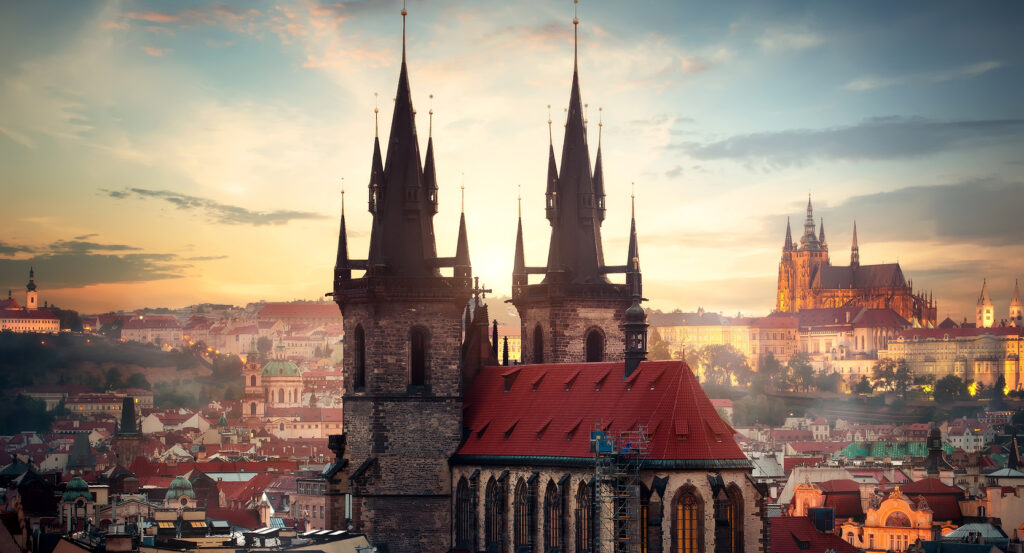
Stand before the statue and circle it slowly; the figures reveal themselves differently from each angle, strength, sorrow, hope. Read the inscription at the base, then look toward the twin spires of the Church of Our Lady before Týn behind it, the same skyline that bore witness to the execution of Hus's followers two centuries before. Visit again after dark, when the memorial is floodlit against the night sky; its shadow stretches across the square toward the Old Town Hall, as if time itself were bowing to conviction. To deepen the experience, walk a few blocks to Bethlehem Chapel, where Hus once preached reformist sermons that sparked a national awakening. Jan Hus Monument isn't a monument you simply visit, it's one you confront. It asks not for admiration, but reflection, a reminder that truth, even when punished, always resurfaces.
Where your story begins.
Foresyte Travel reveals places that feel extraordinary long before you arrive.
Experience premium editorial crafted for luxury travelers.





































































































