
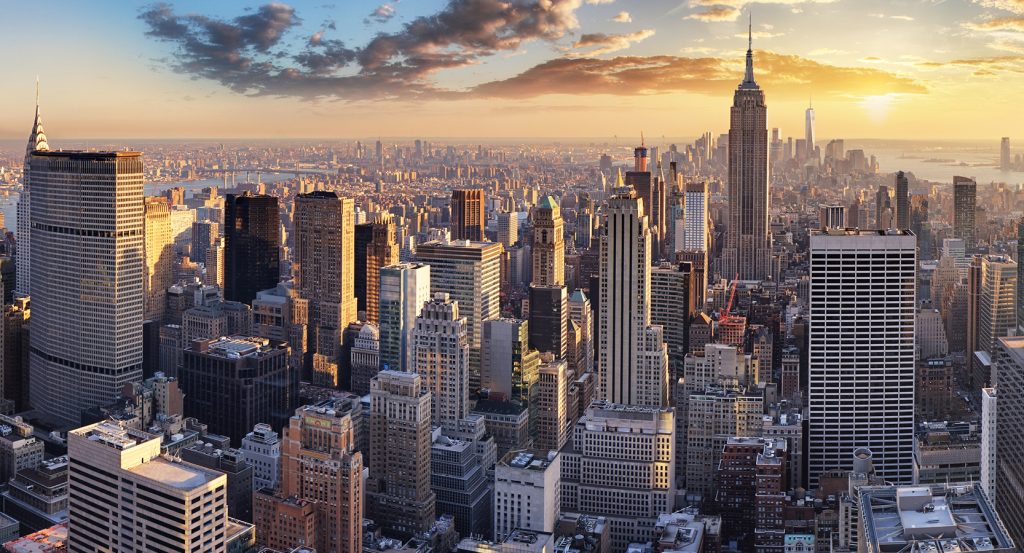
Why you should experience Park Central Hotel New York in New York, NY.
Park Central Hotel New York is a storied hotel where Midtown's performance culture, Jazz Age glamour, celebrity mythology and enduring appetite for performance converge within a grand 7th Avenue address.
Set along 7th Avenue near West 56th Street and just steps from Carnegie Hall, the hotel rose as a 25-story Renaissance Revival composition by Gronenberg & Leuchtag, placing one of Manhattan's largest hospitality properties beside a district already synonymous with concert music and theatrical life. Park Central's public mythology accumulated through guests including Mae West, Jackie Gleason and Eleanor Roosevelt, who maintained a suite at the property, while musicians Glenn Miller and Tommy Dorsey strengthened its association with the big-band culture surrounding Midtown entertainment. The building later moved through Park-Sheraton, New York Sheraton and Omni Park Central identities as successive operators reshaped an enormous hotel for changing generations of Manhattan guests. The result is a hotel where entertainers, political figures and successive hospitality eras give Midtown's performance district a century-spanning address inseparable from New York show-business history.
What you should know about Park Central Hotel New York.
Park Central Hotel New York is best known for opening on June 12, 1927 as a 1,600-room hotel developed by Harry A. Lanzer, with Gronenberg & Leuchtag designing a 357-foot Renaissance Revival building that rose 25 stories at 870 7th Avenue. Sheraton acquired the property from Lanzer in 1948 and renamed it Park-Sheraton Hotel, beginning an ownership and branding chronology that later included the New York Sheraton Hotel, V.M.S. Realty's $60 million acquisition and Omni Hotels management before developer Ian Bruce Eichner restored the Park Central name. Eichner subsequently separated part of the enormous building into The Manhattan Club, while the remaining hotel inventory contracted from 1,450 rooms during the Omni era to 935 rooms by 2004 and ultimately 761 guestrooms. LaSalle Hotel Properties acquired the property and undertook another major reconfiguration with Jeffrey Beers International, MLG Architects, JBS Project Management and Turner Construction, dividing the former 934-room complex between the 761-room Park Central and the separate WestHouse Hotel. Nearly a century of changing room counts, operators, ownership structures and architectural interventions has repeatedly reinvented the original Gronenberg & Leuchtag building without erasing the immense scale of its Jazz Age conception.
Franklin Hughes gave the property another cultural character through the Mermaid Room, a nightclub decorated with large terra-cotta mermaids where pianist Irving Fields and his trio established a long-running residency that connected Park Central directly with Midtown nightlife. Albert Anastasia introduced a darker chapter when the Murder, Inc. figure was assassinated inside the hotel barbershop, an episode that embedded the then Park-Sheraton within the mythology of organized-crime New York. Jeffrey Beers International later recast the surviving hotel through an 760-key design program encompassing the lobby, food-and-beverage spaces and Central Market, while Focus Lighting developed architectural illumination that emphasized the renewed finishes and references to the property's past. Together, Franklin Hughes, Irving Fields, Albert Anastasia and Jeffrey Beers International reveal how Park Central Hotel New York has repeatedly absorbed the entertainment, criminal folklore and design culture of Midtown into its own evolving identity.
How to fold Park Central Hotel New York into your trip.
Park Central Hotel New York works as the anchor for an afternoon tracing concert music, theatrical architecture and the performance institutions concentrated around West 55th and 57th streets.
Begin at Carnegie Hall, where steel magnate Andrew Carnegie commissioned architect and cellist William Burnet Tuthill to create his first concert hall after Louise Carnegie and conductor Walter Damrosch encouraged the project, culminating in an opening concert led by Pyotr Ilyich Tchaikovsky and an auditorium whose acoustics established an international reputation. Continue to New York City Center, where Harry P. Knowles and Clinton & Russell designed the Moorish-inspired Mecca Temple for the Shriners before the building became a performing-arts institution associated with New York City Opera, New York City Ballet and later the Encores! musical-theater series. Conclude at Russian Tea Room, created by figures connected with the Russian ballet world and subsequently developed into a gathering place for performers, musicians and artists immediately beside Carnegie Hall. The progression moves from Tuthill's acoustical experiment through the theatrical afterlife of Mecca Temple into the Russian émigré culture surrounding Carnegie Hall, reconstructing the musical and performing-arts ecosystem that has framed Park Central Hotel New York across generations.
Where your story begins.
Foresyte Travel reveals places that feel extraordinary long before you arrive.
Experience premium editorial crafted for luxury travelers.







































































































