
Why Runyon Canyon matters.
Runyon Canyon is a renowned urban wilderness where Hollywood Hills West's panoramic landscapes, outdoor recreation, celebrity culture, and protected natural habitat create one of Los Angeles' most iconic hiking destinations.
Set between Fuller Avenue and Mulholland Drive near Hollywood Boulevard and just steps from Wattles Garden Park, this expansive hillside preserve combines rugged trails, sweeping overlooks, native chaparral, and unobstructed skyline vistas stretching from Downtown to the Pacific Ocean. Winding dirt paths, rolling ridgelines, seasonal wildflowers, and dramatic elevation changes create a landscape that balances natural beauty with immediate proximity to the heart of Hollywood. Every viewpoint showcases the remarkable relationship between the Santa Monica Mountains and one of the world's most recognizable urban skylines. The result is a park defined by striking scenery, recreational excellence, and one of Southern California's premier urban hiking experiences.
What defines Runyon Canyon.
Runyon Canyon is best known for preserving 160 acres of protected open space within the eastern Santa Monica Mountains, creating one of the largest publicly accessible natural landscapes immediately adjacent to Central Hollywood. The canyon takes its name from Carman Runyon, whose family acquired extensive holdings in the area during the early twentieth century following earlier ownership by Adolph Bernheimer, the German-American art collector who developed the neighboring Yamashiro estate. During the 1980s, proposals for extensive residential development threatened much of the canyon before a coalition of neighborhood organizations, conservation advocates, and the Santa Monica Mountains Conservancy successfully secured permanent protection for the landscape. The preserve officially opened as Runyon Canyon Park in 1984, with additional land acquisitions expanding the protected area over subsequent decades. Today the park encompasses an interconnected network of trails including the Fire Road, East Trail, and West Trail, climbing from 525 feet to more than 1,300 feet above sea level while revealing panoramic views of the Hollywood Sign, Griffith Observatory, Downtown, Century City, the San Gabriel Mountains, and the Pacific Ocean during clear conditions. Native ecosystems throughout the preserve support coastal sage scrub, chaparral, oak woodland, coyotes, hawks, lizards, and numerous migratory bird species, illustrating the remarkable biodiversity that survives within the nation's second-largest metropolitan area. The park's proximity to the entertainment industry has also established Runyon Canyon as one of Los Angeles' most recognizable recreational landmarks, attracting residents, professional athletes, and members of the film and television community while remaining one of the city's most significant examples of successful urban land conservation.
The landscape integrates steep ridgelines, native vegetation, expansive trail networks, and carefully preserved wildlife habitat into an accessible recreational environment overlooking Central Los Angeles. Broad fire roads, narrower hillside paths, strategically positioned overlooks, and continual changes in elevation create varied hiking experiences while maintaining exceptional panoramic views across the metropolitan basin. Ongoing habitat restoration, erosion management, and stewardship programs protect the canyon's ecological integrity while supporting one of the busiest urban trail systems in the United States. Every element demonstrates how environmental conservation, public recreation, landscape management, and thoughtful urban planning combine to preserve one of Los Angeles' defining natural landmarks.
How Runyon Canyon fits.
Runyon Canyon works as the outdoor centerpiece of an exploration through the Hollywood Hills.
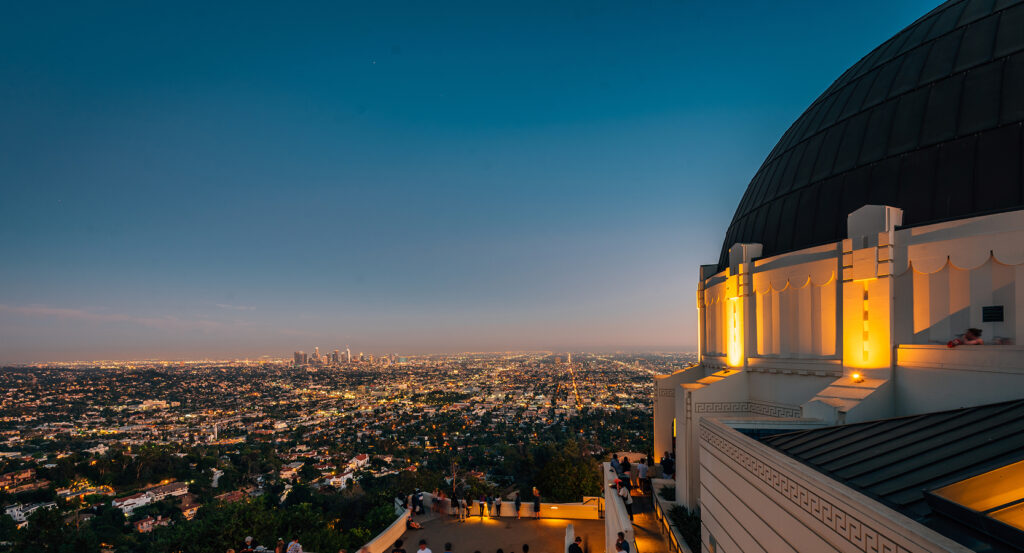
Begin at Hollywood Boulevard, where the entertainment capital's historic theaters and landmarks establish the cultural character of the surrounding district before continuing to Runyon Canyon. Continue to Griffith Observatory, whose iconic architecture and panoramic city views naturally extend the elevated perspectives experienced throughout the canyon. Conclude at Lake Hollywood Park, where close-up views of the Hollywood Sign provide a memorable finale celebrating the landscapes and landmarks that define Los Angeles. The progression moves naturally from Hollywood's historic core to one of the city's premier urban hiking destinations before concluding beneath one of the world's most recognizable landmarks, revealing why Runyon Canyon remains among Southern California's most celebrated outdoor experiences.
Where your story begins.
Foresyte Travel reveals places that feel extraordinary long before you arrive.
Enjoy editorial crafted for luxury travelers.
Foresyte may earn a commission when you book.





































































































