
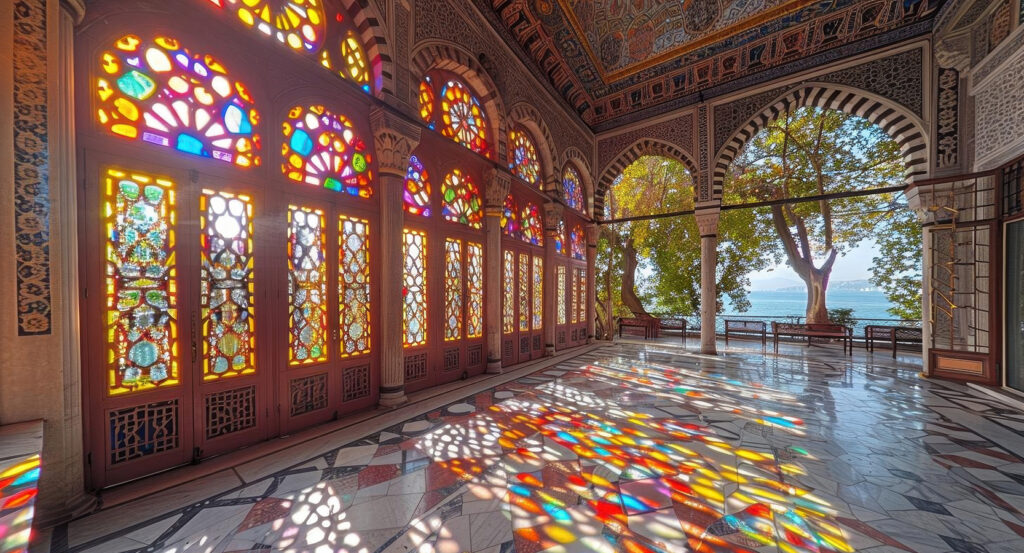
Why you should experience The Audience Chamber at Topkapi Palace in Istanbul, Türkiye.
The Audience Chamber at Topkapi Palace, also known as the Chamber of Petitions or Arz Odası, is where words once carried the weight of empires.
Set within the palace's Third Courtyard, this gilded pavilion served as the meeting ground between the sultan and the world. Beneath its domed ceiling, ambassadors, viziers, and foreign envoys knelt to present petitions or tributes before the sovereign. To stand here today is to feel the gravity of diplomacy itself, a hush of reverence that still lingers beneath the intricate gold leaf and Iznik tilework. Every inch of the chamber whispers hierarchy: the sultan invisible behind latticed screens, the courtiers bowing in choreographed humility. It's a space of power without performance, where silence could change destinies and a gesture carried more meaning than a thousand decrees.
What you should know about The Audience Chamber at Topkapi Palace.
The Audience Chamber was less a throne room and more a theater of control.
Constructed under Sultan Mehmed II and refined by later sultans, notably Suleiman the Magnificent, it embodied Ottoman ceremonial perfection. The chamber's four entrances symbolized the pillars of governance: justice, faith, military strength, and knowledge. Every architectural detail served political intent, the gold-adorned dome representing divine authority, the latticed windows ensuring that the sultan could observe unseen, and the low, cushioned divan forcing every visitor to bow naturally as they entered. Behind the decorative splendor, a strict choreography unfolded: the Grand Vizier introduced envoys, interpreters conveyed messages, and scribes recorded each exchange word for word. Even the chamber's acoustics were deliberate, the curvature of the dome allowed the sultan to hear voices precisely. The silk tapestries, diamond-studded lamps, and mother-of-pearl inlay weren't just opulence, they were psychological weapons, designed to overwhelm and humble those who dared to petition the Ottoman ruler. Yet amid the grandeur, this was also a place of profound restraint, a sacred space where power dressed itself in serenity.
How to fold The Audience Chamber at Topkapi Palace into your trip.
When visiting Topkapi Palace, The Audience Chamber offers one of its most hauntingly intimate moments.
Approach it after exploring the Treasury or the Harem, when your senses have already absorbed the palace's rhythm of power and beauty. Step quietly inside and let your eyes travel across the mosaic tiles, deep cobalt, emerald, and white, that once framed the most consequential conversations of the empire. Stand at the center beneath the golden dome, and imagine the Grand Vizier kneeling before the sultan, the murmurs of interpreters drifting like incense. Visit during the early afternoon, when the filtered sunlight through the arched windows bathes the chamber in honeyed glow, illuminating every trace of its ceremonial geometry. Pause outside afterward in the colonnaded courtyard, where the same air that carried centuries of diplomacy still stirs. The Audience Chamber at Topkapi Palace is not just a room, it's the voice of empire distilled into architecture, a silent conversation between authority and awe that continues long after the sultans have gone.
Where your story begins.
Foresyte Travel reveals places that feel extraordinary long before you arrive.
Experience premium editorial crafted for luxury travelers.





































































































