
Why 28th Street matters.
28th Street is a spirited corridor where Chelsea's creative energy, NoMad's architectural heritage, Rose Hill's commercial legacy, and Midtown South's continual reinvention converge within one of Manhattan's most historically layered districts.
Running across Manhattan between Chelsea and Rose Hill through NoMad, the street passes landmark commercial buildings, historic hotels, loft structures, neighborhood institutions, and contemporary office developments that collectively reflect more than 175 years of urban evolution. The corridor preserves successive layers of Italianate, Beaux-Arts, Renaissance Revival, Art Deco, and modern architecture while adapting to changing patterns of commerce, transportation, and residential life. Walking along 28th Street reveals a streetscape where engineering, architecture, entrepreneurship, and preservation remain closely connected. The result is a corridor where Manhattan's commercial history continues shaping one of the city's most dynamic cross-town streets.
What you should know 28th Street.
28th Street is best known for traversing the former Tin Pan Alley district, where between the 1890s and 1950s West 28th Street became the center of the American popular music publishing industry, housing hundreds of composers, lyricists, arrangers, publishers, and piano demonstration rooms that helped define the nation's commercial music business. The corridor expanded rapidly following the Commissioners' Plan of 1811, while nineteenth-century rowhouses gradually gave way to loft buildings, hotels, commercial structures, and office buildings representing Italianate, Beaux-Arts, Renaissance Revival, Art Deco, and modern architectural traditions. Transportation improvements accelerated development through the opening of the IRT Lexington Avenue Subway in 1904, the BMT Broadway Line in 1918, and the IND Sixth Avenue Line in 1940, strengthening connections between Midtown, Lower Manhattan, and Upper Manhattan. Continued landmark designation, adaptive reuse, and commercial reinvestment have preserved 28th Street as one of Manhattan's most historically significant business and cultural corridors.
The Gilsey House, completed in 1871 to designs by Stephen Decatur Hatch, introduced one of New York City's finest surviving Second Empire hotels, distinguished by its cast-iron façade and French-inspired mansard roof. The Church of the Transfiguration, completed in 1865 under architect Leopold Eidlitz, became one of Manhattan's earliest Gothic Revival Episcopal churches and later earned designation as a National Historic Landmark in 1973. Between 1903 and 1911, the Metropolitan Life Insurance Company erected the Metropolitan Life Tower, designed by Napoleon LeBrun & Sons after Venice's Campanile di San Marco and rising 700 feet as the world's tallest building until 1913. Together, these architectural milestones, engineering achievements, and preservation successes demonstrate how 28th Street evolved within a corridor where commerce, religion, architecture, and popular culture collectively transformed Midtown South into one of New York City's defining urban landscapes.
How 28th Street fits.
28th Street is best experienced through an afternoon exploring Midtown South's architecture, public spaces, and cultural history.
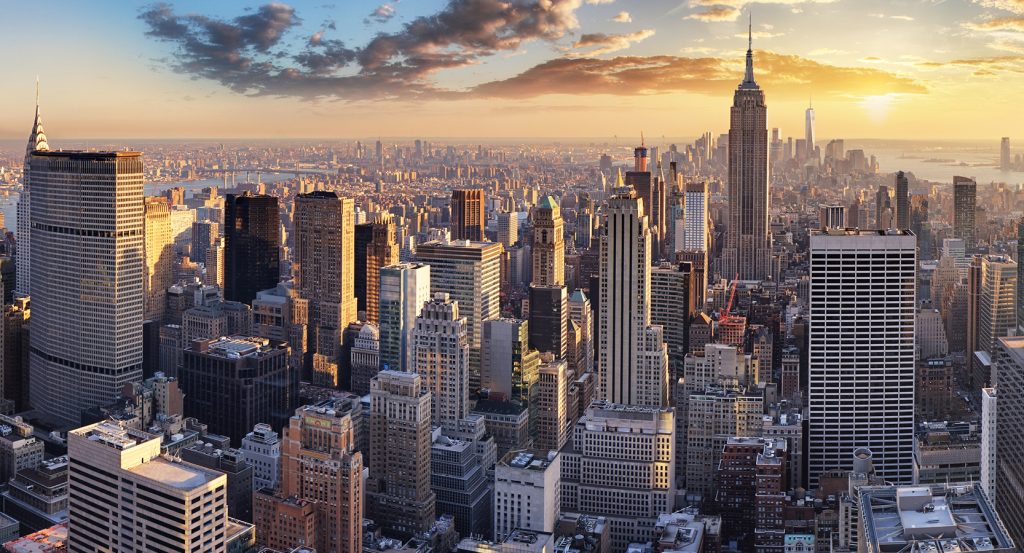
Begin at Madison Square Park, where historic monuments, mature trees, rotating public art installations, and landscaped lawns introduce one of Manhattan's most celebrated civic spaces. Continue to the Flatiron Building, whose pioneering steel-frame construction and distinctive triangular form helped redefine early skyscraper design at the intersection of Broadway and 5th Avenue. Conclude at the Empire State Building, where internationally recognized Art Deco architecture and panoramic observation decks provide a memorable finale overlooking the neighborhoods connected by 28th Street. The progression moves naturally from historic public space to architectural innovation before concluding atop one of the world's most celebrated skyscrapers, revealing how 28th Street connects Manhattan's commercial, architectural, and cultural evolution.
Where your story begins.
Foresyte Travel reveals places that feel extraordinary long before you arrive.
Enjoy editorial crafted for luxury travelers.
Foresyte may earn a commission when you book.







































































































