
Why you should experience 30th Street in New York, NY.
30th Street is a dynamic Chelsea corridor where industrial heritage, contemporary architecture, Hudson River redevelopment, and creative energy connect many of Manhattan's most influential modern destinations.
Running through Chelsea between 10th Avenue and 12th Avenue before continuing east across Midtown, this evolving corridor links celebrated public spaces, architecturally ambitious developments, former industrial landscapes, and thriving cultural institutions into one of Manhattan's most compelling urban streets. Historic warehouses, converted manufacturing buildings, landscaped boulevards, and contemporary skyscrapers demonstrate more than a century of transformation while preserving the neighborhood's distinctive character. The result is a corridor defined by architectural evolution, cultural vitality, and exceptional urban design.
What you should know about 30th Street.
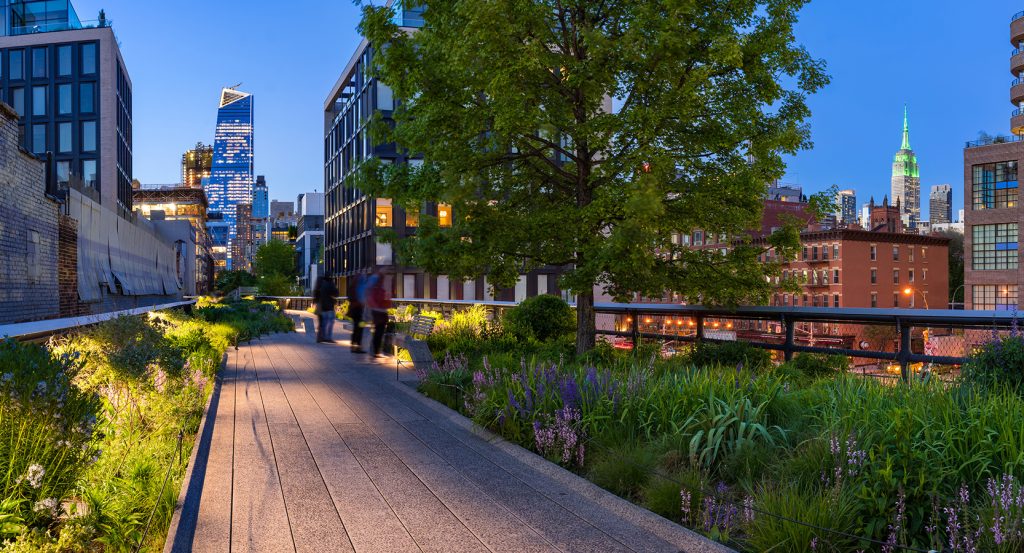
30th Street is best known for anchoring the northern edge of Chelsea's dramatic westward transformation, evolving from an industrial freight corridor serving the Hudson River waterfront and the adjacent West Side Rail Yard into one of Manhattan's most influential contemporary streets through the creation of Hudson Yards, the High Line, and Manhattan West during the early twenty-first century. Throughout the late nineteenth and early twentieth centuries, the corridor was dominated by rail infrastructure, warehouses, manufacturing buildings, freight terminals, and the New York Central Railroad's West Side Line, whose elevated freight tracks eliminated dangerous street-level crossings before eventually falling into disuse during the 1980s. Beginning with the preservation of the High Line in 1999 and its opening as an elevated public park between 2009 and 2019 through the work of James Corner Field Operations, Diller Scofidio + Renfro, and Piet Oudolf, 30th Street became the focal point of one of the world's most influential urban regeneration projects. Simultaneously, Related Companies and Oxford Properties transformed the neighboring Long Island Rail Road storage yards into the $25 billion Hudson Yards development atop a 37,000-ton structural platform spanning more than thirty active rail tracks, while Brookfield Properties completed the Manhattan West district over an additional platform engineered above Penn Station's western approach tracks. Today the corridor encompasses internationally recognized works by Kohn Pedersen Fox, SOM, Foster + Partners, Skidmore, Owings & Merrill, Heatherwick Studio, and Diller Scofidio + Renfro while connecting Edge, The Shed, Moynihan Train Hall, Bella Abzug Park, and the High Line into one of the most architecturally significant stretches of contemporary urban development in North America.
Glass curtain walls, adaptive reuse architecture, elevated green spaces, expansive public plazas, and carefully integrated pedestrian streetscapes continually demonstrate the extraordinary scale of Manhattan's Far West Side redevelopment. Landscape architecture, transportation infrastructure, public art, sustainable engineering, and mixed architectural styles reveal how industrial infrastructure has been reimagined into a spirited urban environment that remains active throughout the day and evening. Every block demonstrates how long-term planning, engineering innovation, and architectural excellence have transformed 30th Street into one of New York City's defining contemporary corridors.
How to fold 30th Street into your trip.
30th Street works as part of a curated exploration through Chelsea's contemporary architecture and elevated public spaces.
Begin at The High Line, where the celebrated elevated park introduces the neighborhood's remarkable adaptive reuse before descending onto 30th Street. Continue to Hudson Yards, whose ambitious architecture and public spaces showcase one of the world's largest urban redevelopment projects. Conclude at Edge at 30 Hudson Yards, where sweeping views across Manhattan and the Hudson River provide a fitting finale celebrating the engineering achievements experienced throughout the corridor. The progression moves naturally from adaptive reuse to contemporary city-building before concluding above the skyline, revealing why 30th Street has become one of Manhattan's defining modern urban corridors.
Where your story begins.
Foresyte Travel reveals places that feel extraordinary long before you arrive.
Experience premium editorial crafted for luxury travelers.







































































































