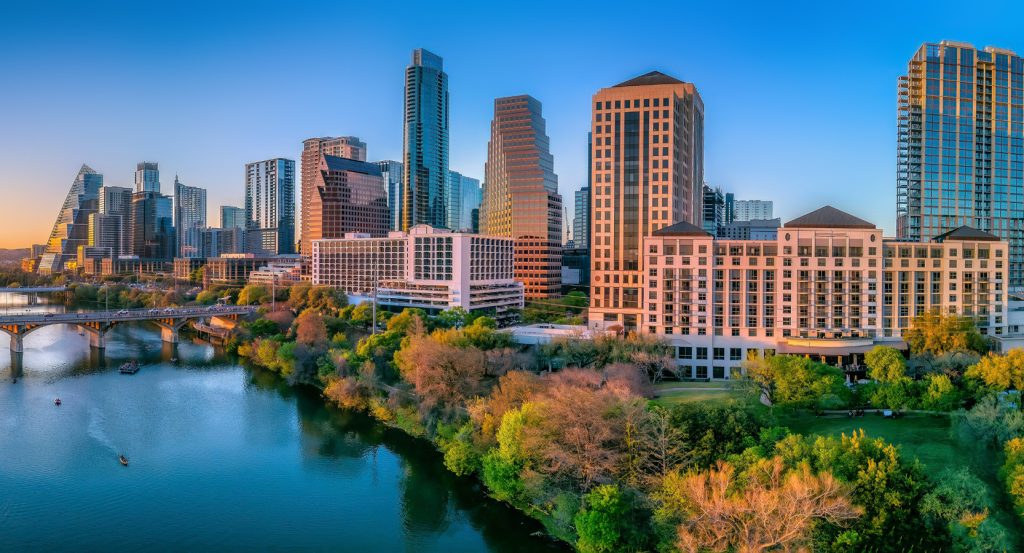
Why 35th Street matters.
35th Street is a graceful corridor where North University's academic heritage, architectural distinction, medical innovation, and enduring Central Austin character converge across one of the city's defining east-west streets.
Running through North University between Hyde Park and Hancock, the corridor links established residential blocks, institutional campuses, mature tree canopies, and long-standing community destinations that collectively reflect Central Austin's evolution throughout the twentieth century. Historic brick residences, Collegiate Gothic architecture, shaded sidewalks, and thoughtfully integrated civic spaces create a streetscape where educational traditions and neighborhood continuity remain closely connected. Decades of careful reinvestment have strengthened the surrounding district while preserving its distinctive sense of place. The result is an experience defined by architectural richness, institutional legacy, and one of Central Austin's most recognizable corridors.
What you should know 35th Street.
35th Street is best known for connecting Central Austin neighborhoods that expanded during the 1910s, 1920s, and 1930s while following the broader street structure established by the 1839 Edwin Waller Plan, which guided Austin's long-term urban growth beyond its original townsite. The corridor borders Hyde Park, Austin's first planned suburb, established in 1891 by the Austin Real Estate and Abstract Company, where collections of Queen Anne, Craftsman, Colonial Revival, and Tudor Revival residences contribute to the Hyde Park Historic District, listed on the National Register of Historic Places in 1990. The corridor provides an important connection to the University of Texas at Austin and the adjoining University of Texas Medical District, whose sustained institutional expansion has influenced surrounding residential development, biomedical research, and professional investment for more than a century. Nearby residential blocks preserve an exceptional concentration of early twentieth-century architecture documenting Austin's transformation from a compact capital into a nationally recognized university city. Collectively, the corridor's planned suburban origins, National Register recognition, architectural diversity, educational influence, and institutional continuity establish 35th Street as one of Central Austin's defining historic corridors.
The Waller Creek watershed extends through nearby portions of Central Austin, where limestone soils, native riparian vegetation, and historic drainage corridors influenced subdivision planning and neighborhood development across the surrounding area. The North University Neighborhood Association and Hyde Park Neighborhood Association continue supporting preservation initiatives, tree stewardship, neighborhood planning, and community engagement that reinforce the district's architectural character. Archaeological investigations throughout Central Austin have documented Indigenous cultural materials together with nineteenth-century settlement evidence that continues expanding scholarly understanding of human occupation across the Upper Colorado River basin. Together, these environmental systems, civic organizations, and archaeological discoveries demonstrate how 35th Street reflects a corridor where environmental history, neighborhood stewardship, and cultural continuity remain closely interconnected.
How 35th Street fits.
35th Street works as an exploration of Central Austin's academic heritage, neighborhood landscapes, and scientific history.
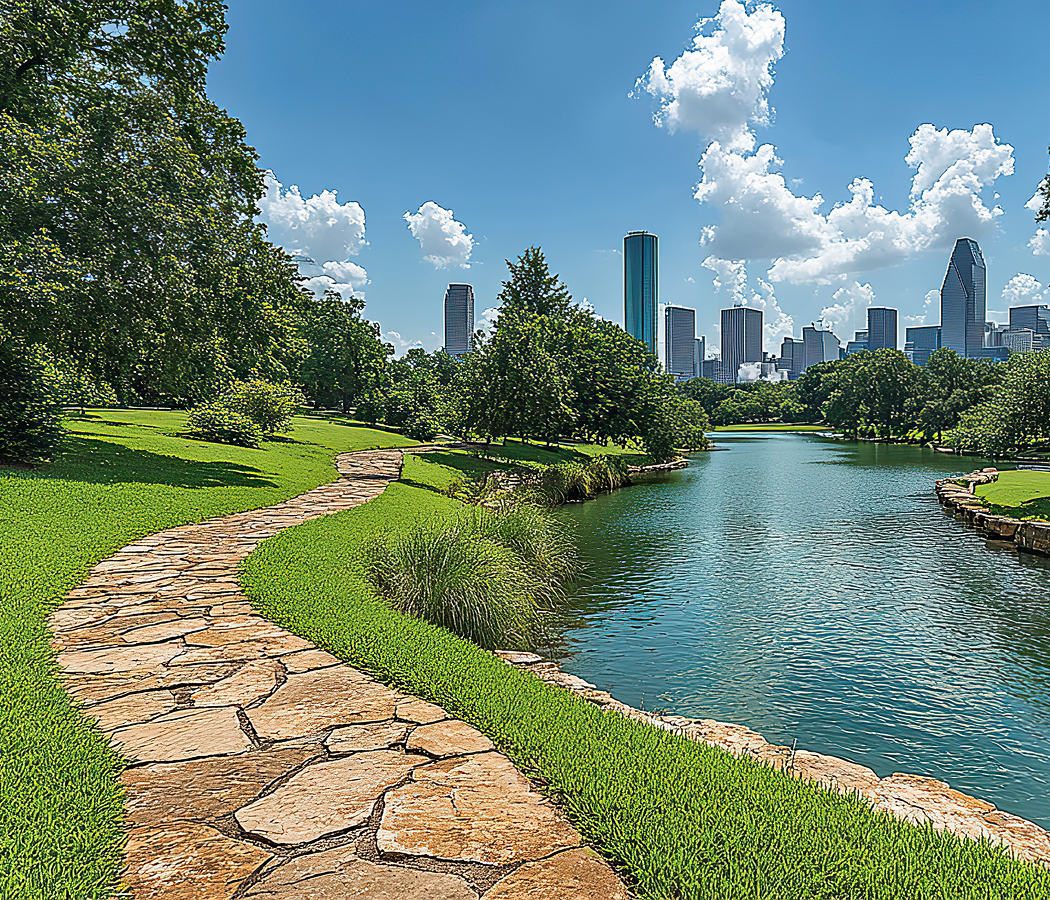
Begin at Adams-Hemphill Neighborhood Park, where shaded walking paths, mature trees, and neighborhood gathering spaces introduce the welcoming residential character surrounding the corridor. Continue to Texas Science & Natural History Museum, where fossils, wildlife specimens, geological collections, and interactive exhibits deepen the experience by revealing the natural history that shaped Texas across millions of years. Conclude at The University of Texas Tower, where the campus's defining architectural symbol provides the historical payoff through its enduring association with the university's academic legacy and Austin's twentieth-century growth. The progression moves naturally from neighborhood green space to scientific discovery before culminating in one of the city's most recognizable academic monuments.
Where your story begins.
Foresyte Travel reveals places that feel extraordinary long before you arrive.
Enjoy editorial crafted for luxury travelers.
Foresyte may earn a commission when you book.