Why 55th Street matters.
55th Street is a cultivated corridor where Hyde Park's academic distinction, architectural heritage, scientific achievement, and Chicago's South Side legacy converge along one of the neighborhood's defining east-west streets.
Running through Hyde Park between Washington Park and Lake Michigan, 55th Street connects internationally renowned university buildings, historic residential blocks, cultural institutions, neighborhood commerce, and celebrated public landscapes that together reflect more than a century of visionary urban planning. Every block reveals another layer of the corridor's character as Collegiate Gothic architecture, elegant limestone façades, mature tree canopies, historic apartment buildings, and thoughtfully preserved streetscapes create an environment shaped by scholarship, craftsmanship, and enduring civic ambition. The corridor reaches its defining character where world-renowned research, architectural excellence, and energetic neighborhood life combine into one of Chicago's most intellectually compelling urban environments. The result is a corridor defined by scholarly influence, architectural distinction, and the enduring legacy of Hyde Park's remarkable academic landscape.
What you should know 55th Street.
55th Street is best known for serving as the southern gateway to the University of Chicago, founded in 1890 through the philanthropy of John D. Rockefeller and the leadership of founding president William Rainey Harper, establishing Hyde Park as one of the world's foremost centers of higher education and research. The corridor's development accelerated after the World's Columbian Exposition of 1893 transformed neighboring Jackson Park, bringing extensive infrastructure improvements, expanded utilities, and lasting institutional investment to Chicago's South Side. Operation of the 55th-56th-57th Street station on today's Metra Electric District, expansion of the Illinois Central Railroad's suburban service, and construction of the South Side Elevated Railroad established the transportation network that supported Hyde Park's sustained residential and academic growth throughout the twentieth century. Between the late nineteenth and early twentieth centuries, architects including Henry Ives Cobb, Shepley, Rutan & Coolidge, and Bertram Goodhue designed many of the University's defining Collegiate Gothic buildings bordering the corridor, while continued investment by the Chicago Department of Transportation strengthened accessibility and preserved the historic street grid. Together, university expansion, exposition-era planning, transportation infrastructure, architectural innovation, and municipal stewardship established 55th Street among Chicago's most historically significant academic corridors.
The corridor became internationally recognized through nearby research institutions including the Marine Biological Laboratory, the Institute for the Study of Ancient Cultures, and the Becker Friedman Institute for Economics, whose work has shaped fields ranging from archaeology to public policy and Nobel Prize-winning economic research. Protection of the Hyde Park-Kenwood Historic District preserved an exceptional collection of Collegiate Gothic, Prairie School, and Classical Revival architecture, safeguarding carved limestone, decorative brickwork, ornamental detailing, and historically significant residential streetscapes surrounding the avenue. Long-term collaboration among the University of Chicago, the Chicago Department of Planning and Development, the Chicago Department of Transportation, and neighborhood preservation organizations has supported historic rehabilitation, pedestrian improvements, streetscape enhancements, and continued investment while maintaining Hyde Park's distinctive architectural character. Together, internationally significant research, architectural preservation, institutional leadership, and coordinated planning explain why 55th Street remains one of Chicago's most distinguished neighborhood corridors.
How 55th Street fits.
55th Street works as an exploration of Hyde Park's scholarly tradition, architectural excellence, and lakefront setting.
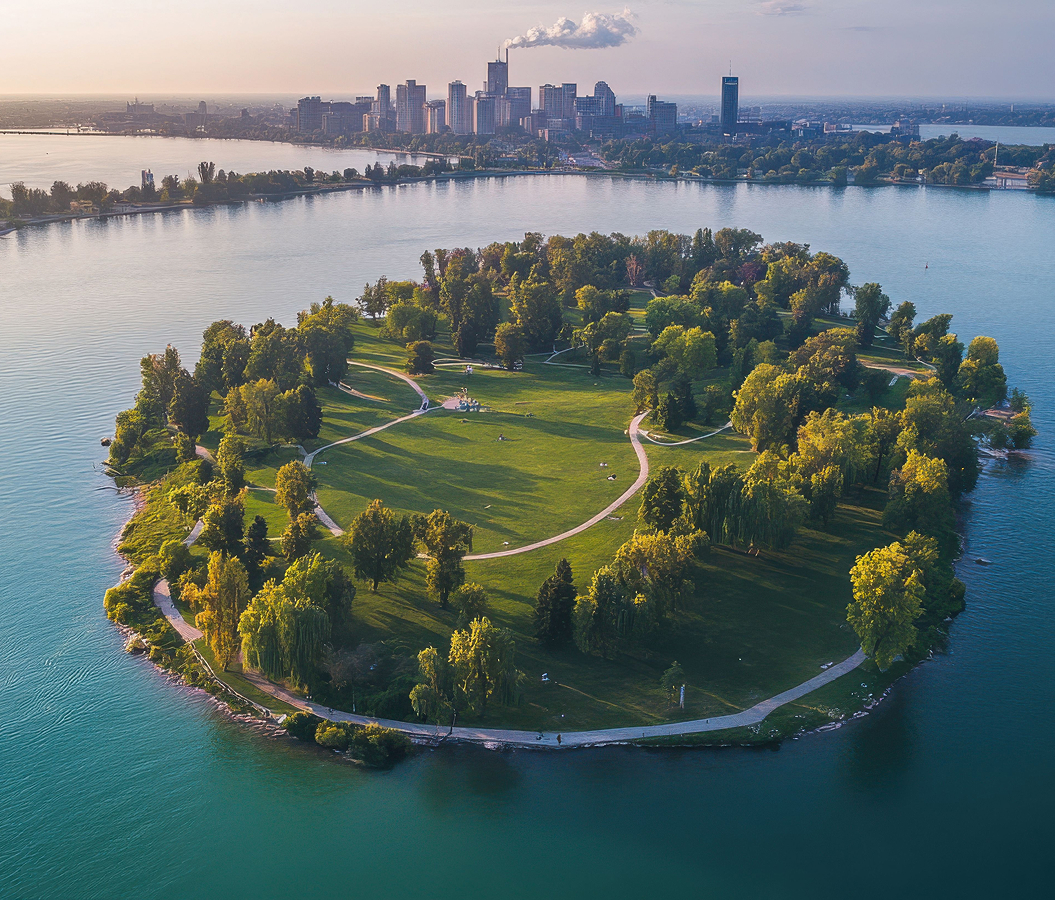
Begin at Harper Memorial Library, where one of the University's most celebrated Collegiate Gothic interiors introduces the academic vision that defines Hyde Park before naturally leading through the surrounding campus. Continue to Court Theatre, where nationally acclaimed classical productions reinforce the neighborhood's longstanding commitment to cultural scholarship before carrying the experience toward its conclusion. Conclude at Promontory Point, where sweeping views across Lake Michigan and Alfred Caldwell's celebrated landscape design provide the historical and scenic payoff, illustrating how 55th Street ultimately connects world-class scholarship with one of Chicago's most treasured waterfront settings. The progression moves naturally from academic tradition to artistic excellence before culminating along the city's iconic shoreline.
Where your story begins.
Foresyte Travel reveals places that feel extraordinary long before you arrive.
Enjoy editorial crafted for luxury travelers.
Foresyte may earn a commission when you book.