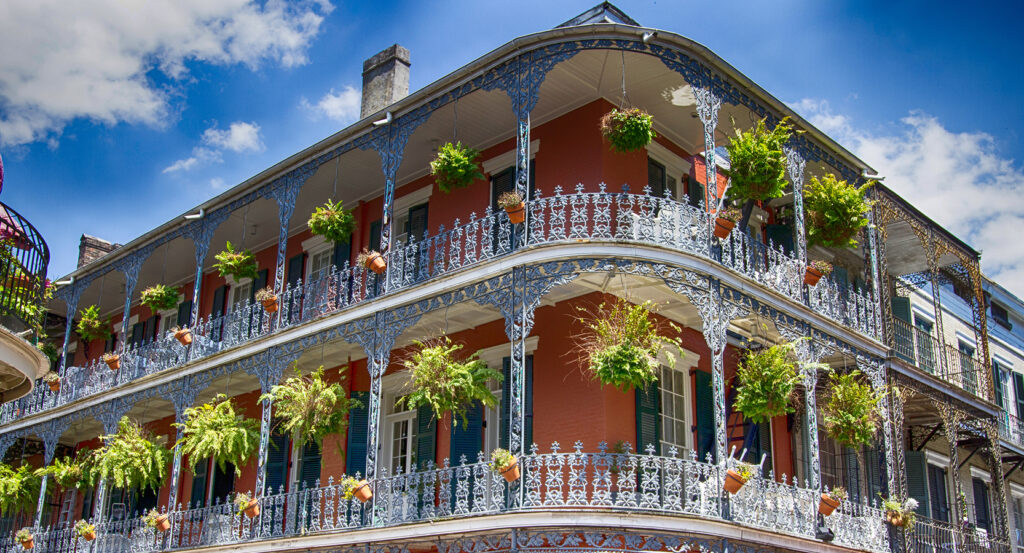
Why you should experience Hotel Peter and Paul in New Orleans, Louisiana.
Hotel Peter and Paul is New Orleans experienced as architectural immersion, where city heritage, adaptive reuse, and thoughtfully repurposed space combine to create a stay that feels rooted in authenticity.
New Orleans is a city of histories, colonial, Creole, American, spiritual, artistic, and this hotel captures a strand of that rich weave. Located in the Marigny neighborhood, just moments from the French Quarter and anchored beside St. Paul's Church and St. Peter's Church, the property transforms a 19th-century school, rectory, convent, and church into a cohesive hospitality environment. Arrival feels gentle and unforced. There is no theatrical threshold; instead, you move from street to courtyard to interior with a sense of continuity that feels intentional. The experience begins with a sense of place already established, one shaped as much by what came before you as by your own arrival. Check-in is warm and personable, delivered with a tone that values presence and context over scripted exchange. Public spaces at Hotel Peter and Paul are layered and expressive. The property's adaptive architecture allows original structures to inform the spatial rhythm, sacred volumes, classrooms with lofty ceilings, wide corridors, and intimate gathering rooms that encourage quiet conversation or calm observation. Materials, wood, stone, brick, speak of age and care, grounding the environment in a tactile honesty that many contemporary hotels chase but few achieve. Movement through the property feels intuitive. There is a sense that you are inhabiting a series of connected rooms in a lived environment rather than circulating through zones of display. Courtyards and garden spaces anchor the experience, offering shaded, quiet areas where you can sit, reflect, or read. These outdoor spaces feel like extensions of the architecture rather than annexes, reflecting a hospitality that is integrated with context, not isolated from it. Guest rooms continue this narrative with thoughtful restraint and comfort. Rooms are individually composed, honoring their original typology while integrating modern comforts with care. Beds are supportive and proportioned for genuine rest after long days exploring the city's neighborhoods. Furnishings are deliberate and tactile, chosen to complement the building's character. Lighting is layered and adaptable, allowing rooms to feel calm in the evening and clear at the start of the day. Windows frame views of historic architecture, tree canopies, and the rhythm of everyday life just beyond the property, keeping you connected to place. Sound here is presence rather than intrusion, ambient city life registers as context, not disruption. Dining and social life at Hotel Peter and Paul reflect its grounded presence. The hotel's restaurant and bar spaces feel integrated into the property's narrative, they are places of gathering. Menus emphasize care and clarity, supporting moments of connection. Mornings unfold quietly and comfortably, with breakfast offerings designed to fuel your day without insisting on lengthy occupation of the room.
What you should know about Hotel Peter and Paul.
Hotel Peter and Paul is best known for a philosophy of adaptive authenticity, where historic structure and contemporary use are woven together.
Rather than masking age, the property exposes it thoughtfully, wood beams, masonry, and painted surfaces negotiate tension between old and new without collapsing into either. Public areas reflect their original purpose, spaces once dedicated to learning, worship, and community now host gathering, conversation, and pause. This continuity reinforces the sense that the hotel is architectural presence before hospitality stage. Guest rooms respect the original spatial logic, allowing scale and proportion to shape comfort rather than forcing them into template layouts. Materials throughout the hotel emphasize texture and presence, contributing to an environment that feels lived-in. Service culture mirrors this architectural grounding. Hospitality here is relational rather than performative; staff interactions are guided by situational awareness rather than scripted engagement. The result is a hotel that feels steady and operationally coherent, offering a version of New Orleans that prioritizes lived presence over performance.
How to fold Hotel Peter and Paul into your trip.
Hotel Peter and Paul works best when you treat it as your architectural anchor, the place that gives New Orleans context between immersion and recovery.
Begin your stay by letting the property's environment set your pace, spend time in the courtyards, seating areas, and garden spaces before stepping into the city's motion. Use mornings for reflective exploration, walk toward the French Quarter, Lafayette Cemetery, or local cafés while the city feels open and legible. Midday returns to the hotel feel grounding rather than retreat-like, offering space to regroup without disconnecting from purpose. Afternoons can extend into neighborhood dining, music venues, or gallery visits. Evenings are best approached with focus, choose one destination that aligns with your intentions, then return when energy begins to taper. On your final morning, departure feels complete and composed, shaped by the sense that you didn't just visit New Orleans, but inhabited one of its lived architectural narratives with attention, clarity, and presence.
Where your story begins.
Foresyte Travel reveals places that feel extraordinary long before you arrive.
Experience premium editorial crafted for luxury travelers.