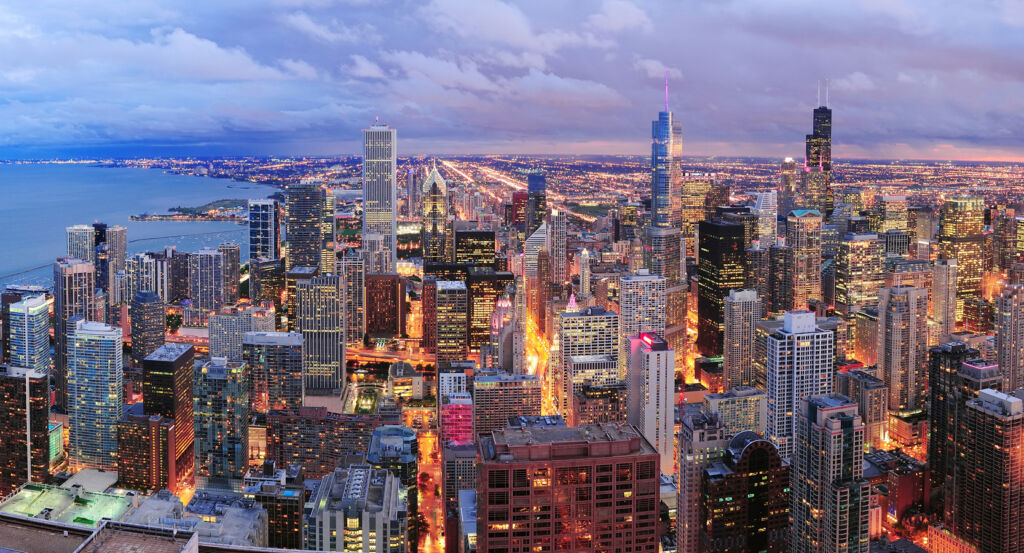
Why you should experience West Maxwell Street in Chicago, Illinois.
West Maxwell Street is a renowned Near West Side corridor where immigrant entrepreneurship, musical innovation, and street market culture converge along one of the most storied streets in American urban history.
Running through the Near West Side between University Village and the South Loop, this historic street connects marketplace traditions, university institutions, cultural landmarks, commercial corridors, community spaces, and historic gathering places that have shaped local life for generations. Historic storefronts, market spaces, educational facilities, neighborhood landmarks, public plazas, and evolving streetscapes create an environment defined by resilience and reinvention. The corridor emerged during the late nineteenth century as a thriving commercial center serving successive waves of immigrants arriving in Chicago. Merchants, musicians, entrepreneurs, students, reformers, and residents helped establish a reputation that continues to resonate far beyond the city. To the east, the South Loop extends naturally from West Maxwell Street through a network of historic streets, civic destinations, and cultural institutions that reinforce the corridor's enduring significance. The result is a street defined by cultural exchange, entrepreneurship, and urban heritage.
What you should know about West Maxwell Street.
West Maxwell Street is best known for serving as the birthplace of Chicago-style electric blues, the influential musical movement that transformed Delta blues traditions into a new urban sound and helped shape modern popular music worldwide.
During the twentieth century, renowned musicians including Muddy Waters, Howlin' Wolf, and Little Walter performed in clubs, storefronts, and informal venues throughout the surrounding district. The neighborhood's energetic street life and immigrant marketplaces created an environment where musical traditions from the American South evolved into something uniquely Chicago. Recordings, performances, and innovations that emerged from Maxwell Street helped lay the foundation for rock and roll, rhythm and blues, and countless later genres. Historians, musicians, and cultural institutions continue to celebrate the street's extraordinary influence on American music. Few streets in America are associated with a musical movement that so profoundly influenced the sound of the modern world.
How to fold West Maxwell Street into your trip.
West Maxwell Street works as an exploration of the Near West Side's immigrant heritage, musical legacy, and cultural evolution.
Begin at Maxwell Street Market, where the corridor's defining relationship with commerce, migration, and community life immediately comes into focus. Continue toward the University of Illinois Chicago, whose expansive campus reveals the educational and civic forces that helped shape the district across generations. From there, make your way to the Blues Hall of Fame marker at Maxwell Street, where one of the neighborhood's most meaningful cultural landmarks provides a broader perspective on the musical traditions that continue to define the area today. Along the route, you'll encounter historic marketplaces, educational institutions, cultural landmarks, public gathering spaces, neighborhood corridors, architectural treasures, and celebrated streetscapes that showcase the avenue's remarkable depth. The progression moves naturally from renowned market to academic anchor to musical landmark, revealing the forces that transformed West Maxwell Street into one of Chicago's most consequential cultural corridors. West Maxwell Street remains one of the city's most rewarding streets, preserving a distinctive balance between immigrant heritage, musical innovation, and community identity.
Where your story begins.
Foresyte Travel reveals places that feel extraordinary long before you arrive.
Experience premium editorial crafted for luxury travelers.