Why you should experience 79th Street in Chicago, Illinois.
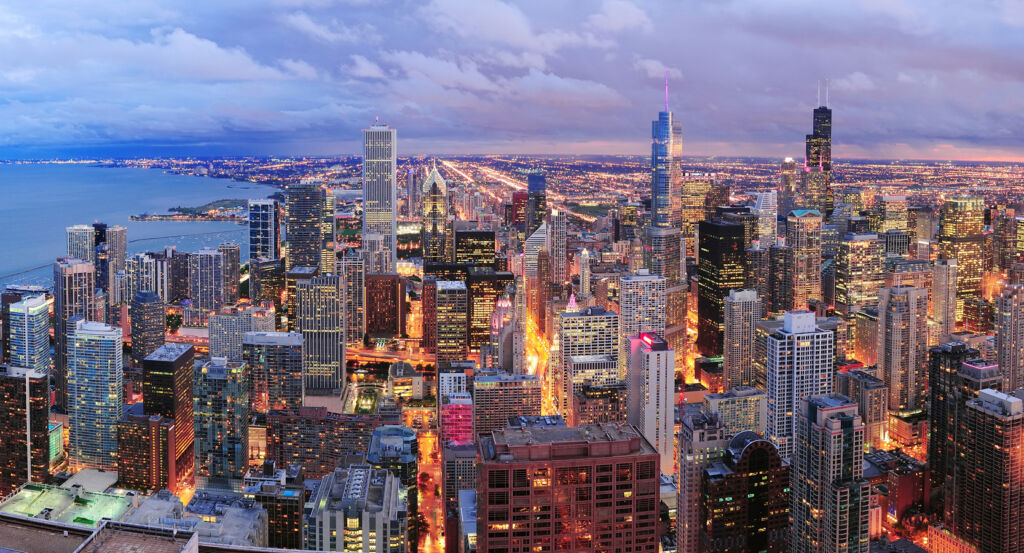
79th Street is an animated corridor where Chatham's commercial heritage, South Side resilience, civic institutions, and Chicago's neighborhood history converge along one of the city's most influential east-west thoroughfares.
Running through Chatham between Ashburn and South Shore, 79th Street links historic business districts, celebrated cultural institutions, neighborhood shopping corridors, and longstanding residential communities that together reflect more than a century of South Side development. Every mile reveals another dimension of the corridor as historic commercial buildings, thriving retail centers, churches, public art, and locally rooted businesses create an urban landscape shaped by generations of entrepreneurship and community life. The corridor reaches its defining character where landmark institutions, enduring neighborhood commerce, and the energy of one of Chicago's busiest arterial streets combine into a vivid expression of the South Side's cultural and economic identity. The result is a corridor defined by commercial vitality, cultural significance, and the enduring influence it continues to exert across Chicago's South Side.
What you should know about 79th Street.
79th Street is best known for evolving from an early township road into one of Chicago's principal South Side commercial arteries following annexations during the late nineteenth century, with rapid urbanization accelerating after the Great Chicago Fire of 1871 and continued expansion into the twentieth century. Extension of electric streetcar service along the corridor, later supplemented by the CTA 79th Street bus route, established one of Chicago's highest-ridership east-west transit corridors while supporting continuous residential and commercial development across multiple neighborhoods. Construction of the Dan Ryan Expressway (Interstate 94) during the 1960s, development of the 79th Street Metra Electric Station, and the opening of the 79th Street Red Line station strengthened the corridor's regional transportation significance by linking South Side communities with Downtown and surrounding suburbs. The avenue also became closely associated with major civic investment through institutions including Greater Grand Crossing, Chatham, and South Shore, while improvements directed by the Chicago Department of Transportation have modernized streetscapes, pedestrian infrastructure, and multimodal accessibility. Together, transportation expansion, expressway engineering, transit infrastructure, neighborhood commerce, and municipal investment established 79th Street among Chicago's most important urban corridors.
Commercial leadership along 79th Street helped establish one of the South Side's most influential Black-owned business districts during the twentieth century, supporting generations of entrepreneurs, financial institutions, professional offices, restaurants, and cultural organizations that became central to Chicago's African American economic history. Revitalization initiatives led by the Greater Chatham Initiative, the 79th Street Corridor Improvement Project, the Chicago Department of Planning and Development, and neighborhood development organizations have strengthened commercial reinvestment through façade improvements, streetscape modernization, public art, and small-business support. Historic commercial buildings, neighborhood theaters, churches, and civic institutions continue preserving the corridor's architectural legacy while adapting to contemporary economic needs. Together, African American entrepreneurship, coordinated revitalization, preserved commercial architecture, and sustained neighborhood leadership explain why 79th Street remains one of Chicago's defining South Side corridors.
How to fold 79th Street into your trip.
79th Street works as an exploration of Chicago's South Side heritage, neighborhood culture, and civic landmarks.
Begin at Avalon Regal Theater, where one of Chicago's finest Art Deco theaters introduces the corridor's rich entertainment history before naturally leading deeper into the surrounding commercial district. Continue to Carter G. Woodson Regional Library, whose celebrated architecture and extensive collections illuminate the intellectual and cultural legacy of the South Side before carrying the experience toward its conclusion. Conclude at Rainbow Beach Park, where Lake Michigan, expansive green spaces, and sweeping shoreline views provide a memorable finale illustrating how 79th Street ultimately connects energetic neighborhood life with one of Chicago's defining natural landscapes. The progression moves naturally from architectural heritage to cultural scholarship before concluding along the city's celebrated lakefront.
Where your story begins.
Foresyte Travel reveals places that feel extraordinary long before you arrive.
Experience premium editorial crafted for luxury travelers.