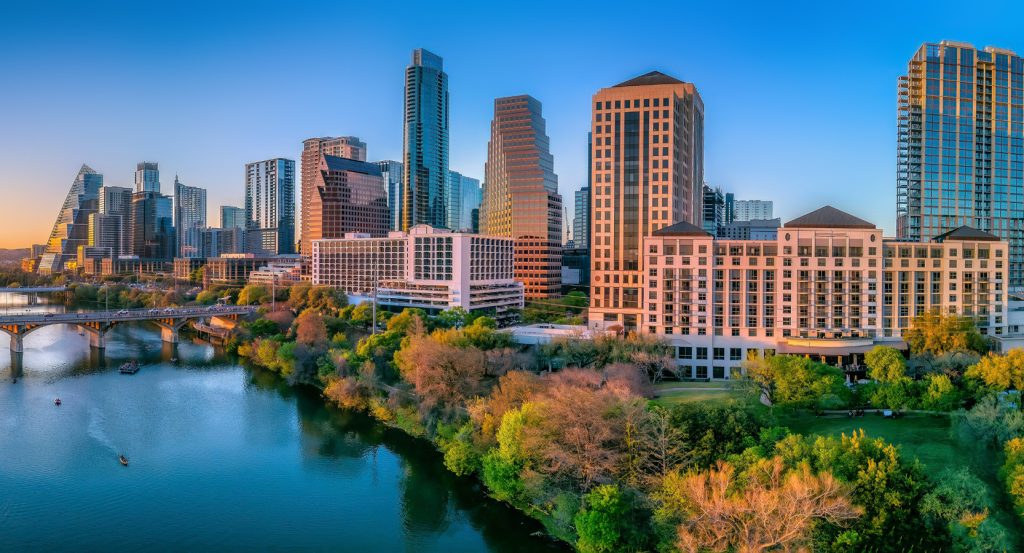
Why you should experience Cherrywood Road in Austin, Texas.
Cherrywood Road is a welcoming corridor where Cherrywood's mid-century heritage, creative energy, neighborhood tradition, and enduring East Austin character create one of the district's most distinctive streets.
Running through Cherrywood between Hancock and French Place, the corridor links established residential blocks, neighborhood gathering places, mature tree canopies, and locally owned businesses that reflect decades of thoughtful growth immediately east of the University of Texas campus. Broad sidewalks, limestone cottages, postwar homes, and flourishing live oaks create an environment where architectural continuity remains closely connected to a strong sense of community. Successive generations of residents have reinforced the area's independent character while preserving the intimate scale that continues distinguishing Cherrywood from surrounding neighborhoods. The result is an experience defined by neighborhood authenticity, architectural character, and one of Cherrywood's most memorable corridors.
What you should know about Cherrywood Road.
Cherrywood Road is best known for traversing Cherrywood, a neighborhood largely developed during the 1940s and 1950s as Austin expanded beyond its original streetcar suburbs, creating one of the city's most cohesive collections of postwar residential architecture. The corridor preserves an extensive concentration of Minimal Traditional, early Ranch-style, Mid-century Modern, and modest brick veneer residences that collectively document Austin's rapid population growth following World War II while illustrating changing residential design trends across the mid-twentieth century. Much of the surrounding neighborhood occupies land formerly associated with the M. K. amp; T. Railroad corridor and agricultural tracts that gradually transitioned into residential subdivisions as Austin's eastern neighborhoods expanded during the postwar era. Cherrywood also developed a reputation for neighborhood preservation through active community organizations, locally owned businesses, and careful reinvestment that retained the district's residential character while accommodating contemporary growth. Mature live oak, cedar elm, pecan, Mexican plum, and Texas red oak contribute to an established urban canopy supporting migratory birds, native pollinators, and one of Central Austin's healthiest residential tree populations. Collectively, the corridor's postwar development, architectural cohesion, railroad-era origins, environmental character, and longstanding community stewardship establish Cherrywood Road as one of East Austin's defining corridors.
The Cherrywood Neighborhood Association, established during the late twentieth century, has played an important role in preserving neighborhood character, encouraging tree planting, supporting local businesses, and coordinating community improvement initiatives throughout the district. Nearby Boggy Creek continues serving as one of East Austin's historic natural drainage systems, sustaining riparian vegetation, native wildlife habitat, and ecological diversity despite surrounding urban development. Cherrywood's compact subdivision pattern, interconnected sidewalks, and modest residential lot sizes reflect planning priorities that emphasized walkability decades before it became a widespread urban design objective. Together, these civic organizations, natural systems, and historic planning patterns demonstrate how Cherrywood Road reflects a corridor where environmental continuity, neighborhood stewardship, and architectural preservation continue reinforcing one another.
How to fold Cherrywood Road into your trip.
Cherrywood Road works as an exploration of East Austin's neighborhood heritage, public spaces, and creative culture.
Begin at Cherrywood Pocket Park, where shaded seating, neighborhood gathering spaces, and mature trees introduce the community-focused atmosphere that has long distinguished Cherrywood from surrounding districts. Continue to Mueller Lake Park, where landscaped trails, public art, restored prairie plantings, and expansive green space broaden the experience while illustrating Austin's contemporary approach to urban park design. Conclude at Thinkery, where nationally recognized exhibits celebrating science, engineering, and creative learning provide the historical payoff by highlighting one of Austin's leading cultural institutions serving generations of families. The progression moves naturally from neighborhood green space to an expansive civic park before culminating in an institution that celebrates creativity, education, and innovation.
Where your story begins.
Foresyte Travel reveals places that feel extraordinary long before you arrive.
Experience premium editorial crafted for luxury travelers.