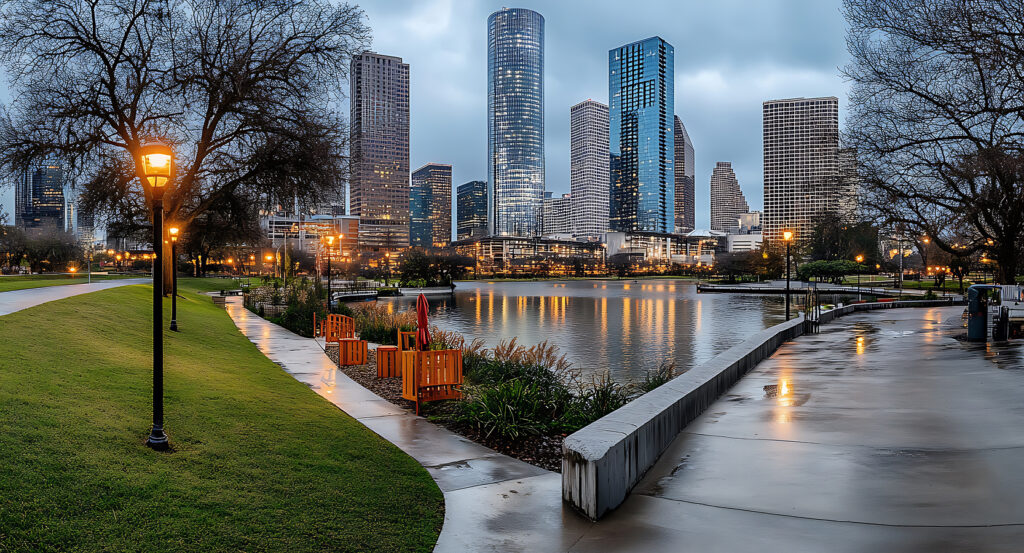
Why you should experience Post Oak Road in Houston, Texas.
Post Oak Road is a sophisticated corridor where Greater Uptown's commercial prestige, architectural ambition, cultural refinement, and enduring civic character converge along one of Houston's most distinguished streets.
Running through Greater Uptown between River Oaks and Memorial, the corridor connects internationally recognized office towers, luxury residential communities, premier retail destinations, and carefully planned public spaces that collectively reflect Houston's emergence as a global business center. Broad landscaped medians, mature live oaks, grand architecture, and meticulously maintained streetscapes create a setting where ambitious urban planning and long-term investment remain immediately apparent. Decades of coordinated development have strengthened the corridor while preserving the visual character that distinguishes Greater Uptown from every other Houston district. The result is an experience defined by architectural excellence, commercial significance, and one of Houston's most recognizable corridors.
What you should know about Post Oak Road.
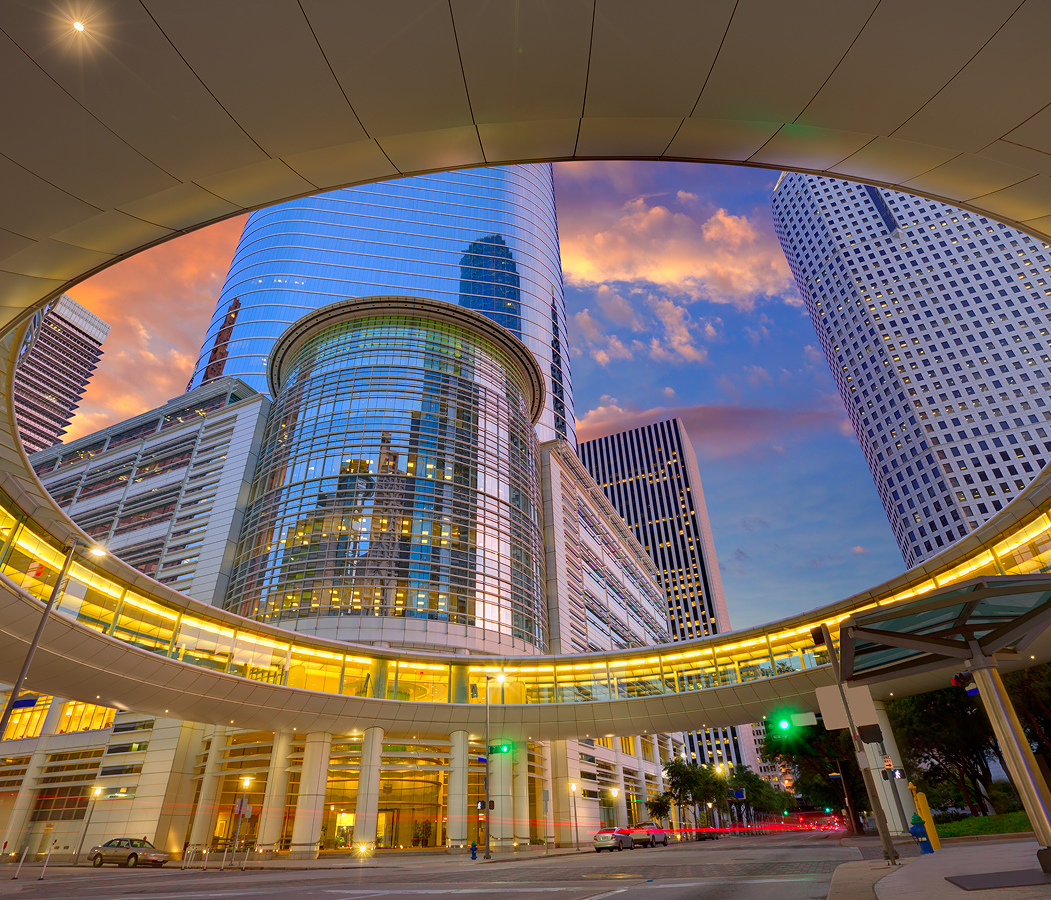
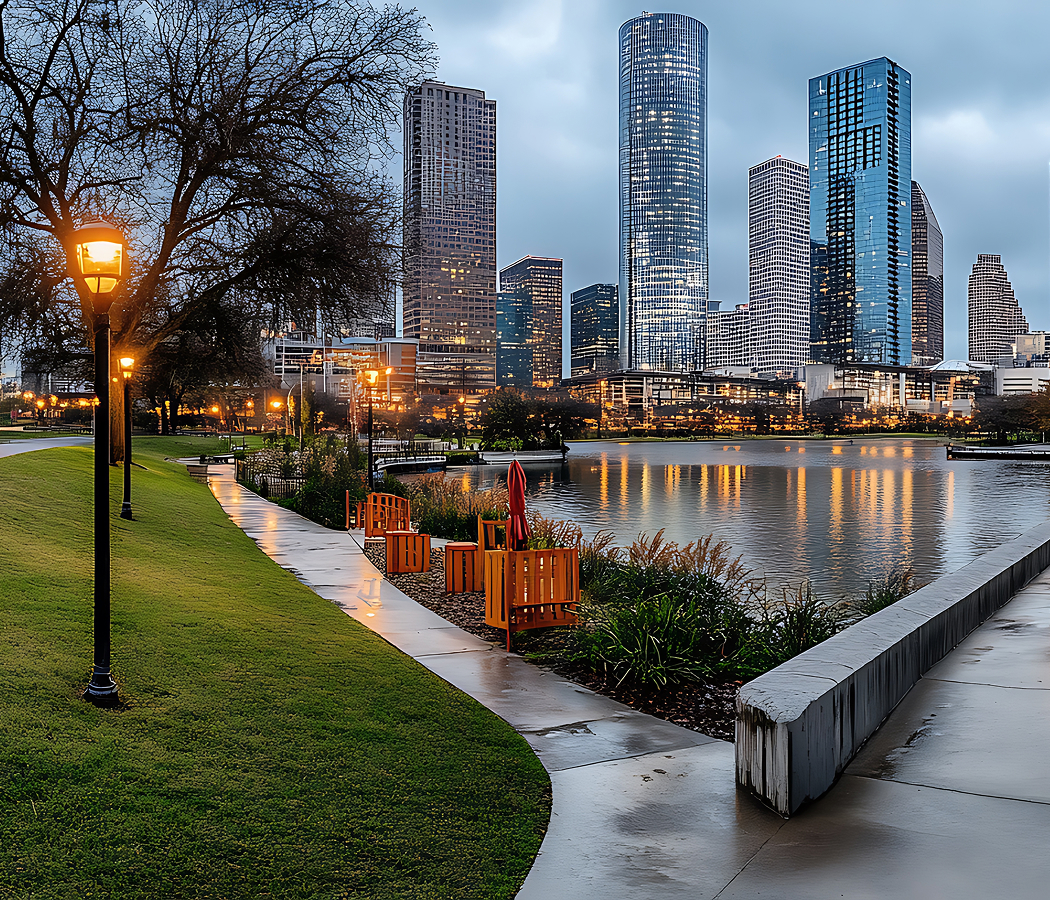
Post Oak Road is best known for traversing Greater Uptown, a district whose modern development accelerated during the 1960s as the Gerald D. Hines Interests organization and other developers introduced high-rise office towers, luxury hotels, and mixed commercial districts that reshaped western Houston into an internationally recognized business center. The corridor evolved alongside the Uptown Houston District, formerly the Uptown Association, whose coordinated planning established landscaped boulevards, signature public art, extensive pedestrian improvements, and one of the nation's largest concentrations of Class A office space outside a traditional central business district. Landmark buildings designed by internationally prominent architects, including Philip Johnson, John Burgee, César Pelli, and Skidmore, Owings & Merrill, contributed Postmodern, Modernist, and contemporary skyscrapers that transformed Houston's skyline while reinforcing the corridor's architectural identity. The nearby Williams Tower, completed in 1983 at 901 feet, remained the tallest building in the world outside a central business district upon its completion, symbolizing Greater Uptown's global commercial stature. Collectively, the corridor's planned expansion, internationally significant architecture, institutional leadership, commercial concentration, and skyline-defining structures establish Post Oak Road as one of Houston's defining historic corridors.
Adjacent to the corridor, Saint Martin's Episcopal Church, established in 1952, occupies an expansive Gothic-inspired campus whose limestone architecture and longstanding civic engagement demonstrate the institutional development accompanying Greater Uptown's commercial growth. That tradition of cultural investment continues through The Waterwall Park, completed in 1985, where the 64-foot semicircular fountain designed by Philip Johnson has become one of Houston's most recognizable civic landscapes through its engineering, scale, and carefully framed live oak grove. Nearby Houston Arboretum & Nature Center, founded in 1967, preserves 155 acres of native forest, prairie, wetland, and savanna ecosystems, demonstrating that significant ecological resources continue surrounding Post Oak Road despite the district's internationally recognized skyline. Together, these enduring institutions, celebrated public landscapes, and preserved natural environments demonstrate how Post Oak Road developed within a corridor where architectural ambition, civic stewardship, and environmental continuity remain closely connected.
How to fold Post Oak Road into your trip.
Post Oak Road works as an exploration of Houston's architectural ambition, cultural sophistication, and artistic heritage.
Begin at The Galleria, where celebrated architecture, luxury retail, and one of America's largest shopping destinations introduce the commercial vision that transformed Greater Uptown into an international destination. Continue to Gerald D. Hines Waterwall Park, where grand design and cascading water create one of Houston's defining public spaces while expanding the corridor's architectural story. Conclude at Museum of Fine Arts, Houston, where encyclopedic collections spanning thousands of years provide the historical payoff by illustrating the artistic traditions that complement Houston's architectural and cultural evolution. The progression moves naturally from commercial innovation through celebrated public design before culminating in one of the nation's premier art museums.
Where your story begins.
Foresyte Travel reveals places that feel extraordinary long before you arrive.
Experience premium editorial crafted for luxury travelers.