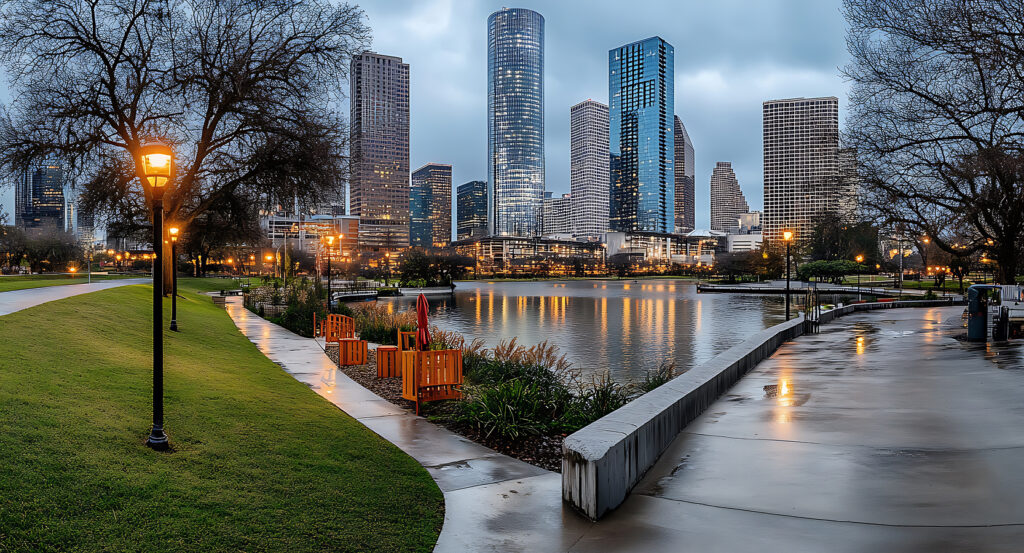
Why you should experience Spring Cypress Road in Houston, Texas.
Spring Cypress Road is a distinctive corridor where Spring's pioneering heritage, wooded landscapes, suburban evolution, and enduring community character converge across one of Northwest Harris County's defining east-west thoroughfares.
Running through Spring between Cypress and Klein, the corridor links historic settlements, established residential communities, preserved green spaces, and commercial centers that collectively reflect the transformation of Northwest Harris County from timberland and agricultural countryside into one of Greater Houston's fastest-growing regions. Mature pine forests, expansive parkland, longstanding community institutions, and thoughtfully integrated development create a streetscape where the area's natural and historical foundations remain readily apparent. Continued growth has expanded the corridor while preserving the wooded setting that has long distinguished Spring from surrounding communities. The result is an experience defined by environmental richness, historical continuity, and one of Spring's most recognizable corridors.
What you should know about Spring Cypress Road.
Spring Cypress Road is best known for connecting communities whose origins trace to the arrival of the International-Great Northern Railroad during the late nineteenth century, when Spring emerged as an important agricultural and shipping center serving timber, cotton, and regional commerce across Northwest Harris County. Development surrounding the corridor accelerated throughout the second half of the twentieth century as former ranches, farms, and pine forests gradually evolved into master-planned residential communities while preserving substantial tracts of native woodland. The surrounding landscape remains closely associated with the West Gulf Coastal Plain, where loblolly pine, post oak, water oak, sweetgum, and eastern red cedar continue reflecting the ecological character that shaped early settlement patterns across the region. Together, the corridor's railroad heritage, agricultural origins, ecological diversity, and carefully managed suburban expansion establish Spring Cypress Road as one of Northwest Harris County's defining historic corridors.
Along the corridor, Kleb Woods Nature Preserve, established around the nineteenth-century Kleb homestead, preserves native prairie, forest, and wetland habitats while interpreting the farming traditions that shaped the surrounding landscape for generations. That relationship between natural resources and settlement continues through the nearby Mercer Botanic Gardens, where living collections of Gulf Coast native plants, rare trees, and internationally significant horticultural specimens demonstrate the botanical diversity that has long distinguished this part of Harris County. Seasonal migrations documented by the Houston Audubon Society regularly bring painted buntings, Mississippi kites, barred owls, and dozens of other bird species through the wooded corridor, reinforcing the ecological continuity that remains evident despite decades of regional growth. Together, these preserved landscapes, historic homesteads, botanical collections, and native ecosystems demonstrate how Spring Cypress Road developed within a corridor whose modern character continues to be shaped by the natural environment that first attracted settlement.
How to fold Spring Cypress Road into your trip.
Spring Cypress Road works as an exploration of Northwest Harris County's natural heritage, local history, and regional culture.
Begin at Kickerillo-Mischer Preserve, where forested trails, Cypress Creek wetlands, and quiet lakes introduce the ecological landscape that continues defining this part of Greater Houston. Continue to Tomball Museum Center, where restored nineteenth-century buildings and interpretive exhibits expand the experience through the agricultural and railroad history that shaped nearby communities. Conclude at Old Town Spring, where preserved historic storefronts, locally owned shops, and nineteenth-century commercial architecture provide the historical payoff by illustrating the community whose growth helped define the wider corridor. The progression moves naturally from preserved natural landscapes through regional history before culminating in the historic commercial center that anchors Spring's enduring identity.
Where your story begins.
Foresyte Travel reveals places that feel extraordinary long before you arrive.
Experience premium editorial crafted for luxury travelers.