Why you should experience Aberdeen Street in Chicago, Illinois.
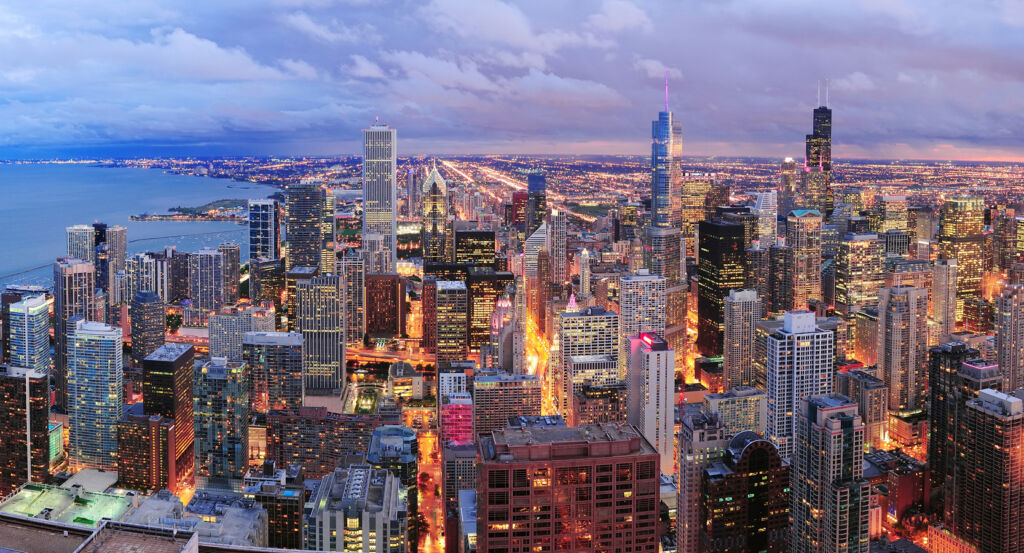
Aberdeen Street is a historic urban corridor where industrial heritage, architectural reinvention, and neighborhood transformation converge along one of Chicago's most distinctive streets.
Running through West Loop between Fulton Market and Greektown, this historic corridor connects former industrial districts, celebrated dining destinations, residential communities, cultural institutions, public gathering spaces, and civic landmarks that have shaped city life for generations. Converted warehouses, historic loft buildings, community gathering places, innovative businesses, architectural landmarks, and dynamic streetscapes create an environment defined by reinvention and creativity. The corridor evolved alongside Chicago's rise as a manufacturing and distribution powerhouse before becoming a focal point of one of the most dramatic urban revitalizations in the United States. Industrialists, entrepreneurs, restaurateurs, artists, civic leaders, and residents helped establish a legacy rooted in innovation, resilience, and economic growth. The result is a street defined by historical significance, cultural vitality, and contemporary urban energy.
What you should know about Aberdeen Street.
Aberdeen Street is best known for running through the heart of Fulton Market, the former meatpacking and food distribution district that evolved into one of the fastest-growing urban redevelopment zones in America while preserving its historic industrial character.
For much of the twentieth century, the surrounding district served as a critical component of Chicago's food supply chain, housing warehouses, cold-storage facilities, wholesalers, and food processors that supported businesses throughout the Midwest. As industrial activity declined, developers and entrepreneurs transformed the area into a nationally recognized destination for technology companies, acclaimed restaurants, creative firms, and residential development. The neighborhood's ability to retain its industrial architecture while adapting to new economic realities has become a model studied by planners and urban development experts. Few city streets are associated with a redevelopment story that so successfully balanced preservation and economic transformation.
How to fold Aberdeen Street into your trip.
Aberdeen Street works as an exploration of Chicago's industrial legacy, culinary culture, and architectural reinvention.
Begin at Fulton Market District, where the corridor's defining relationship with commerce, innovation, and city life immediately comes into focus. Continue toward The Fulton-Randolph Market Historic District, whose preserved industrial landscape reveals the economic and architectural forces that helped shape the area across generations. From there, make your way to Union Park, where one of the West Side's most beloved public spaces provides a broader perspective on the community life, civic investment, and neighborhood vitality that continue to define the district today. Along the route, you'll encounter historic warehouses, public gathering places, cultural destinations, neighborhood businesses, architectural landmarks, community institutions, and celebrated streetscapes that showcase the corridor's remarkable depth. The progression moves naturally from industrial marketplace to historic district to civic green space, revealing the forces that transformed Aberdeen Street into one of the city's most consequential urban corridors. Aberdeen Street remains one of Chicago's most rewarding streets, preserving a distinctive balance between historical significance, architectural authenticity, and contemporary city life within the West Loop.
Where your story begins.
Foresyte Travel reveals places that feel extraordinary long before you arrive.
Experience premium editorial crafted for luxury travelers.