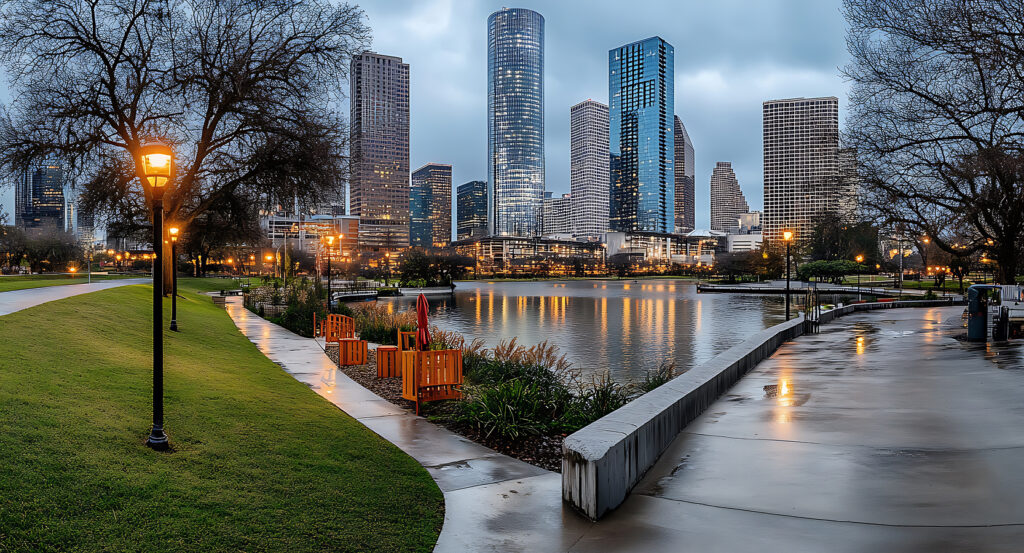
Why Alabama Street matters.
Alabama Street is a dynamic Central Houston corridor where artistic expression, educational excellence, and neighborhood vitality converge along one of the city's most influential east-west thoroughfares.
Running through Midtown between Montrose and the Museum District, this prominent corridor connects world-class museums, universities, neighborhood parks, performance venues, restaurants, and established residential communities that collectively showcase Houston's cultural richness. Tree-lined boulevards, historic neighborhoods, contemporary mixed-use developments, public art, and thriving local businesses create a streetscape where creativity and community flourish together. As Central Houston expanded throughout the twentieth century, Alabama Street evolved into an essential connector linking many of the city's most celebrated civic and cultural destinations. The result is a corridor defined by culture, accessibility, and enduring urban character.
What defines Alabama Street.
Alabama Street is best known for passing The Menil Collection, opened in 1987 after philanthropists John and Dominique de Menil donated one of the world's foremost private art collections to the public, creating a museum housing more than 19,000 works spanning 5,000 years of human history with free admission.
The museum opened in 1987, fulfilling the de Menils' vision of making an internationally significant art collection freely accessible within a neighborhood setting. Designed by Renzo Piano, the building introduced an innovative daylight gallery system that became one of the architect's defining early works while providing an exceptional environment for displaying art from ancient civilizations to the modern era. The museum's collection has since grown into one of America's most respected cultural institutions, attracting visitors from around the world while preserving its founders' commitment to free public access. Few Houston corridors are associated with a landmark that has so profoundly shaped the city's international reputation for art and architecture.
How Alabama Street fits.
Alabama Street works as an exploration of Houston's remarkable concentration of art, architecture, and neighborhood culture.
Begin at The Menil Collection, where one of America's finest free art museums immediately establishes the corridor's extraordinary cultural significance. Continue to Rothko Chapel, whose internationally renowned space for contemplation and human rights reveals the artistic vision that defines the surrounding neighborhood. From there, conclude at Levy Park, where beautifully landscaped gardens, public art, and year-round programming provide a memorable finale to an afternoon shaped by creativity, architecture, and community life. Along the route, museums, neighborhood cafés, public art, historic homes, tree-lined streets, restaurants, and cultural institutions demonstrate how Alabama Street continues to connect many of Central Houston's most distinguished destinations. The progression moves naturally from world-class fine art to contemplative architecture before concluding within one of Houston's premier neighborhood parks, revealing why Alabama Street remains one of the city's defining cultural corridors.
Where your story begins.
Foresyte Travel reveals places that feel extraordinary long before you arrive.
Enjoy editorial crafted for luxury travelers.
Foresyte may earn a commission when you book.