Why Aliʻiōlani Hale matters.
Aliʻiōlani Hale in Honolulu stands as one of Hawaii's most distinguished landmarks, a graceful example of monarchy, law, and legacy rising in the heart of Oahu.
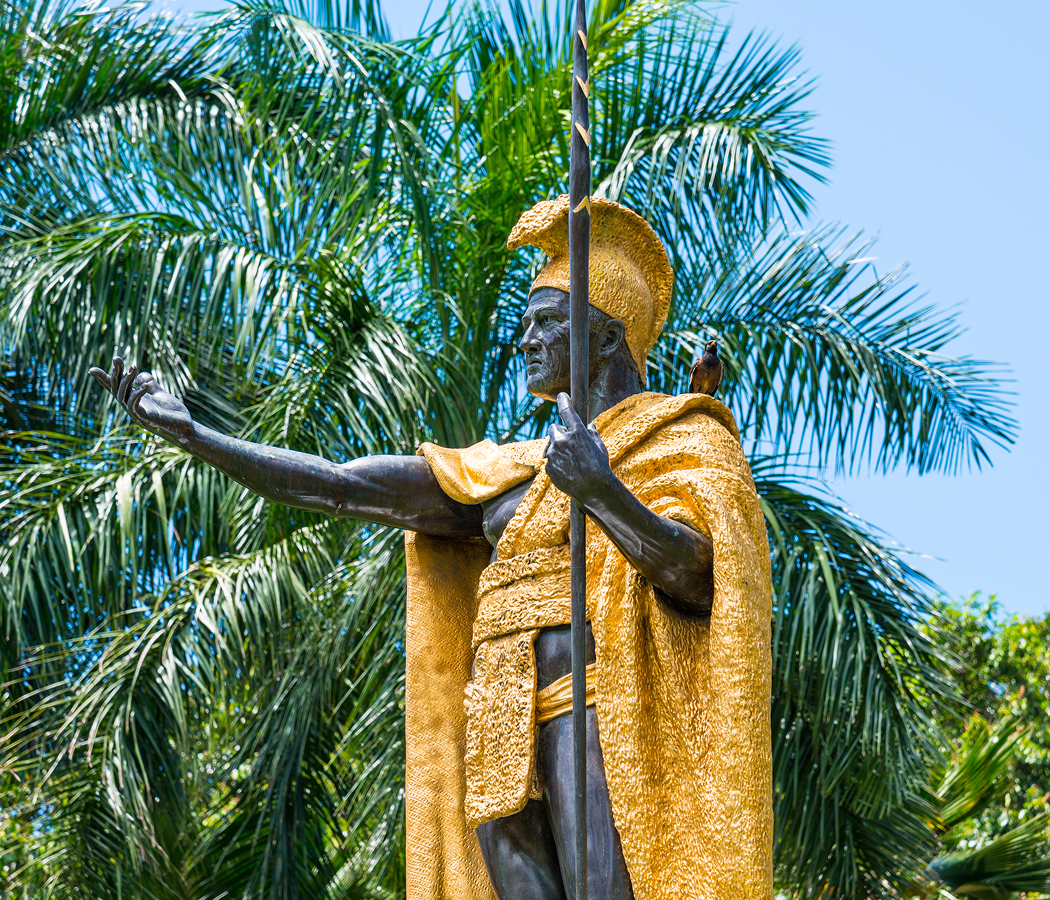
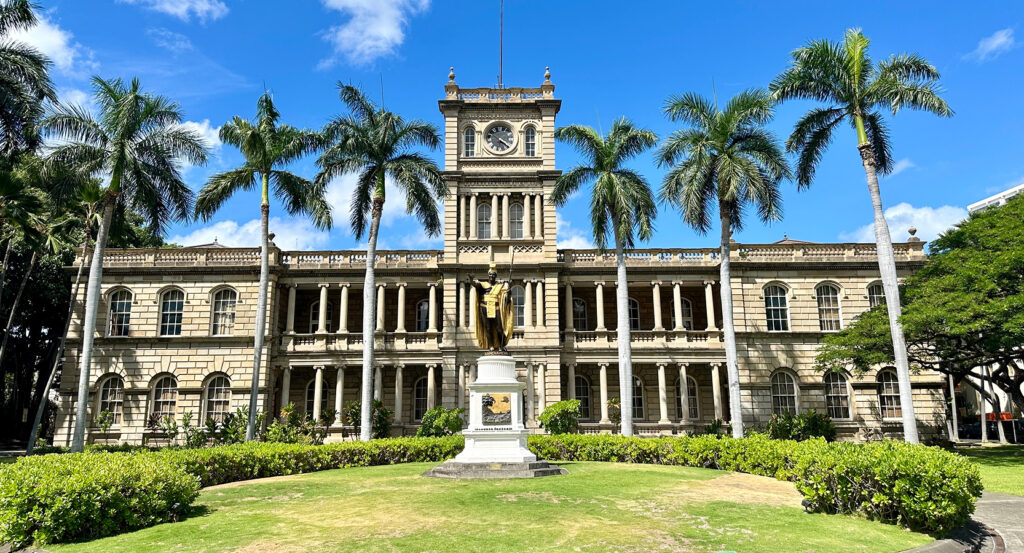
Its name, meaning “House of the Heavenly King,” perfectly captures the building's dual identity: a regal monument to Hawaii's royal past and a cornerstone of its modern statehood. Completed in 1874 under the reign of King Kamehameha V, Aliʻiōlani Hale was originally conceived as a royal palace but was soon repurposed to house the kingdom's government and courts. Its design, a blend of British neoclassical and Polynesian influences, makes it one of the most architecturally striking buildings in the islands. The moment you step onto the grounds, the air shifts: palm trees sway over limestone arcades, and the bronze statue of King Kamehameha I stands sentinel before the building, his outstretched arm forever proclaiming unity and strength. This statue, among Hawaii's most photographed icons, is as much a part of the site's story as the structure itself, a symbol of sovereignty that once crossed oceans before finding its rightful home. Inside, the building remains the seat of Hawaii's Supreme Court and the repository of some of the state's most treasured historical archives. Aliʻiōlani Hale isn't merely a civic institution, it's the living intersection of past and present, where the vision of a kingdom still echoes through the corridors of democracy.
What defines Aliʻiōlani Hale.
The story of Aliʻiōlani Hale mirrors Hawaii's evolution, from royal dynasty to modern statehood, and its walls have borne witness to both triumph and turmoil.
When King Kamehameha V commissioned the building in the 1870s, he sought to create a permanent symbol of Hawaiian advancement and dignity, one that could stand proudly among the world's great capitals. British architect Thomas Rowe designed it in a Renaissance Revival style, using local materials like coral limestone quarried from Oahu's coast. Its original purpose was to serve as a palace, but the monarchy's growing administrative needs transformed it into the government's central hub. In 1893, following the controversial overthrow of Queen Liliʻuokalani, Aliʻiōlani Hale became the headquarters of the Provisional Government, a stark shift from royal residence to site of political upheaval. The building later hosted the trial of Queen Liliʻuokalani herself, accused of treason after an unsuccessful counter-revolution attempt. Despite these painful chapters, Aliʻiōlani Hale endured as a seat of justice, eventually housing Hawaii's Supreme Court after the islands became a U.S. territory and later the 50th state. The Kamehameha statue that graces its front lawn has its own extraordinary story: the original statue, commissioned in 1878, was lost at sea near the Falkland Islands, only for a replica to be cast and installed in time for King Kamehameha Day in 1883. The original was later recovered and now stands in Kapaʻau on the Big Island. Inside the building, the Judiciary History Center preserves this complex legacy, with exhibits that chronicle Hawaii's legal and cultural transformation through documents, photographs, and restored courtrooms. The building's name, “Aliʻiōlani,” a title once used for Kamehameha V himself, stands as a poetic tribute to a monarch who believed in both progress and preservation.
How Aliʻiōlani Hale fits.
Aliʻiōlani Hale works as part of a deeper exploration of Honolulu's historic core, a compact district where centuries of Hawaiia character converge.
Start the visit at the front lawn, where the golden figure of King Kamehameha I commands the space with regal stillness. Arrive early in the morning for the best light; the statue's gilded cloak gleams against the gray stone façade of Aliʻiōlani Hale, while the neighboring Iolani Palace glows softly in the rising sun. Step inside the Judiciary History Center, admission is free, and allow time to explore its interactive exhibits on the Hawaiian monarchy, constitutional evolution, and landmark cases that shaped island law. You'll walk through restored courtrooms and see rare photographs and artifacts that bring the 19th-century justice system to life. Afterward, stroll through the surrounding Capitol District: directly across the street lies Iolani Palace, the only royal residence on U.S. soil; nearby, Kawaiahaʻo Church, often called the Westminster Abbey of Hawaii, and the Mission Houses Museum complete a powerful trio of historic sites. If you visit around June 11th, you'll witness the grand floral ceremonies of King Kamehameha Day, when the statue is draped in fragrant lei that cascade down to the ground in a performance of reverence and color. Take time to sit beneath the banyan trees that frame the courtyard, where the contrast of modern skyscrapers and 19th-century stonework captures the essence of Honolulu itself, tradition meeting transformation. Whether you linger for a few minutes or an entire morning, Aliʻiōlani Hale invites quiet reflection on Hawaii's enduring journey from kingdom to democracy, from isolation to identity. It stands as both monument and mirror, a reminder that justice, like heritage, is built stone by stone, and must be tended with reverence to endure.
Where your story begins.
Foresyte Travel reveals places that feel extraordinary long before you arrive.
Enjoy editorial crafted for luxury travelers.
Foresyte may earn a commission when you book.