
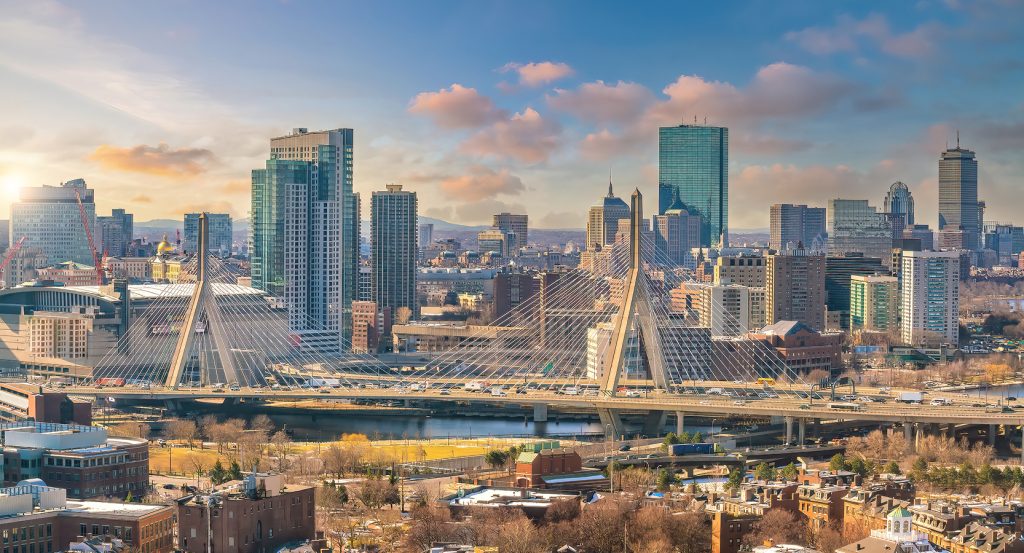
Why you should experience Arch Street in Boston, Massachusetts.
Arch Street is a historic Downtown Crossing corridor where commercial innovation, religious heritage, and urban transformation converge along one of Boston's oldest downtown streets.
Running through Downtown Crossing between Summer Street, Franklin Street, Washington Street, and Federal Street, this distinguished corridor connects landmark office buildings, historic commercial blocks, architecturally significant churches, thriving retail destinations, welcoming pedestrian spaces, and enduring civic institutions that collectively showcase Boston's extraordinary evolution from colonial marketplace to modern business district. Historic masonry architecture, thoughtfully preserved commercial buildings, energetic street life, celebrated cultural landmarks, thriving neighborhood businesses, and enduring civic traditions create an urban landscape where generations of merchants, publishers, financiers, entrepreneurs, residents, and visitors have shaped one of New England's defining downtown corridors. Arch Street has continually adapted to changing commercial and cultural needs while preserving its remarkable place within Boston's historic core. The result is a corridor defined by historical significance, commercial vitality, and lasting metropolitan importance.
What you should know about Arch Street.
Arch Street is best known for housing the Old South Meeting House, where more than 5,000 colonists gathered on December 16, 1773 before marching to Griffin's Wharf to carry out the Boston Tea Party, among the defining acts leading to the American Revolution.
The meeting represented the culmination of weeks of resistance to the Tea Act, with thousands assembling inside and around the church to debate Britain's taxation policies before receiving word that the tea ships would not be allowed to depart. The decision reached that evening directly preceded the march to Boston Harbor, forever linking the meeting house with one of the most consequential moments in American history. Today, the landmark preserves that extraordinary legacy while serving as one of Boston's most important Revolutionary-era historic sites. That pivotal role in the events preceding the Boston Tea Party has established Arch Street as one of America's most historically significant civic corridors.
How to fold Arch Street into your trip.
Arch Street works as an exploration of Boston's Revolutionary history, historic downtown, and architectural heritage.
Begin along Arch Street, where the thriving downtown streetscape immediately establishes the corridor's defining identity. Continue toward the Old South Meeting House, where one of America's most influential Revolutionary landmarks provides broader perspective on the street's extraordinary historical legacy. From there, make your way to the Old State House, where the seat of colonial government provides a memorable conclusion while celebrating Boston's enduring contribution to the founding of the United States. Along the way, you'll encounter architecturally significant commercial buildings, welcoming pedestrian streets, thriving local businesses, beautifully preserved historic landmarks, celebrated Freedom Trail sites, and energetic gathering places that reveal Downtown Crossing's exceptional depth. The progression moves naturally from a historic commercial corridor to the meeting place that preceded the Boston Tea Party to the center of colonial government, demonstrating how Arch Street connects revolutionary ideals, community life, and historical discovery.
Where your story begins.
Foresyte Travel reveals places that feel extraordinary long before you arrive.
Experience premium editorial crafted for luxury travelers.







































































































