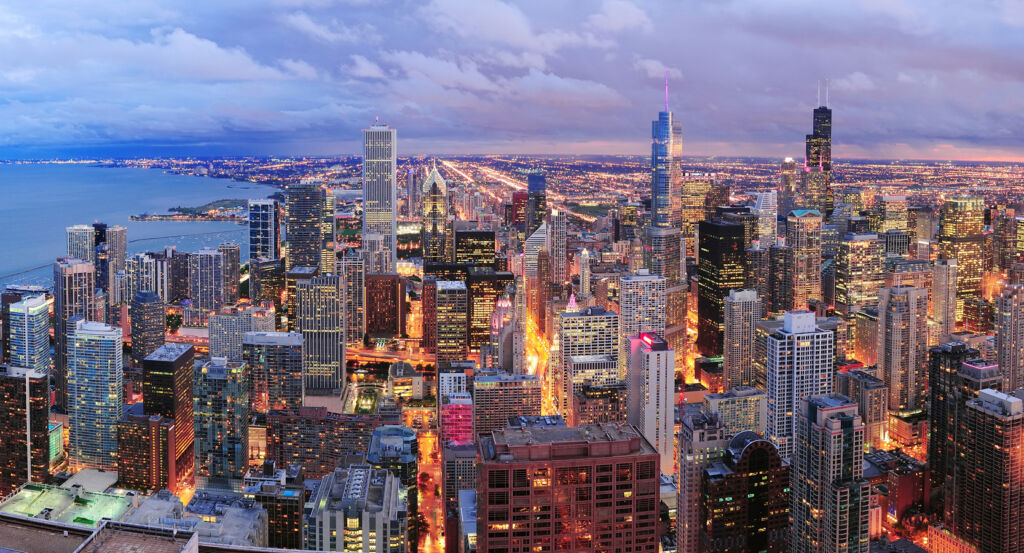
Why you should experience Archer Avenue in Chicago, Illinois.
Archer Avenue is a renowned transportation corridor where frontier history, industrial growth, and immigrant ambition converge along one of the oldest roads in the Chicago region.
Running through Bridgeport between Chinatown and McKinley Park, this historic avenue connects neighborhood business districts, industrial landmarks, residential communities, transportation hubs, cultural institutions, and civic destinations that have shaped city life for generations. Historic commercial strips, industrial corridors, community gathering places, architectural landmarks, local businesses, and dynamic streetscapes create an environment defined by continuity and resilience. The route evolved from an early overland trail into one of Chicago's most important commercial and transportation arteries, helping guide the city's expansion beyond its original settlement. Traders, immigrants, laborers, entrepreneurs, civic leaders, and residents helped establish a legacy rooted in mobility, opportunity, and economic growth. The result is a street defined by historical significance, cultural richness, and enduring urban influence.
What you should know about Archer Avenue.
Archer Avenue is best known for following the route of the historic Archer Road, which itself traced portions of the ancient Chicago Portage, among the most strategically important transportation links in North America connecting the Great Lakes watershed to the Mississippi River system.
Long before Chicago emerged as a city, Indigenous peoples, explorers, traders, and settlers used the Chicago Portage to move between two vast continental water networks. The route became a critical geographic advantage that helped establish Chicago as a transportation and commercial powerhouse. Archer Avenue preserved part of this historic pathway as the city expanded, creating a direct connection between modern urban development and one of the most consequential transportation corridors in North American history. Historians frequently regard the Chicago Portage as a foundational reason for Chicago's rise to national prominence. Few city streets can trace their origins to a route of such continental significance.
How to fold Archer Avenue into your trip.
Archer Avenue works as an exploration of Chicago's transportation heritage, immigrant traditions, and industrial legacy.
Begin at Chinatown Gate, where the avenue's defining relationship with immigration, commerce, and community life immediately comes into focus. Continue toward Bridgeport Art Center, whose historic industrial setting reveals the economic and cultural forces that helped shape the corridor across generations. From there, make your way to McKinley Park, where one of the Southwest Side's most beloved public spaces provides a broader perspective on the recreational traditions, neighborhood identity, and civic investment that continue to define the area today. Along the route, you'll encounter historic architecture, public gathering places, cultural institutions, industrial landmarks, neighborhood businesses, community destinations, and celebrated streetscapes that showcase the corridor's remarkable depth. The progression moves naturally from cultural gateway to industrial landmark to civic parkland, revealing the forces that transformed Archer Avenue into one of the city's most consequential urban corridors. Archer Avenue remains one of Chicago's most rewarding streets, preserving a distinctive balance between historical significance, transportation heritage, and contemporary community life within Bridgeport.
Where your story begins.
Foresyte Travel reveals places that feel extraordinary long before you arrive.
Experience premium editorial crafted for luxury travelers.