Why Bad Habits Lounge & Tacos matters.
Bad Habits Lounge & Tacos is a nocturnal taco lounge where North Oak Cliff's independent nightlife meets live Latin music, dancing and a patio-centered social scene.
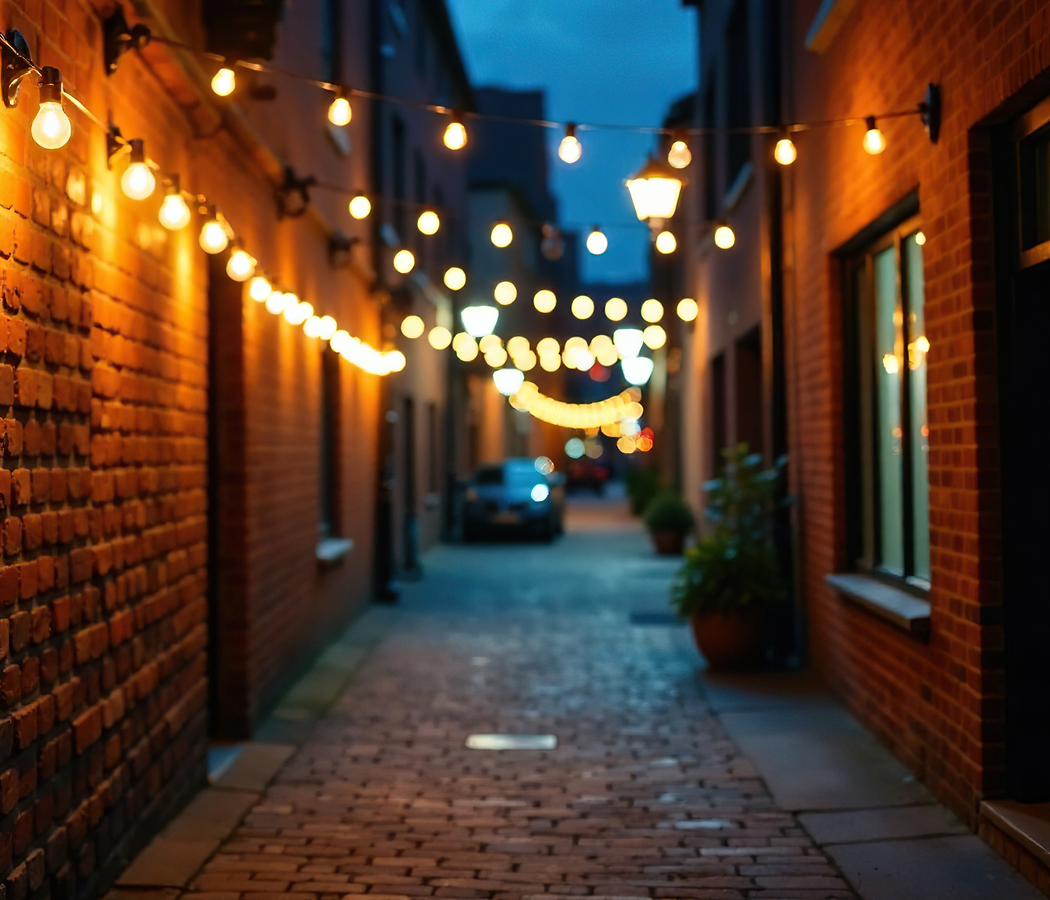
Set along Centre Street near West Jefferson Boulevard and just steps from the commercial blocks extending toward Bishop Avenue, the lounge occupies a compact pocket of North Oak Cliff between the Jefferson Boulevard corridor, the Bishop Arts District and the residential streets spreading west toward Winnetka Heights, with the Trinity River and Downtown lying beyond the neighborhood to the northeast. A small interior opens onto a substantially larger patio, shifting much of the room's activity outdoors once performances and evening service gather momentum. Live Spanish-language bands bring guitars, drums and amplified vocals into close range of the tables, placing musicians directly inside the night rather than isolating them behind a large concert-room footprint. DJ sets extend the musical program between performances as dancing, cocktails and tacos circulate through the same indoor-outdoor layout. The result is a compact Oak Cliff lounge whose patio, Latin performances, DJ nights and street-food format concentrate several strands of neighborhood nightlife within a single Centre Street address.
What defines Bad Habits Lounge & Tacos.
Bad Habits Lounge & Tacos is best known for developing its Centre Street room into a recurring stage for Latin bands, DJs and independently produced nightlife events. The property already carried a nightclub history before the current concept, operating as Last Call Lounge in 2017 and LC Lounge by 2020, when the building's official occupant load stood at 68. Bad Habits subsequently inherited a site with an established relationship to late-night entertainment and recast it around tacos, cocktails, hookah and dancing. Concert programming has brought Mexican rock into the room, including a May 2025 appearance by Foco de Atelier during the band's United States touring schedule. The 2026 calendar broadened that performance role through Baddie's Drag Brunch, an Adecia Lush production staged as a two-hour Sunday show with a rotating series of dates through the year. Alternative nightlife producer House Allen also selected the lounge for Alt Elite Saturdays, a monthly program built around changing themes and dance-centered gatherings. Latin rock returns to the stage on October 16, 2026 with Los Pink Cheese Green Goes, placing the Dallas stop of the group's touring schedule inside the Centre Street room. The succession of bands, DJs, drag performers and independent promoters has turned a small Oak Cliff lounge into a flexible neighborhood performance room whose calendar reaches beyond its taco-and-cocktail billing.
How Bad Habits Lounge & Tacos fits.
Bad Habits Lounge & Tacos works as the late-night anchor for an Oak Cliff outing connecting a pioneering neighborhood movie palace, a civic arts institution descended from a Latino cultural center and a postwar cinema rescued after decades of physical upheaval.
Begin at Texas Theatre, opened on April 21, 1931 after Oak Cliff entrepreneur C. R. McHenry joined Harold B. Robb, E. H. Rowley, W. G. Underwood and David Bernbaum to develop what became the largest suburban movie house in Dallas. Architect W. Scott Dunne conceived the auditorium in a Venetian mode with opera boxes, fountains, projected clouds, a giant chandelier and a night-sky ceiling, and a 4,000-gallon water-cooled system moved 200,000 cubic feet of air per minute to make the building Dallas' first air-conditioned theater. Howard Hughes and Harold B. Franklin briefly controlled the Robb & Rowley chain around its opening, but the building's place in American history changed permanently on November 22, 1963, when Dallas police arrested Lee Harvey Oswald inside the auditorium. Continue to Oak Cliff Cultural Center, whose institutional ancestry reaches to the Ice House Cultural Center, established in 1997 inside a 1908 building on West Page Street with a program centered on Latino arts and the cultural life of surrounding neighborhoods. The Ice House closed in 2009, and its mission transferred the following August into the newly inaugurated Oak Cliff Cultural Center, a 5,000-square-foot facility combining a gallery with a multipurpose studio. Early exhibitions included La Genta de la Revolución, built around historical photography of the Mexican Revolution, and Oak Cliff in Transit, which brought Mathew Barnes, Rosie Lee and Orlando Sanchez into a visual examination of the neighborhood. Conclude at The Kessler, constructed in 1941 as a neighborhood movie theater before Gene Autry purchased it in 1945 during Oak Cliff's postwar cinema boom. A direct tornado strike in 1957 severely damaged the building, and a 1962 fire ended its regular theatrical life for decades apart from intermittent church use. Preservationist Edwin Cabaniss and musician Jeff Liles led its return in 2010 as a 500-capacity live-music room, even reinstalling original theater seats recovered during the rehabilitation. Americana, blues and rock subsequently returned sustained performance to a building that had survived two major disasters and nearly half a century outside its original purpose. The progression moves from a technologically ambitious 1931 movie palace through Oak Cliff's Latino arts institution and culminates inside a tornado-struck postwar cinema reclaimed for live music, carrying the district's performance culture from film and visual art into the concert traditions surrounding Bad Habits.
Where your story begins.
Foresyte Travel reveals places that feel extraordinary long before you arrive.
Enjoy editorial crafted for luxury travelers.