Why you should experience California Avenue in Chicago, Illinois.
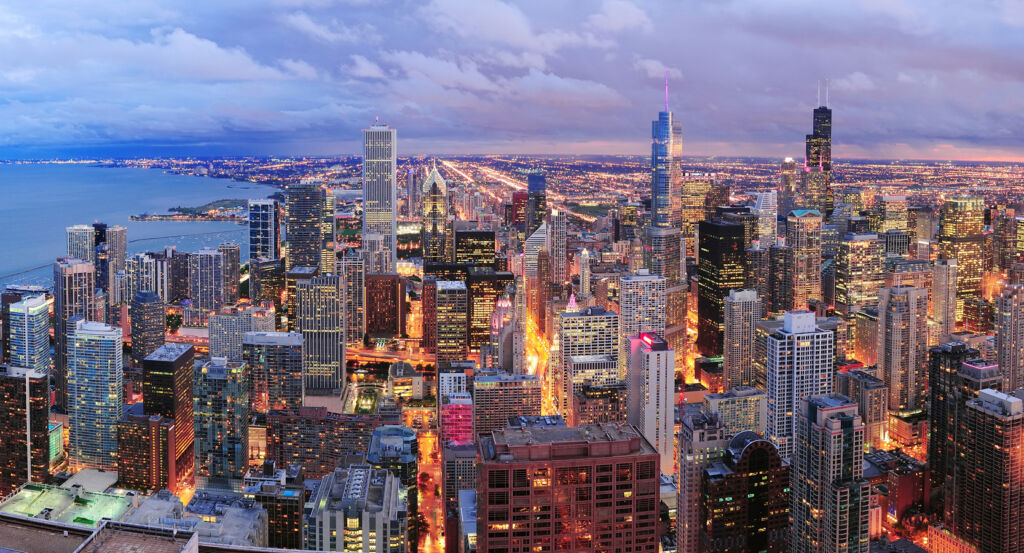
California Avenue is a spirited corridor where Chicago's neighborhood diversity, civic institutions, transportation heritage, and cultural traditions unfold across one of the city's longest north-south streets.
Running from the Far North Side through Logan Square, Humboldt Park, Garfield Park, Little Village, Brighton Park, and the South Side, California Avenue links historic boulevards, residential districts, commercial corridors, public parks, educational institutions, and civic landmarks that collectively reflect more than 170 years of urban growth. The corridor reveals how immigration, landscape planning, public investment, and transportation infrastructure shaped communities representing many of Chicago's defining cultural identities. Historic commercial buildings, park boulevards, neighborhood business districts, schools, and civic architecture continue defining the avenue while reinforcing its enduring role within the city's urban fabric. The result is a corridor distinguished by cultural continuity, architectural variety, and generations of neighborhood evolution.
What you should know about California Avenue.
California Avenue is best known for serving as one of Chicago's principal north-south arterial streets, expanding alongside the city's annexation of western neighborhoods during the late nineteenth century as residential subdivisions, industrial districts, and commercial corridors extended steadily beyond the historic city center. Major improvements under the West Chicago Park Commission integrated long stretches of the avenue into Chicago's celebrated boulevard system, connecting neighborhoods with landscaped parkways while improving circulation between emerging communities. Construction of the California station on the Metra Milwaukee District, multiple CTA Blue Line and CTA Green Line stations, extensive CTA bus service, and successive roadway improvements established the corridor as an important multimodal transportation spine serving neighborhoods across the city. Planning initiatives by the Chicago Department of Transportation, the Chicago Metropolitan Agency for Planning, and the Chicago Transit Authority have continued modernizing intersections, pedestrian infrastructure, bicycle facilities, traffic operations, and public transit access while accommodating long-term population growth. Continued investment in transportation infrastructure, neighborhood business districts, and public streetscape improvements has maintained California Avenue as one of Chicago's most significant urban corridors.
Successive waves of immigration brought Scandinavian, German, Polish, Jewish, Mexican, Puerto Rican, Korean, Middle Eastern, and numerous other communities whose businesses, religious institutions, schools, and cultural organizations established enduring neighborhood identities along the avenue. Public investment through corridor revitalization programs, streetscape enhancements, accessibility improvements, and neighborhood commercial initiatives strengthened local business districts while preserving the avenue's role as a civic gathering place across multiple generations. Coordinated leadership by the Chicago Department of Transportation, the Chicago Transit Authority, the Chicago Metropolitan Agency for Planning, neighborhood development organizations, and local chambers of commerce has balanced transportation modernization with long-term community investment throughout the corridor. Together, the West Chicago Park Commission, regional transit expansion, neighborhood commercial development, immigrant entrepreneurship, coordinated planning, and sustained civic investment demonstrate how California Avenue has continually evolved while remaining one of Chicago's most representative cross-city corridors.
How to fold California Avenue into your trip.
California Avenue works as an exploration of Chicago's cultural diversity, neighborhood history, and public landscapes.
Begin at Humboldt Park, where expansive green spaces and historic landscape design introduce the civic vision that helped shape California Avenue before naturally expanding into the surrounding community. Continue to National Museum of Mexican Art, where acclaimed exhibitions celebrate one of the corridor's defining cultural traditions while deepening appreciation for the neighborhoods connected by the avenue. Conclude at Garfield Park Conservatory, where grand glasshouse architecture and exceptional botanical collections provide the historical and architectural payoff, illustrating how public investment and cultural stewardship continue enriching California Avenue. The progression moves naturally from landscape architecture to cultural heritage before concluding with one of Chicago's most celebrated conservatories.
Where your story begins.
Foresyte Travel reveals places that feel extraordinary long before you arrive.
Experience premium editorial crafted for luxury travelers.