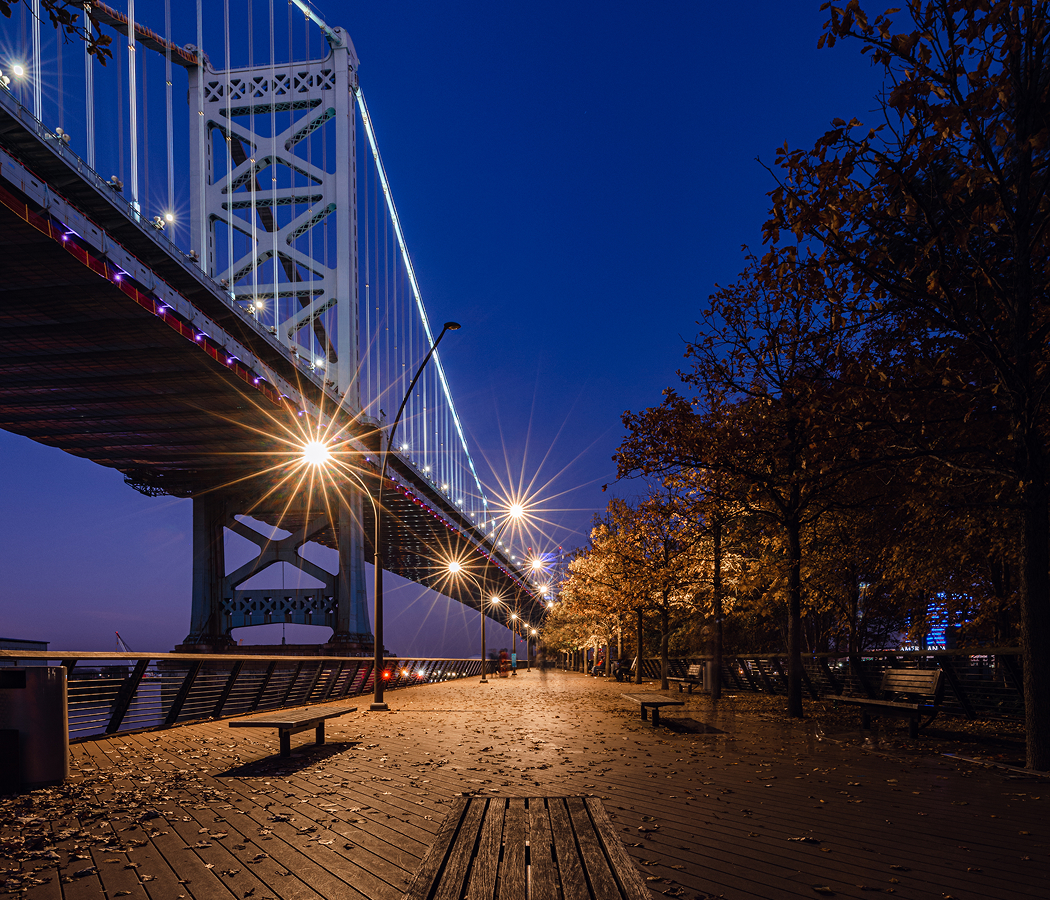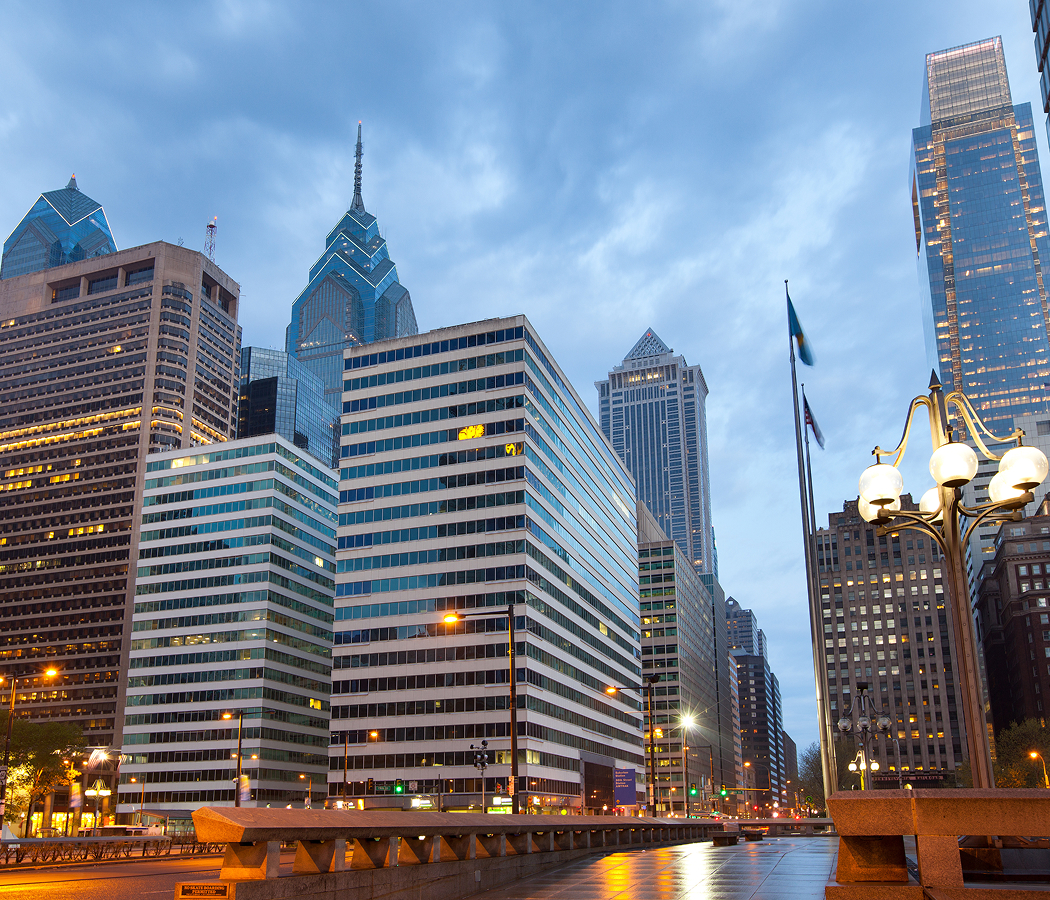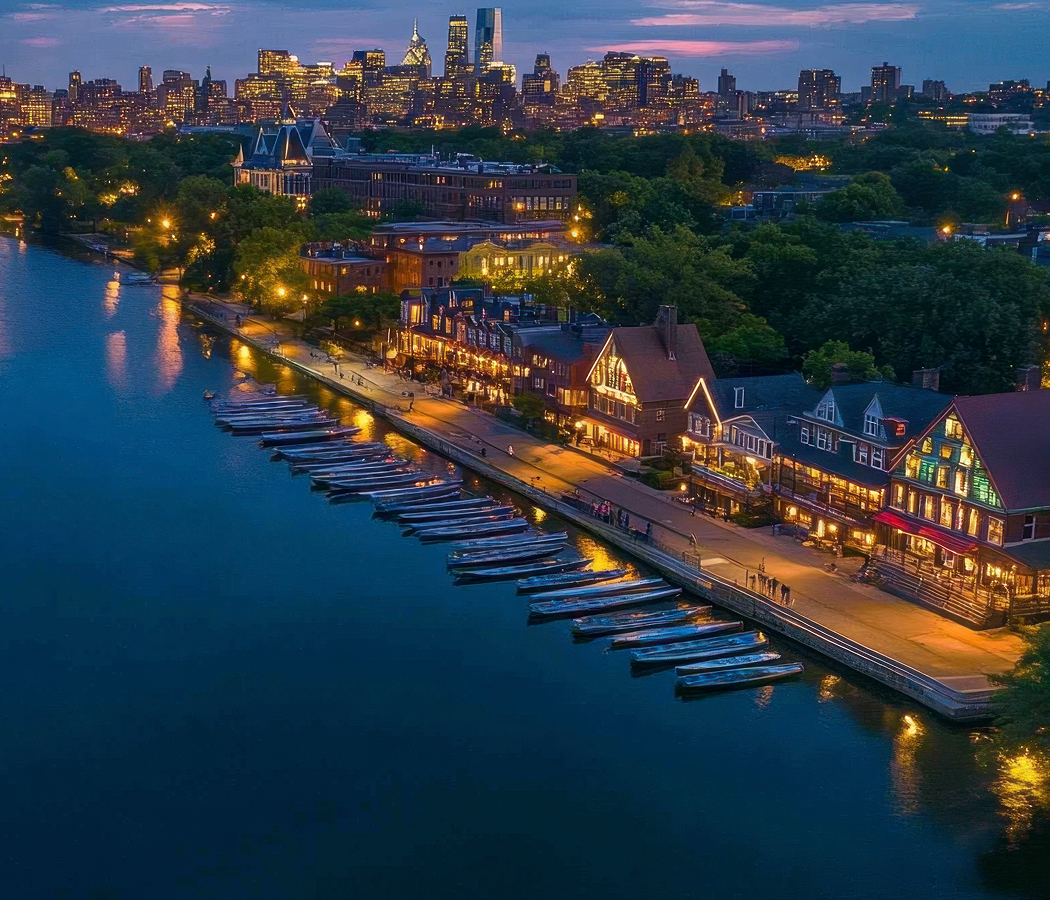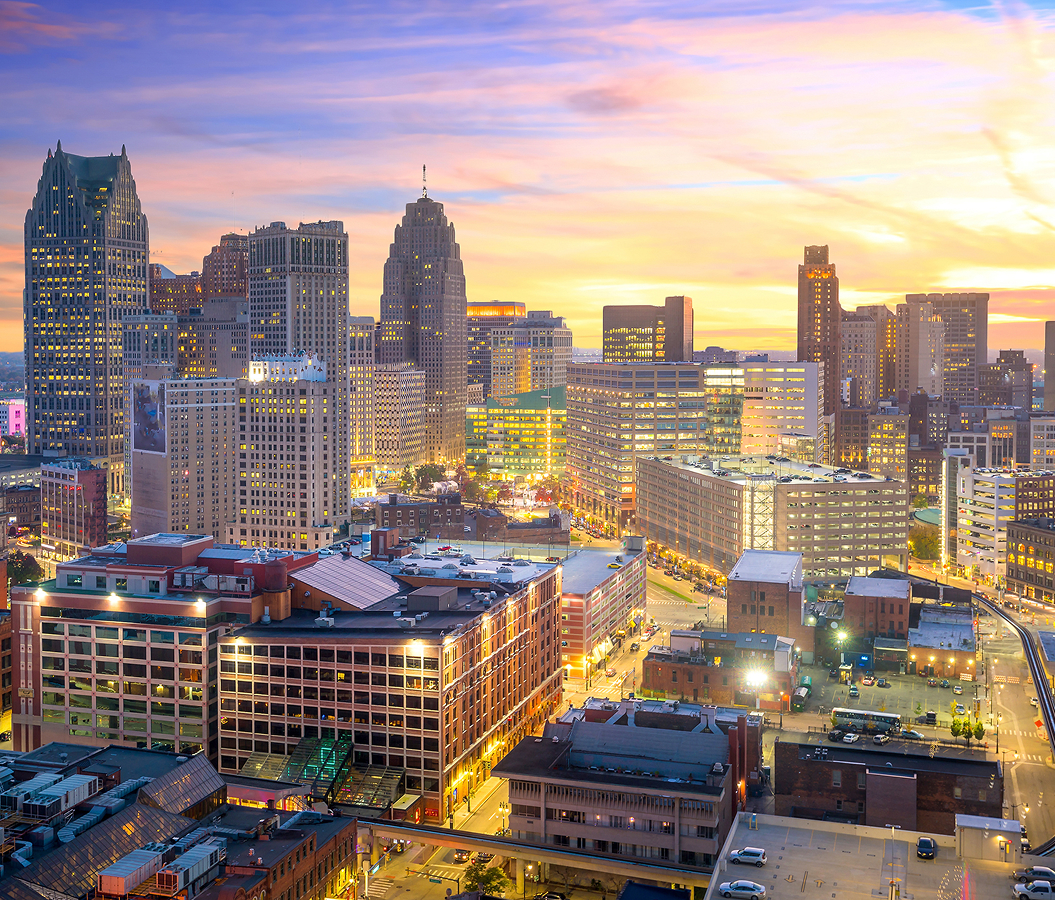
Why you should experience City Avenue in Philadelphia, Pennsylvania.
City Avenue is an enterprising corridor where West Philadelphia's institutional prominence, commercial vitality, architectural diversity, and metropolitan connectivity define one of Philadelphia's most influential urban thoroughfares.
Running through West Philadelphia between Overbrook and Wynnefield Heights, the corridor forms a prominent gateway linking Philadelphia with Lower Merion Township while connecting major universities, corporate campuses, residential districts, and longstanding commercial destinations. Successive segments reveal how transportation investment, institutional expansion, and private development established the avenue as a defining edge between city and suburb. Broad rights-of-way, mid-century office towers, collegiate campuses, landscaped setbacks, and enduring commercial centers collectively express more than a century of metropolitan evolution. The result is an experience defined by ambition, accessibility, and one of Philadelphia's most recognizable regional corridors.
What you should know about City Avenue.
City Avenue is best known for following the historic boundary established between the City of Philadelphia and Lower Merion Township, creating a corridor whose character has long been shaped by its position at the intersection of municipal, commercial, and institutional growth. Completion of the Schuylkill Expressway (Interstate 76), expansion of U.S. Route 1, and improvements to surrounding arterial highways elevated the avenue into one of the region's principal transportation corridors, encouraging sustained corporate investment and regional commerce. Major institutions including Saint Joseph's University, Lankenau Medical Center, and Bala Cynwyd's adjacent business district reinforced the corridor through higher education, healthcare, professional employment, and continuing private investment. Mid-twentieth-century development introduced office towers, hotels, commercial centers, and modern architectural forms constructed with structural steel, reinforced concrete, curtain-wall glazing, limestone, and brick, creating a built environment distinct from Philadelphia's traditional nineteenth-century streetscapes. Together, regional transportation infrastructure, institutional expansion, commercial investment, and modern architecture established City Avenue as one of Greater Philadelphia's defining metropolitan corridors.
Recognition of City Avenue as a regional business destination encouraged coordinated investment through the City Avenue District, whose public-private initiatives have supported streetscape enhancements, landscaped medians, pedestrian improvements, public art installations, and unified corridor branding that strengthen the avenue's physical identity. Continued construction of corporate headquarters, medical offices, hospitality properties, and residential high-rises expanded the corridor's economic influence while reinforcing longstanding relationships among Saint Joseph's University, Lankenau Medical Center, and neighboring employers. Modern engineering projects have introduced upgraded intersections, intelligent traffic management systems, accessible pedestrian crossings, dedicated bicycle facilities, and improved public transit connections that enhance mobility across the city-suburban boundary. Together, these investments in design, infrastructure, institutional partnerships, and economic development demonstrate how City Avenue continues evolving as a regional center whose character remains rooted in connectivity, commerce, and higher education.
How to fold City Avenue into your trip.
City Avenue works as an introduction to West Philadelphia's institutional character, architectural diversity, and regional significance.
Begin at Please Touch Museum, where the restored Memorial Hall introduces Philadelphia's rich architectural heritage while providing context for the cultural landscape surrounding West Fairmount Park. Continue to Fairmount Park, whose expansive landscapes and historic setting broaden appreciation for the city's relationship between recreation, landscape design, and urban development before naturally leading westward. Conclude at The Mann Center for the Performing Arts, where world-class performances within a wooded amphitheater provide the historical and cultural payoff while illustrating the enduring importance of West Philadelphia's cultural institutions. Together, the sequence moves from architectural heritage to landscape design before culminating in one of the city's premier cultural destinations.
Where your story begins.
Foresyte Travel reveals places that feel extraordinary long before you arrive.
Experience premium editorial crafted for luxury travelers.