Why Clay Road matters.
Clay Road is a historic West Houston corridor where pioneer settlement, industrial growth, and neighborhood resilience converge along one of the region's oldest continuously traveled roadways.
Running through Spring Branch between Katy and Memorial, this longstanding corridor connects historic neighborhoods, business districts, community parks, schools, churches, and locally owned businesses that have supported West Houston for generations. Established residential communities, mature tree canopies, commercial centers, and light industrial districts create a streetscape that reflects more than a century of regional development. Originally serving farmers, ranchers, and travelers crossing the prairie west of Houston, Clay Road gradually evolved into an essential artery linking rural settlements with one of America's fastest-growing cities. The result is a corridor defined by history, connectivity, and enduring community character.
What defines Clay Road.
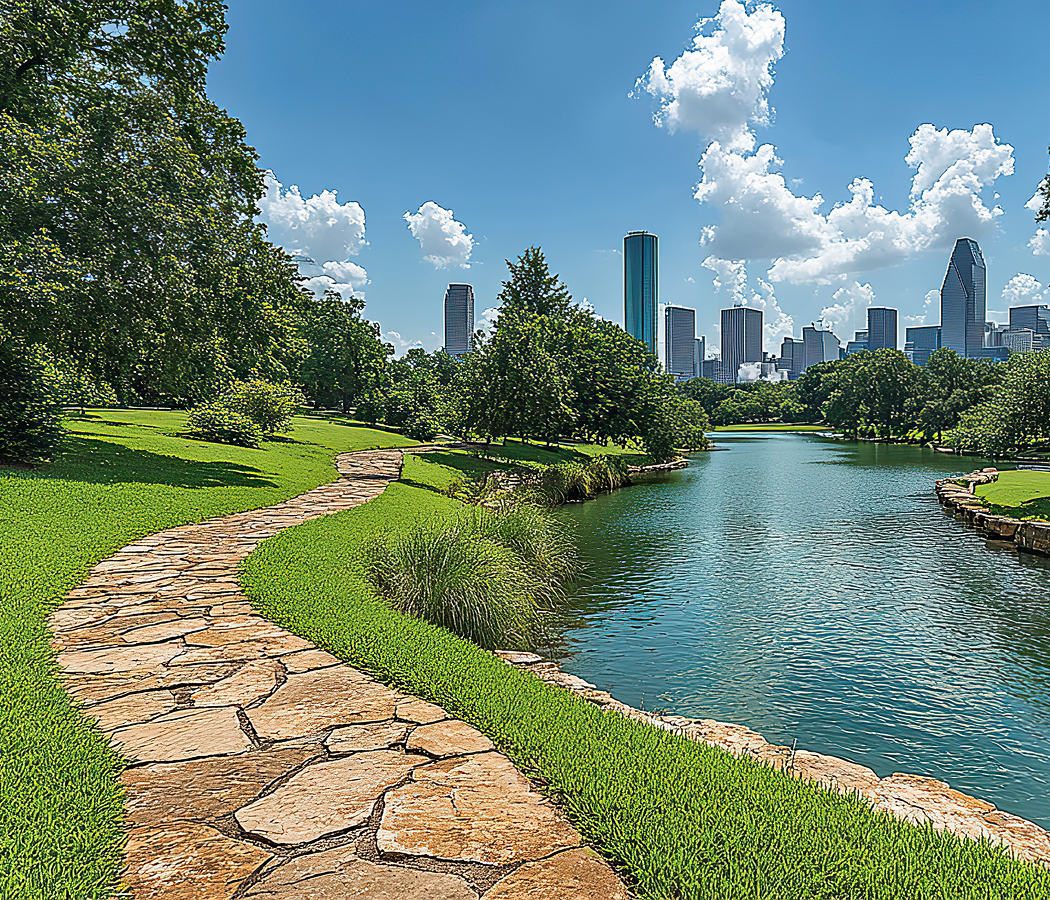
Clay Road is best known for passing Bear Creek Pioneers Park, established in 1947 when Harris County began assembling more than 2,100 acres along Bear Creek to preserve native prairie, woodlands, and floodplain landscapes while creating one of the county's largest regional parks.
The first parkland was acquired in 1947, laying the foundation for a regional destination that expanded over subsequent decades into one of Harris County's most significant recreational assets. The park today encompasses equestrian trails, sports fields, wildlife habitats, picnic areas, archery facilities, and the renowned Harris County Deputy Darren Goforth Park on the property, while continuing to protect an extensive portion of the Bear Creek watershed. Its remarkable scale allows visitors to experience native Gulf Coast ecosystems that once characterized much of West Houston before urban expansion transformed the surrounding landscape. Few Houston corridors are associated with a landmark that so successfully combines environmental conservation, regional recreation, and the preservation of the area's natural heritage.
How Clay Road fits.
Clay Road works as an exploration of West Houston's natural landscapes and longstanding community destinations.
Begin at Bear Creek Pioneers Park, where expansive woodlands, prairie landscapes, and recreational amenities immediately establish the corridor's defining relationship with the outdoors. Continue to Katy Heritage Park, whose preserved historic buildings reveal the pioneering communities that once depended upon routes like Clay Road for commerce and travel. From there, conclude at George Bush Park, where one of the region's largest urban parks provides a memorable finale to an afternoon shaped by history, conservation, and recreation. Along the route, neighborhood parks, equestrian trails, historic communities, locally owned businesses, wooded landscapes, and scenic roadways demonstrate how Clay Road continues to connect West Houston's past with its thriving present. The progression moves naturally from protected prairie to historic settlement before concluding within one of Houston's great regional parks, revealing why Clay Road remains one of West Houston's most enduring corridors.
Where your story begins.
Foresyte Travel reveals places that feel extraordinary long before you arrive.
Enjoy editorial crafted for luxury travelers.
Foresyte may earn a commission when you book.