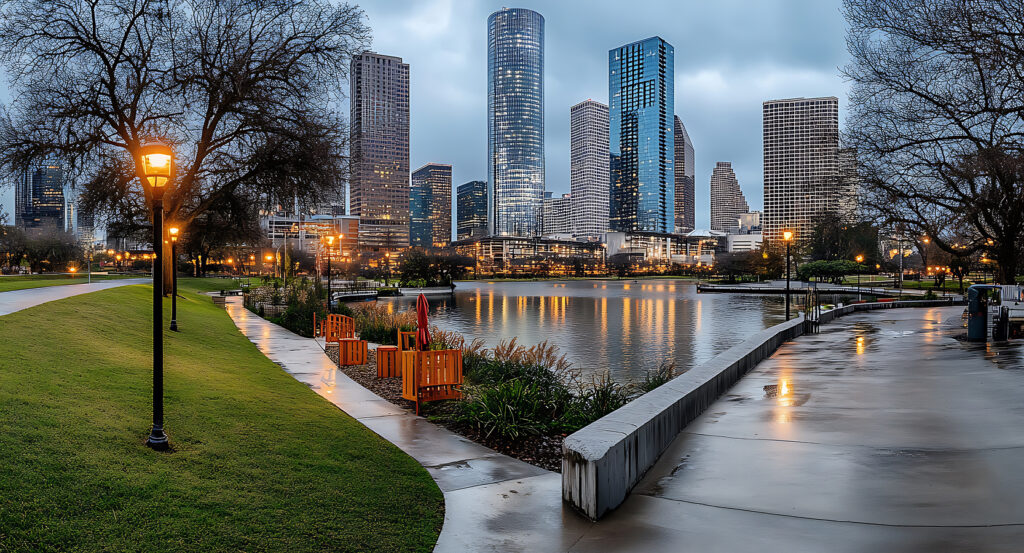
Why you should experience Clay Street in Houston, Texas.
Clay Street is a distinguished corridor where Downtown's legal tradition, architectural heritage, institutional presence, and evolving urban character unfold across one of the city's longstanding central streets.
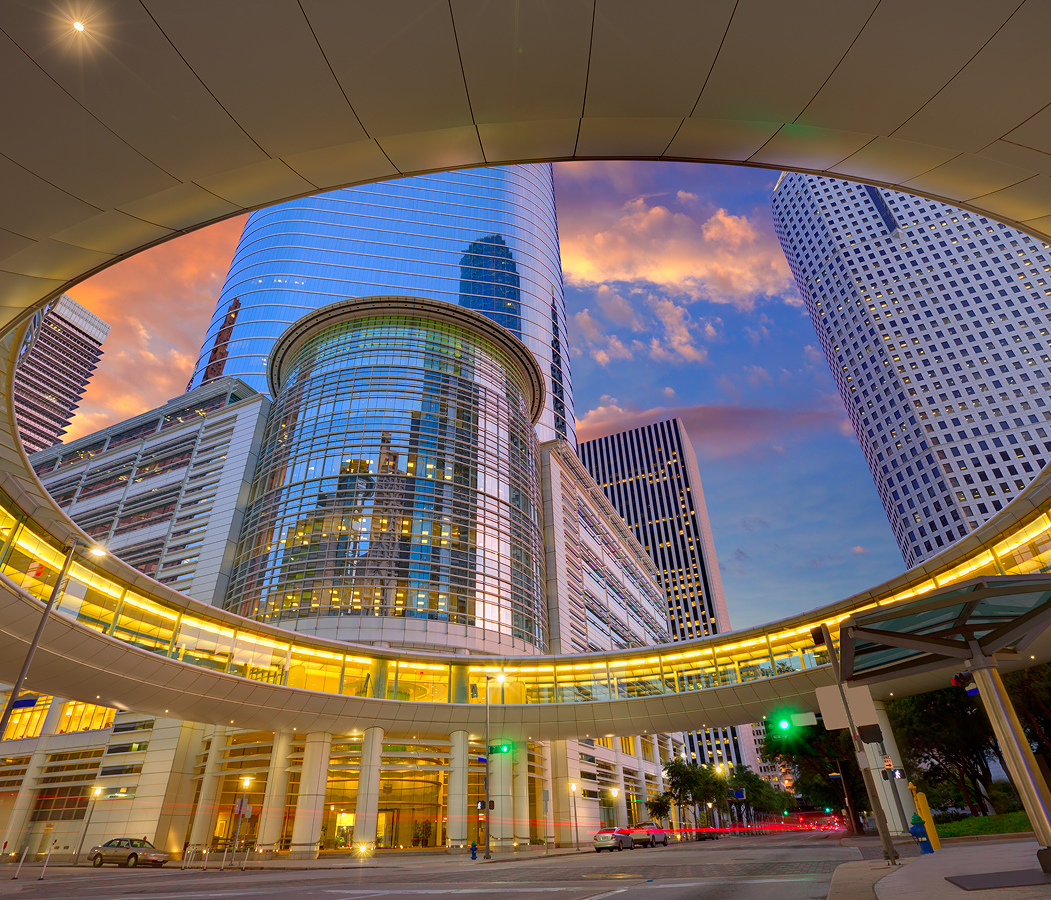
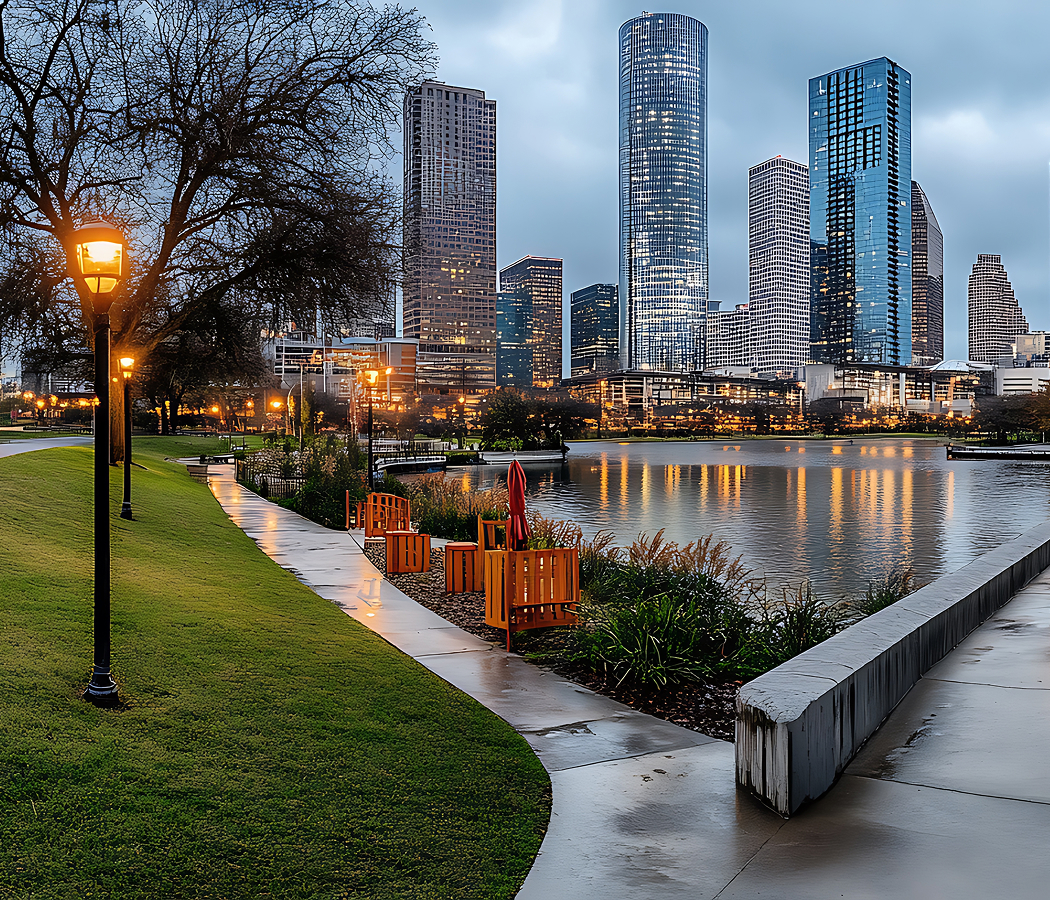
Running through Downtown between Midtown and the Theater District, the corridor connects early twentieth-century office buildings, courthouse complexes, cultural venues, and restored commercial blocks that collectively demonstrate Houston's emergence as the economic capital of Texas. Limestone façades, brick commercial buildings, contemporary towers, and mature streetscapes reflect successive generations of architectural development while preserving the corridor's longstanding civic and professional identity. Throughout the street, legal institutions, performing arts venues, businesses, and public spaces reinforce a setting where Houston's history and continued growth remain closely intertwined. The result is an experience defined by continuity, purpose, and one of downtown's enduring urban corridors.
What you should know about Clay Street.
Clay Street is best known for extending through Houston's original nineteenth-century street grid established after Augustus Chapman Allen and John Kirby Allen founded the city in 1836, preserving an alignment that has supported commercial, legal, and institutional activity since the Republic of Texas era. The corridor developed alongside Houston's rapid expansion during the late nineteenth and early twentieth centuries as banks, law offices, insurance companies, and professional firms concentrated within Downtown, contributing to the city's rise as the principal commercial center of Southeast Texas. Buildings along and adjoining Clay Street display Classical Revival, Beaux-Arts, Art Deco, Modernist, and contemporary architectural styles spanning more than a century of urban development, while nearby courthouse buildings and office towers document Houston's continuing role as one of the nation's largest legal and business centers. Continued preservation of historic commercial structures alongside successive generations of high-rise construction allows Clay Street to reflect the architectural evolution of Downtown from its earliest brick business blocks to its modern skyline.
Sam Houston Park preserves several of Houston's oldest surviving structures, including the 1847 Kellum-Noble House and the 1866 Nichols-Rice-Cherry House, providing tangible connections to the city's nineteenth-century built environment immediately adjoining the corridor. The Heritage Society, founded in 1954, maintains archival collections, restored historic buildings, and interpretive exhibitions that document Houston's architectural, social, and commercial development through original artifacts and historic preservation. Nearby architectural commissions by firms including Skidmore, Owings & Merrill, Philip Johnson, and Cesar Pelli demonstrate how nationally recognized designers have shaped the skyline surrounding Clay Street across successive decades of development. Together, these preserved buildings, historical collections, and architectural achievements demonstrate how Clay Street occupies the center of Houston's continuing architectural and institutional story.
How to fold Clay Street into your trip.
Clay Street works as a walk through Downtown's architectural heritage, cultural institutions, and civic history.
Begin at Sam Houston Park, where Houston's oldest preserved houses introduce the city's nineteenth-century origins before following Clay Street into the surrounding downtown streetscape. Continue to Alley Theatre, whose acclaimed productions and distinctive Brutalist architecture add another dimension to Houston's longstanding cultural identity. Conclude at Tranquility Park, where fountains, landscaped terraces, and views toward the surrounding skyline provide a reflective finale celebrating the city's continued evolution from frontier settlement to global metropolis. The progression moves naturally from preserved early history through performing arts before concluding within a thoughtfully designed public space, revealing why Clay Street offers an insightful cross-section of Downtown's enduring character.
Where your story begins.
Foresyte Travel reveals places that feel extraordinary long before you arrive.
Experience premium editorial crafted for luxury travelers.