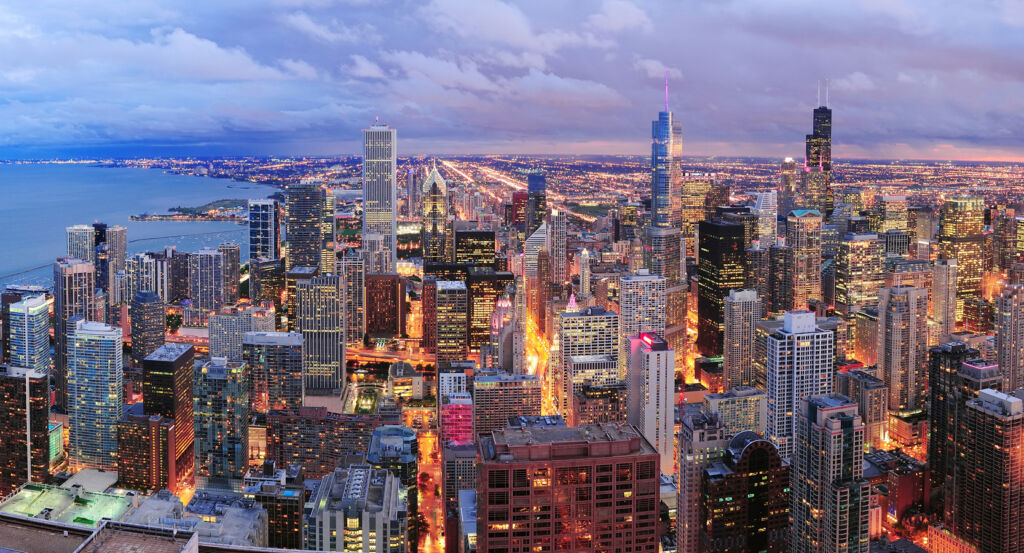
Why you should experience Dearborn Parkway in Chicago, Illinois.
Dearborn Parkway is a refined corridor where Gold Coast elegance, architectural heritage, civic legacy, and Chicago's residential history converge along one of the Near North Side's most distinguished streets.
Running through the Gold Coast between Lincoln Park and the Grand Mile, Dearborn Parkway connects historic mansions, luxury apartment buildings, churches, embassies, neighborhood institutions, and tree-lined residential blocks that collectively reflect more than 150 years of continuous urban evolution. The corridor reveals how post-fire residential development, boulevard planning, architectural craftsmanship, and long-term preservation established one of Chicago's most celebrated residential environments. Ornate limestone residences, historic apartment houses, mature landscaping, and carefully maintained streetscapes continue defining the parkway while reinforcing its enduring character. The result is a corridor distinguished by architectural excellence, residential continuity, and sustained historic stewardship.
What you should know about Dearborn Parkway.
Dearborn Parkway is best known for extending through the Gold Coast, a neighborhood that emerged after the Great Chicago Fire of 1871 as affluent residents relocated north of the city's rebuilt commercial center, establishing one of Chicago's foremost residential districts. Development between the 1870s and the 1930s introduced an exceptional collection of Romanesque Revival, Queen Anne, Georgian Revival, Beaux-Arts, Classical Revival, and Tudor Revival residences together with distinguished apartment buildings designed by architects including Henry Ives Cobb, Holabird & Roche, Jarvis Hunt, Andrew Rebori, and Benjamin Marshall. Growth accelerated following construction of Lake Shore Drive, expansion of Lincoln Park, and continued accessibility provided by the Chicago & North Western Railway and later CTA Red Line, strengthening the neighborhood's reputation among prominent civic leaders, industrialists, philanthropists, and business executives. Designation of the surrounding Astor Street District and Gold Coast Historic District, together with numerous individually designated Chicago Landmarks and properties listed on the National Register of Historic Places, preserved one of the nation's richest collections of late nineteenth- and early twentieth-century residential architecture. Continued investment in preservation, residential rehabilitation, and neighborhood planning has maintained Dearborn Parkway as one of Chicago's most architecturally significant residential corridors.
Formation of the Gold Coast Neighbors Association strengthened neighborhood stewardship through preservation advocacy, zoning review, public safety initiatives, streetscape improvements, and community engagement supporting Dearborn Parkway and the surrounding district. Architects David Adler, Howard Van Doren Shaw, Benjamin Marshall, and Andrew Rebori expanded the architectural legacy of the Gold Coast through residences, apartment buildings, and institutional commissions that complemented earlier work by Henry Ives Cobb and Holabird & Roche. Long-term preservation efforts coordinated by the Commission on Chicago Landmarks, continued investment by the Chicago Department of Planning and Development, restoration of historic masonry residences, and careful protection of mature streetscapes collectively demonstrate how architecture, landscape planning, preservation policy, and sustained residential investment have preserved the corridor's historic identity. Together, the Great Chicago Fire, Henry Ives Cobb, Holabird & Roche, Jarvis Hunt, Benjamin Marshall, David Adler, Howard Van Doren Shaw, Andrew Rebori, the Gold Coast Neighbors Association, the Astor Street District, the Gold Coast Historic District, and more than a century of architectural stewardship establish Dearborn Parkway among Chicago's most historically significant residential corridors.
How to fold Dearborn Parkway into your trip.
Dearborn Parkway works as an exploration of the Gold Coast's architectural heritage, residential elegance, and lakefront history.
Begin at Charnley-Persky House, where pioneering residential design by Louis Sullivan and Frank Lloyd Wright introduces the architectural innovation that distinguishes the Gold Coast before naturally expanding into the surrounding neighborhood. Continue to International Museum of Surgical Science, where a distinguished historic mansion and extensive medical history collections deepen the appreciation of the area's cultural and architectural legacy before guiding the experience toward its conclusion. Conclude at North Avenue Beach, where sweeping views of Lake Michigan, the city skyline, and Lincoln Park provide the historical and visual payoff, illustrating how residential planning and Chicago's lakefront have shaped the enduring character of Dearborn Parkway. The progression moves naturally from residential design to cultural history before concluding along the shoreline that helped define the Gold Coast.
Where your story begins.
Foresyte Travel reveals places that feel extraordinary long before you arrive.
Experience premium editorial crafted for luxury travelers.