Why Detroit Marriott at the Renaissance Center matters.
Detroit Marriott at the Renaissance Center is architectural ambition translated into urban command, modern comfort woven into a city's evolving identity, and skyline presence paired with waterfront perspective, a hotel that doesn't just put you in Detroit, but places you above it, grounding your stay in both panoramic context and practical momentum.
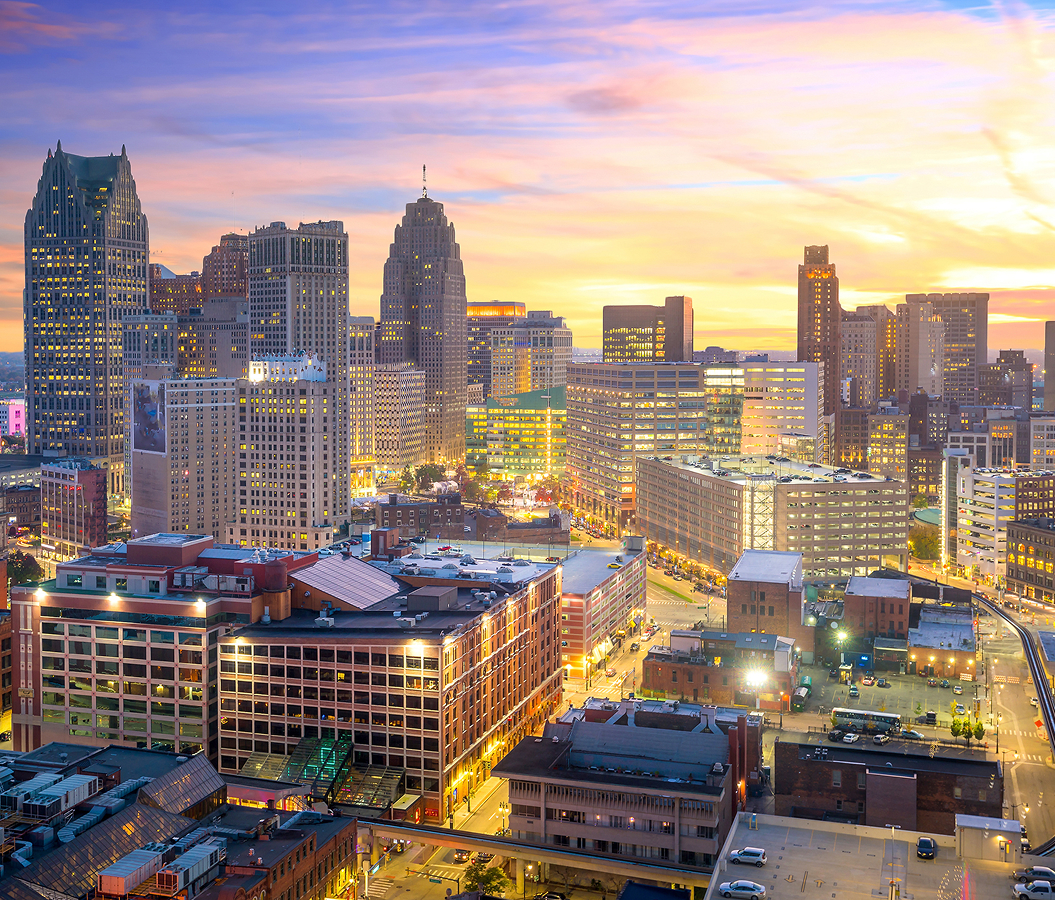
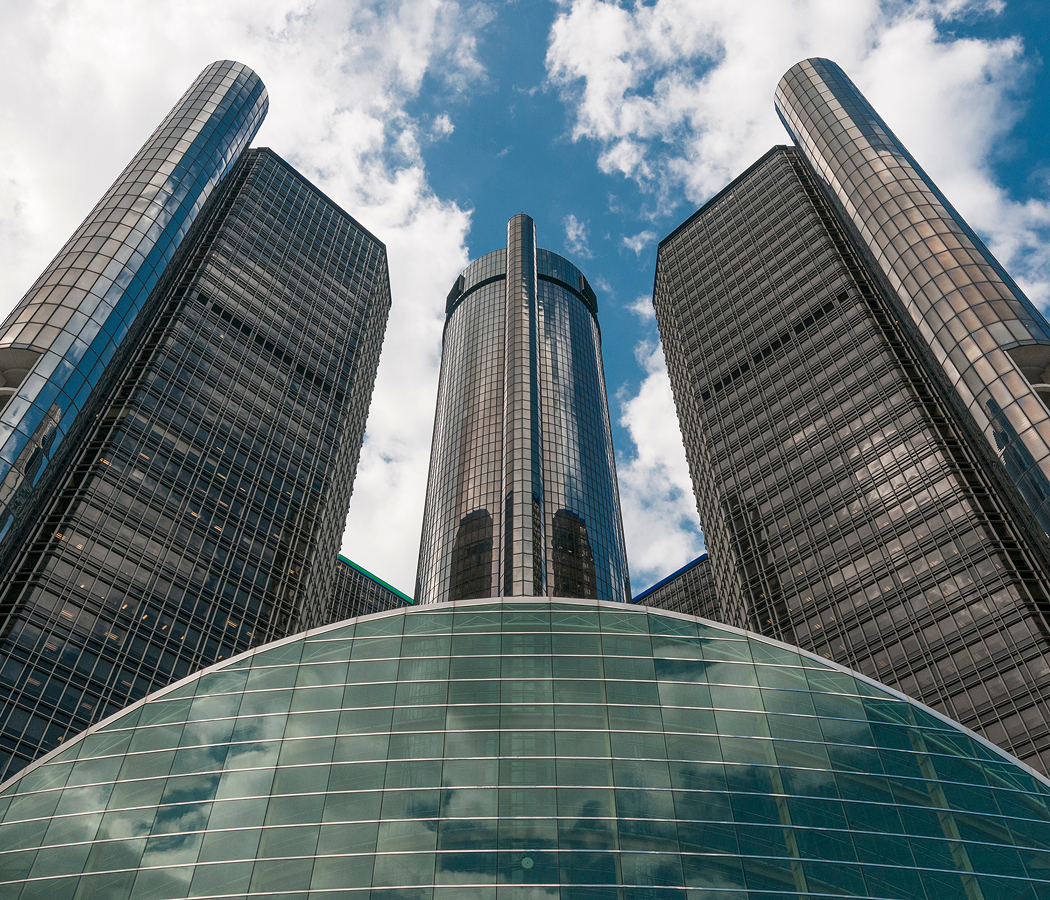
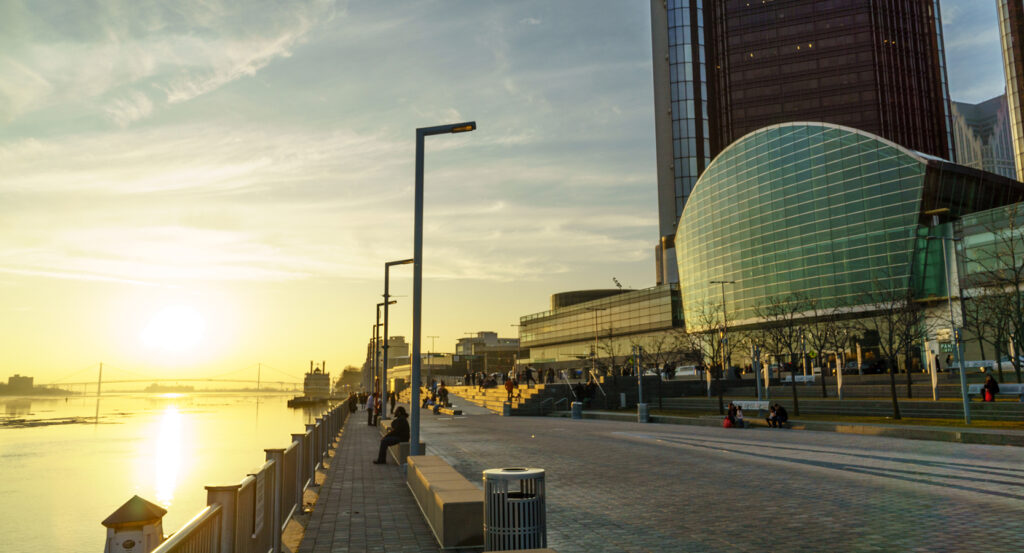
Rising from the banks of the Detroit River, this property occupies the heart of the Renaissance Center, a cluster of glass towers that have stood as Detroit's vertical symbol of resurgence and commercial character for decades. Arrival is direct and purposeful. There is no hidden entrance tucked away from the city; instead, you step into a space that feels connected to Detroit's rhythm, visible from miles around, and intuitively aligned with movement, water, and skyline geometry. The exterior's sweeping glass surfaces reflect the river, the sunrise, and the city grid in ways that make arrival feel like entrance into perspective. Inside, the lobby and public spaces communicate this clarity through scale and line: tall ceilings, light surfaces balanced with refined finishes, and sightlines that emphasize openness. Materials are chosen for spatial coherence rather than decorative excess, allowing the environment to feel elevated without physical overload. Public zones are designed to be usable: clear circulation, thoughtful seating clusters, and lighting that supports conversation, work, or pause. This is a hotel structured around ease. Guest rooms build on this logic with comfort that feels resolute. Layouts are generous and rational, allowing space to be inhabited fully. Beds are engineered for deep restorative sleep after long days of exploration or business engagements, supportive, quiet, and framed by lighting that moves effortlessly from day activity to evening calm. Windows are a defining asset. Many rooms provide panoramic views of the Detroit River, Windsor, Canada's skyline across the water, or the city's evolving architectural channels, reinforcing a sense of place that transcends street-level distraction. Bathrooms are clean-lined and functional, with finishes that feel refined. Sound management is effective, allowing the room to feel calm even as the city's pulse persists beyond your window. Service at Detroit Marriott at the Renaissance Center is polished, anticipatory, and situationally aware. Interactions feel professional without being perfunctory, warm without being intrusive, staff provide support that respects your autonomy rather than scripting your experience. Staying here feels like choosing clarity over chaos, presence over pretense, and a hotel that supports how you move through Detroit rather than how you pause inside it, making this hotel an excellent base for travelers who want the city's energy to be accessible, navigable, and genuinely meaningful.
What defines Detroit Marriott at the Renaissance Center.
Detroit Marriott at the Renaissance Center is deeply shaped by its architectural lineage and urban role, and that context is central to the experience in ways most visitors don't immediately recognize.
The Renaissance Center was conceived during a period of bold urban rethinking, a time when Detroit sought to articulate not only economic resilience but also civic character through built form. The complex's verticality was a visual signal: Detroit could rise. Today, that spirit continues in the hotel's relationship to the city. Instead of hiding its scale or trying to domesticate itself into neighborhood clichés, the property uses its mass, elevation, and glass facade to frame Detroit rather than mask it. This architectural honesty translates into interior design decisions that emphasize proportion, light, and continuity. Public spaces are structured around movement and meeting. Sightlines extend. Lighting supports clarity. This orientation feels particularly apt in a city that, in so many ways, is about movement, economic, cultural, historical, and geographic. Renovations and updates have consistently reinforced performance over flash. Climate control, acoustics, connectivity, and circulation are treated as fundamentals, ensuring that what matters most, comfort, access, ease, remains reliable whether you're staying for a night, a week, or longer. The hotel's location reinforces this underlying structure. Positioned at the water's edge, the building connects to transit, riverfront promenades, cultural institutions, corporate zones, and historic corridors. Downtown Detroit may feel intense at street level, but from the vantage point of the Renaissance Center's elevation, the city becomes legible: river paths, grid patterns, architectural nodes, and layers of history reveal themselves as intelligible form. Staff culture reflects this architectural and urban orientation. Service is best known for situational awareness, local fluency, and logistical support. Recommendations feel specific, timing feels respectful, and assistance feels genuinely adaptive. In a hotel industry often divided between boutique personality and luxury theater, Detroit Marriott at the Renaissance Center operates on a third model: investment in functional elegance as experiential weight, proving that comfort, when grounded in place and built on structural clarity, can feel more powerful than any overtly curated narrative.
How Detroit Marriott at the Renaissance Center fits.
Detroit Marriott at the Renaissance Center works as a vertical hub that connects you to the city's waterways, streets, and cultural vectors, particularly for travelers who want Detroit to feel accessible, intelligible, and continually present throughout their stay.
Days here begin with orientation. Step outside and the Detroit River, promenades, and People Mover transit become immediate reference points, not distant attractions, but parts of the city you can integrate into your movement. Morning walks along the waterfront reveal Detroit not as a series of destinations, but as an urban ecology shaped by water, light, and infrastructure. This base makes planning easier: museums, historic corridors, arts districts, sports venues, and business zones come into play. Midday returns to the hotel are genuinely restorative. The spatial calm and clarity of the interior allow experiences to settle rather than stack, giving you space to reset before the afternoon or evening plans. This psychological reset, between exploration and reflection, makes long days feel sustainable. Afternoons can be organized around context: cultural institutions like the Detroit Institute of Arts, walking tours through Brush Park and Corktown, architectural corridors that reveal the city's timeline, or casual exploration of local neighborhoods that feel coherent. Evenings at the Renaissance Center feel particularly aligned. Dinner with river views, sunset from high vantage points, or nighttime walks along water-lined pathways all become natural extensions of your day. Returning to the hotel at night feels like re-entering an axis. Over multiple nights, familiarity becomes an asset. You begin to anticipate patterns, light over the water at certain hours, when transit pulses toward evening activity, how the city's energy shifts between work rhythm and cultural rhythm. Extended stays reveal the hotel's most significant contribution: resonant continuity. You engage with Detroit not as a checklist of destinations, but as a lived urban environment with rhythm, texture, and personal resonance. By the time you depart, Detroit Marriott at the Renaissance Center will not feel like just a hotel you stayed in, but like a structural view through which the city's scale, waterfront geography, and lived life became visible, navigable, and deeply meaningful, offering coherence, comfort, and conceptual clarity in a metropolis defined by history and reinvention.
Where your story begins.
Foresyte Travel reveals places that feel extraordinary long before you arrive.
Enjoy editorial crafted for luxury travelers.
Foresyte may earn a commission when you book.