Why you should experience Diamond Head Crater in Hawaii.
Diamond Head Crater in Honolulu is one of those rare places where geology, history, and myth converge in perfect harmony.
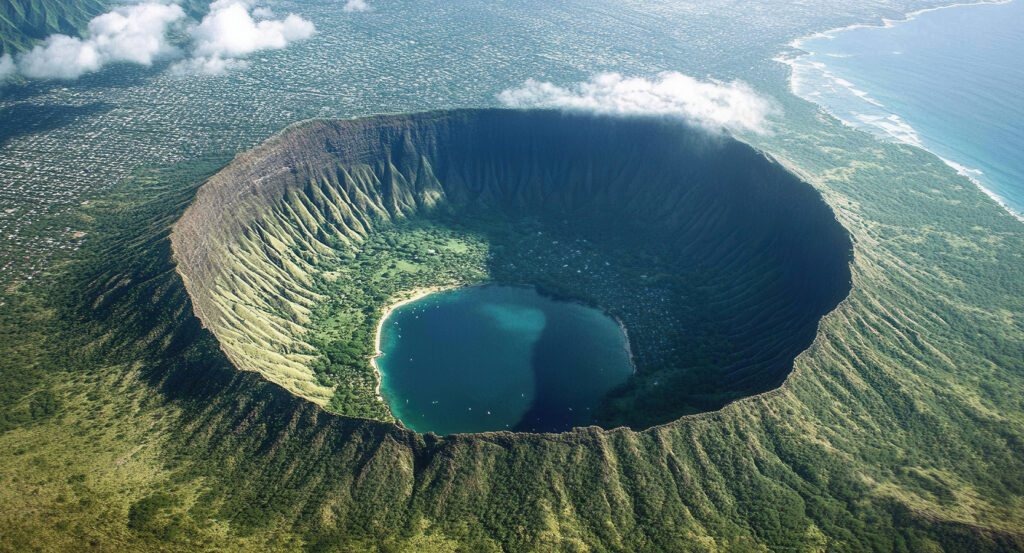
Standing before its sweeping ridgeline, you can feel both the weight of deep time and the pulse of the living island beneath your feet. The crater's slopes glow in shades of ochre and green, etched by wind and rain into a dramatic amphitheater overlooking the Pacific. Hiking into its interior, you're not just exploring a landscape, you're walking through the story of Hawaii's birth. The trail leads through tunnels, staircases, and steep switchbacks carved into volcanic tuff, each step revealing how nature sculpted this fortress of stone. When you reach the summit, the view unfurls like a painting, Waikiki's skyline shimmering below, the blue ocean curling around Oahu's south shore, and the horizon stretching toward infinity. The air carries the scent of salt and sun-warmed rock, and for a moment, you understand why Diamond Head is more than a symbol of Hawaii, it's the island's beating heart, resilient and unbroken.
What you should know about Diamond Head Crater.
Diamond Head, or Leahi, meaning “brow of the tuna” in Hawaiian, was formed about 300,000 years ago in a single explosive eruption that spewed ash and molten rock high into the air before collapsing into the broad crater we see today.
Though it appears immense, the crater itself is surprisingly shallow, only about 760 feet deep, yet it spans 350 acres across Honolulu's southeastern edge. Its English name came centuries later, when 19th-century sailors mistook calcite crystals glinting in the sun for diamonds. The site later played a pivotal role in Hawaii's modern history; in the early 1900s, the U.S. military transformed the crater into a coastal defense outpost. The summit's bunkers, artillery observation posts, and the Fire Control Station that once coordinated island-wide defenses remain preserved today, now seamlessly woven into the hiking trail. Few visitors realize the trail was built by the Army in 1908, designed for soldiers to haul munitions and supplies up to the ridge. Inside the crater's floor, remnants of barracks, tunnels, and lookout points whisper of the island's strategic past. Today, the monument is both a geological wonder and a cultural landmark, a natural amphitheater formed by fire, shaped by history, and revered by locals as a sacred guardian of Oahu.
How to fold Diamond Head Crater into your trip.
A visit to Diamond Head Crater is a pilgrimage of perspective, both literally and spiritually.
Plan to arrive early in the morning before the Hawaiian sun grows fierce. The hike, just under a mile each way, takes about an hour round-trip, but its steep staircases and uneven paths make every step count. Bring water, a hat, and your sense of awe. As you ascend, stop often, not only to catch your breath but to let the views expand around you. The midpoint lookout offers a breathtaking perspective over Koko Head, while the summit delivers one of the most iconic panoramas in all of Hawaii. The 360-degree view captures the full sweep of Honolulu, a city framed by ocean, mountain, and sky. After the descent, linger at the base visitor center, where exhibits explore Diamond Head's geological and military history, and local stands serve fresh pineapple juice and shaved ice. For a richer experience, pair your visit with a stroll along Waikiki Beach afterward, the same stretch of sand once guarded by the crater's watchful presence. Whether you come for the hike, the view, or the feeling of standing atop an ancient volcano that still breathes with the rhythm of the earth, Diamond Head Crater leaves you changed, reminded that even the most powerful eruptions can give rise to enduring beauty.
Where your story begins.
Foresyte Travel reveals places that feel extraordinary long before you arrive.
Experience premium editorial crafted for luxury travelers.