
Why Downtown Aquarium matters.
Downtown Aquarium is a distinctive marine attraction where Downtown's historic civic center meets aquatic wildlife, elaborate themed environments, and the transformation of two early twentieth-century buildings into a major family entertainment destination.
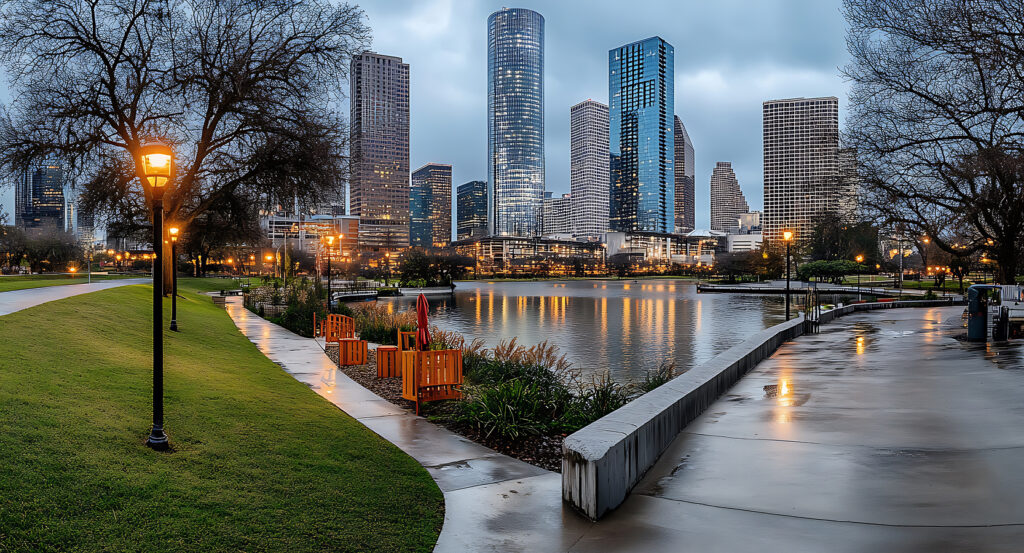
Set along Bagby Street near Memorial Drive and just steps from the landscaped grounds surrounding Sesquicentennial Park, the attraction occupies a prominent position on the northwestern edge of Downtown, between the Theater District and the bridges crossing Buffalo Bayou. A circular entrance plaza connects the principal exhibition building with outdoor amusement attractions and landscaped gathering spaces. Interior galleries use theatrical lighting, sculpted rockwork, and large viewing windows to establish distinct aquatic environments. The property's restaurant occupies a substantial dining space organized around a towering aquarium, extending the marine setting into the hospitality areas. The result is a compact entertainment complex whose combination of aquatic exhibits, dining, and amusement attractions creates a recognizable presence within Houston's central city.
What defines Downtown Aquarium.
Downtown Aquarium is best known for combining a substantial collection of aquatic animals with a themed entertainment complex developed through the restoration of two historic Houston buildings. The attraction emerged from a redevelopment project undertaken by Landry's, Inc., the hospitality and entertainment company founded by Tilman Fertitta. Its site incorporated the former Central Waterworks Building and Fire Station No. 1, structures associated with Houston's expanding municipal infrastructure during the early twentieth century. The waterworks facility served the city's growing public utility system, connecting the property with an important period of urban development. Fire Station No. 1 represented another essential municipal function, providing emergency services within the expanding downtown district. The redevelopment preserved elements of these buildings while integrating them into a new entertainment destination. Downtown Aquarium opened in 2003, introducing a combination of aquatic exhibitions, dining facilities, and amusement attractions to the northern edge of Houston's central business district. The project became part of Landry's broader portfolio of destination restaurants and themed attractions, which included aquarium entertainment complexes in other American cities. Its development coincided with substantial public and private investment in Downtown's cultural and recreational infrastructure. The attraction's location near the city's principal performing arts venues helped establish a complementary family-oriented destination within the district. Its aquarium exhibitions introduced visitors to marine and freshwater species through environments organized around different ecological and geographical themes. The complex also developed educational presentations focused on animal characteristics, habitats, and conservation. Its combination of preserved civic architecture and contemporary entertainment facilities established a distinctive example of adaptive reuse within Houston's downtown landscape.
The Louisiana Swamp exhibit introduces the aquatic environments of the American Gulf Coast through species associated with wetlands, rivers, and coastal habitats. Alligators, turtles, and freshwater fish contribute to an interpretation of the ecological relationships characteristic of southern waterways. A separate Rainforest exhibit incorporates tropical vegetation and aquatic species associated with warmer freshwater environments, emphasizing the biological diversity of forest ecosystems. The Sunken Temple gallery develops a more theatrical presentation through architectural elements inspired by ancient ruins and aquariums containing colorful fish. Its design places marine animals within an imaginative archaeological setting, creating a contrast between natural specimens and constructed scenery. The Gulf of Mexico exhibit focuses on the aquatic life associated with the region's coastal waters, connecting the attraction's collection with the marine environment surrounding southeastern Texas. The Shark Voyage train extends the exhibition program beyond the principal building, carrying passengers through an enclosed viewing tunnel associated with a large shark habitat. The attraction's white tigers occupy another themed environment, introducing terrestrial wildlife into a facility primarily devoted to aquatic animals. Outdoor rides include a Ferris wheel and carousel, establishing a traditional amusement-park component alongside the zoological exhibits. The combination of aquarium galleries, theatrical environments, and mechanical attractions supports a varied visit organized around animal observation and recreational entertainment. Downtown Aquarium's distinguishing character comes from the concentration of these different activities within a single urban property.
How Downtown Aquarium fits.
Downtown Aquarium works as the anchor for a Downtown outing connecting a historic public park, the city's performing arts heritage, and an architecturally significant civic building.
Begin at Market Square Park, the public space occupying one of the original blocks of Houston's nineteenth-century town plan. The square served as a focal point of civic and commercial activity during the city's early development, accommodating successive municipal buildings and public gatherings. Its surrounding streets preserve a concentration of historic commercial architecture, including buildings associated with Houston's expansion as a regional trading center. A major renovation completed in 2010 introduced landscaped lawns, shaded seating areas, and contemporary public amenities. The park also contains a memorial to the victims of the 1960 Houston bus accident, preserving an important chapter of local history. Continue to Wortham Theater Center, the major performing arts complex that opened in 1987 through substantial private philanthropy. The building contains the Brown Theater and Cullen Theater, providing performance spaces for opera, ballet, and other theatrical productions. Houston Grand Opera and Houston Ballet established the complex as a central venue for their principal seasons, strengthening the city's standing as a major American performing arts center. Architect Eugene Aubry contributed to its design, creating an expansive interior distinguished by dramatic circulation spaces and substantial audience facilities. The center's development represented a consequential investment in Houston's cultural infrastructure during a period of economic uncertainty. Conclude at Houston City Hall, the Art Deco municipal building completed in 1939 during the administration of Mayor R. H. Fonville. Architect Joseph Finger designed the structure, combining limestone surfaces, geometric ornament, and a commanding central tower. Its construction formed part of a broader period of civic investment associated with New Deal-era public works. The building's exterior incorporates sculptural details referencing municipal government and the city's economic development. Hermann Square extends across the landscaped grounds in front of the building, creating a formal civic setting for public gatherings and ceremonies. The progression moves from Market Square Park's nineteenth-century civic origins through Wortham Theater Center's performing arts heritage and culminates at Houston City Hall's Art Deco architecture, connecting three consequential chapters of Downtown's institutional development.
Where your story begins.
Foresyte Travel reveals places that feel extraordinary long before you arrive.
Enjoy editorial crafted for luxury travelers.
Foresyte may earn a commission when you book.














































































































