Why you should experience Grove Boulevard in Austin, Texas.
Grove Boulevard is an energetic corridor where Pleasant Valley's contemporary growth, outdoor character, neighborhood connectivity, and evolving character create one of Southeast Austin's most engaging streets.
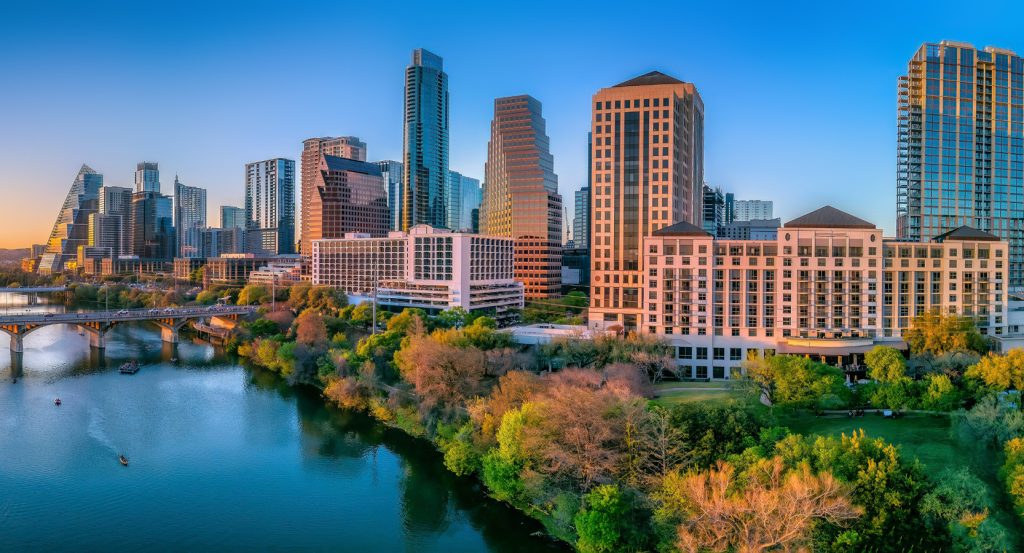
Running through Pleasant Valley between Riverside and Montopolis, the corridor connects established residential communities, urban parks, employment centers, and river-oriented landscapes that reflect Austin's continued expansion beyond its historic core. Broad sidewalks, mature pecan trees, contemporary residential development, neighborhood businesses, and generous green spaces establish a setting where recreation and daily life comfortably intersect. Successive waves of investment have strengthened the surrounding district while maintaining close connections to the Colorado River and Austin's extensive park system. The result is an experience defined by accessibility, open space, and one of Pleasant Valley's most inviting corridors.
What you should know about Grove Boulevard.
Grove Boulevard is best known for serving one of Southeast Austin's fastest-evolving urban districts following significant redevelopment during the 1990s, 2000s, and 2010s, when former industrial land and underutilized parcels gradually transitioned into residential neighborhoods, commercial centers, and mixed employment districts supporting Austin's expanding population. The corridor developed alongside major transportation investments associated with East Riverside Drive, U.S. Highway 183, and State Highway 71, creating efficient connections between Downtown, Austin-Bergstrom International Airport, and employment centers throughout southeastern Travis County. Residential construction introduced contemporary apartment communities, townhomes, office buildings, neighborhood retail, and landscaped public spaces while complementing earlier commercial development established during the postwar decades. Native pecan, cedar elm, eastern cottonwood, bald cypress, Mexican sycamore, and riparian grasses flourish throughout the nearby Colorado River floodplain, where engineered drainage systems and restored green corridors continue strengthening ecological resilience across the district. Collectively, the corridor's transportation connectivity, residential transformation, commercial growth, environmental stewardship, and modern urban planning establish Grove Boulevard as one of Pleasant Valley's defining corridors.
The Austin Parks and Recreation Department, established in 1928, continues managing extensive parkland and recreational facilities throughout the surrounding river corridor, reinforcing the area's longstanding relationship with public open space. Nearby, the Colorado River Alliance, founded in 1994, advances watershed education, river stewardship, habitat restoration, and community engagement that support the long-term ecological health of Central Texas. The surrounding landscape also occupies portions of the Colorado River alluvial plain, where deep alluvial soils, seasonal flooding, and flood-control engineering continue influencing vegetation, drainage infrastructure, and urban development throughout Southeast Austin. Together, these public institutions, environmental organizations, and natural systems demonstrate how Grove Boulevard reflects a corridor where recreation, conservation, and sustainable growth continue reinforcing one another.
How to fold Grove Boulevard into your trip.
Grove Boulevard works as an exploration of Southeast Austin's outdoor spaces, river landscapes, and contemporary urban character.
Begin at Roy G. Guerrero Colorado River Metropolitan Park, where expansive trails, restored woodland, athletic facilities, and riverfront scenery introduce the natural landscape that defines the surrounding district while establishing an ideal starting point for the experience. Continue to The Boardwalk at Lady Bird Lake, where elevated pathways, wetlands, and sweeping skyline views expand the experience by illustrating how Austin has integrated recreation with environmental restoration along the Colorado River. Conclude at Festival Beach Food Forest, where community-supported orchards, native plantings, and sustainable landscape design provide the historical payoff by demonstrating how stewardship and public participation continue shaping Austin's relationship with its urban environment. The progression moves naturally from regional parkland to waterfront recreation before culminating in a community landscape that reflects the city's enduring commitment to ecological preservation.
Where your story begins.
Foresyte Travel reveals places that feel extraordinary long before you arrive.
Experience premium editorial crafted for luxury travelers.