Why Gulf Freeway matters.
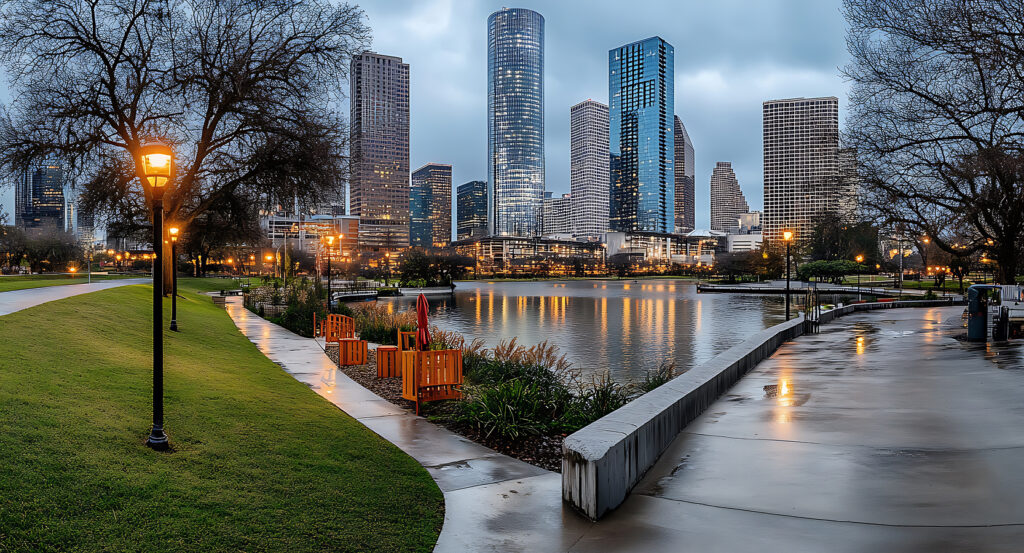
Gulf Freeway is a historic Southeast Houston corridor where transportation innovation, commercial growth, and regional connectivity converge along one of Texas's most influential highways.
Running through East End between Downtown and Southeast Houston, this landmark corridor connects historic neighborhoods, aviation landmarks, commercial districts, educational institutions, and gateway communities that have shaped Houston's expansion toward Galveston for generations. Modern interchanges, longstanding businesses, civic destinations, and evolving commercial centers reflect a transportation artery that has continually adapted to the city's remarkable growth. Since its construction, the freeway has served as one of Houston's principal economic lifelines, carrying millions of travelers while fostering development across the southeastern portion of the metropolitan area. The result is a corridor defined by mobility, commerce, and lasting regional significance.
What defines Gulf Freeway.
Gulf Freeway is best known for following the route of the Galveston-Houston Electric Railway, which began operating in 1911 as the longest interurban electric railway in the United States, carrying passengers between Houston and Galveston decades before the modern freeway was constructed.
The interurban rapidly became one of Texas's most ambitious transportation projects, offering high-speed electric rail service that transformed travel and commerce between the state's two most important Gulf Coast cities. When the Gulf Freeway opened in 1948, it became Texas's first freeway, replacing the declining interurban as automobile travel emerged as the dominant mode of regional transportation. The highway permanently reshaped commuting patterns, suburban development, and commercial investment while preserving the historic transportation corridor that had connected Houston and Galveston for generations. Few American roadways demonstrate such a clear progression from pioneering electric railway to landmark postwar freeway, reflecting more than a century of transportation innovation.
How Gulf Freeway fits.
Gulf Freeway works as an exploration of the transportation corridor connecting Downtown with the city's aviation and coastal gateways.
Begin at 1940 Air Terminal Museum, where Houston's early commercial aviation history establishes the corridor's longstanding relationship with regional transportation. Continue to Space Center Houston, whose internationally celebrated exhibits reveal how the same southeastern corridor eventually became synonymous with America's space program. From there, conclude at Lone Star Flight Museum, where historic aircraft and aviation exhibits provide a fitting finale to a journey shaped by engineering, innovation, and mobility. Along the route, historic commercial districts, transportation infrastructure, museums, neighborhood landmarks, and public spaces demonstrate how the Gulf Freeway continues to connect many of Houston's most significant destinations. The progression moves naturally from aviation history to space exploration before concluding with one of Texas's premier aviation museums, revealing why Gulf Freeway remains one of Houston's most historically significant transportation corridors.
Where your story begins.
Foresyte Travel reveals places that feel extraordinary long before you arrive.
Enjoy editorial crafted for luxury travelers.
Foresyte may earn a commission when you book.