Why Indian School Road matters.
Indian School Road is a renowned Midtown Phoenix corridor where Indigenous heritage, civic evolution, and metropolitan life converge along one of Arizona's most historically significant thoroughfares.
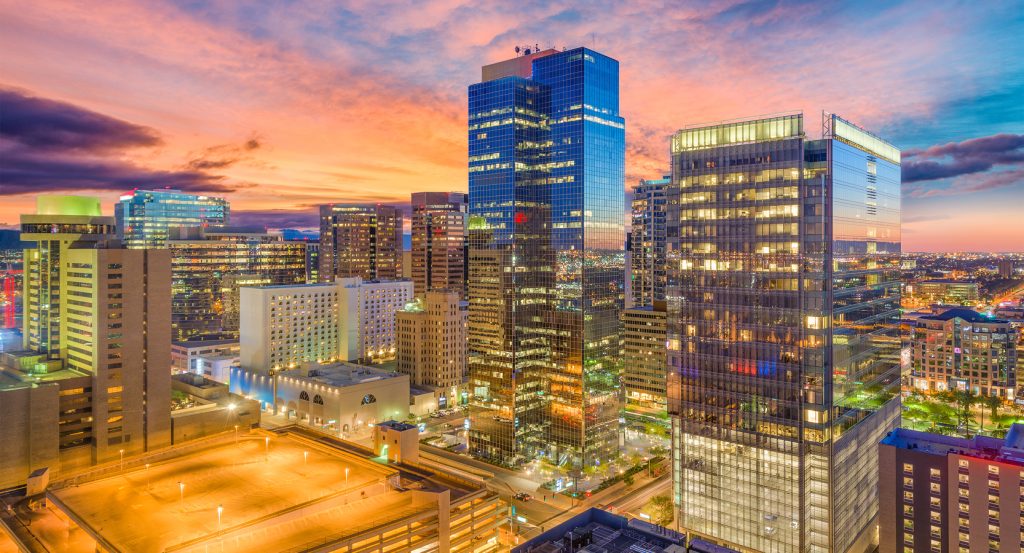
Running through Midtown between Maryvale, Encanto Village, and Camelback East, this iconic corridor threads together historic neighborhoods, cultural institutions, medical campuses, parks, restaurants, museums, and thriving commercial districts that collectively reflect the evolution of modern Phoenix. Stretching across the heart of the city, Indian School Road has witnessed generations of transformation while remaining one of the capital's defining east-west arteries. Every mile carries the story of a city that continually expands without losing sight of the history that shaped it. The result is a corridor defined by historical depth, civic prominence, and enduring metropolitan significance.
What defines Indian School Road.
Indian School Road is best known for taking its name from the Phoenix Indian School, which operated for 99 years between 1891 and 1990 as one of the largest off-reservation boarding schools in the United States, educating tens of thousands of Native American students from more than 100 tribes and leaving an enduring legacy that continues to shape Arizona's understanding of Indigenous history and cultural preservation.
Established by the federal government during an era of nationwide assimilation policies, the Phoenix Indian School became one of the country's most influential and complex Native American educational institutions. Students from tribes across the Southwest and beyond lived and studied on its expansive campus, where generations experienced profound cultural change, resilience, achievement, and hardship. Following the school's closure, much of the historic campus was preserved as Steele Indian School Park, allowing restored buildings, interpretive exhibits, public art, and cultural memorials to present a fuller understanding of this nationally significant history. The corridor's name now serves as a lasting reminder of one of Arizona's most consequential educational institutions while connecting visitors with a landscape that continues to honor Native communities through remembrance, education, and public engagement.
How Indian School Road fits.
Indian School Road works as an exploration of Phoenix's cultural landmarks, historic landscapes, and civic heritage.
Begin at Steele Indian School Park, where preserved historic buildings and expansive green spaces immediately establish the profound history behind the corridor's name. Continue toward Heard Museum, whose internationally renowned collections celebrate the art, cultures, and histories of Indigenous peoples throughout the Americas. From there, make your way to Phoenix Art Museum, where world-class exhibitions provide a memorable conclusion to your exploration. Along the route, historic neighborhoods, public art, locally owned restaurants, tree-lined streets, museums, and civic landmarks reveal why Indian School Road continues to connect many of Arizona's most meaningful destinations. The progression moves naturally from historic preservation to Indigenous cultural excellence and finally to artistic achievement, revealing why Indian School Road remains one of Phoenix's most important historic corridors.
Where your story begins.
Foresyte Travel reveals places that feel extraordinary long before you arrive.
Enjoy editorial crafted for luxury travelers.
Foresyte may earn a commission when you book.