Why Interstate 35 matters.
Interstate 35 is a defining corridor where Downtown's economic momentum, transportation legacy, cultural diversity, and statewide significance converge along one of Texas' most consequential highways.
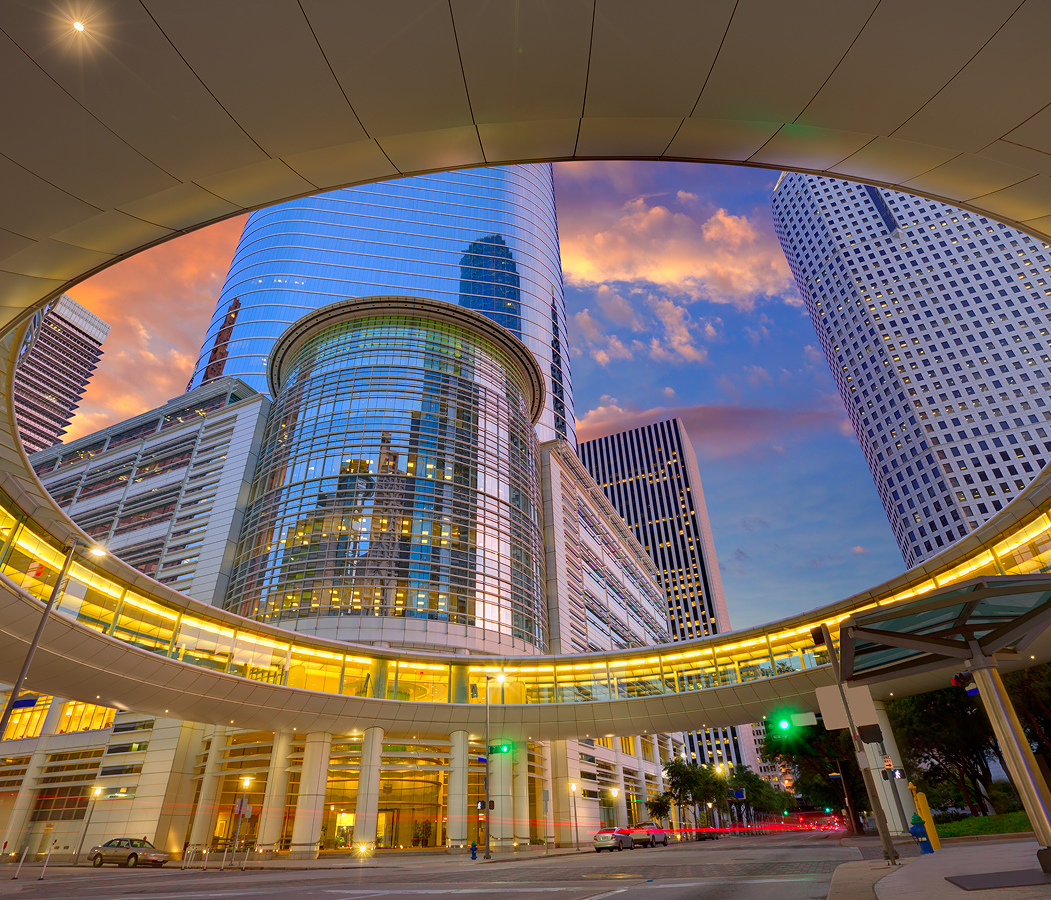
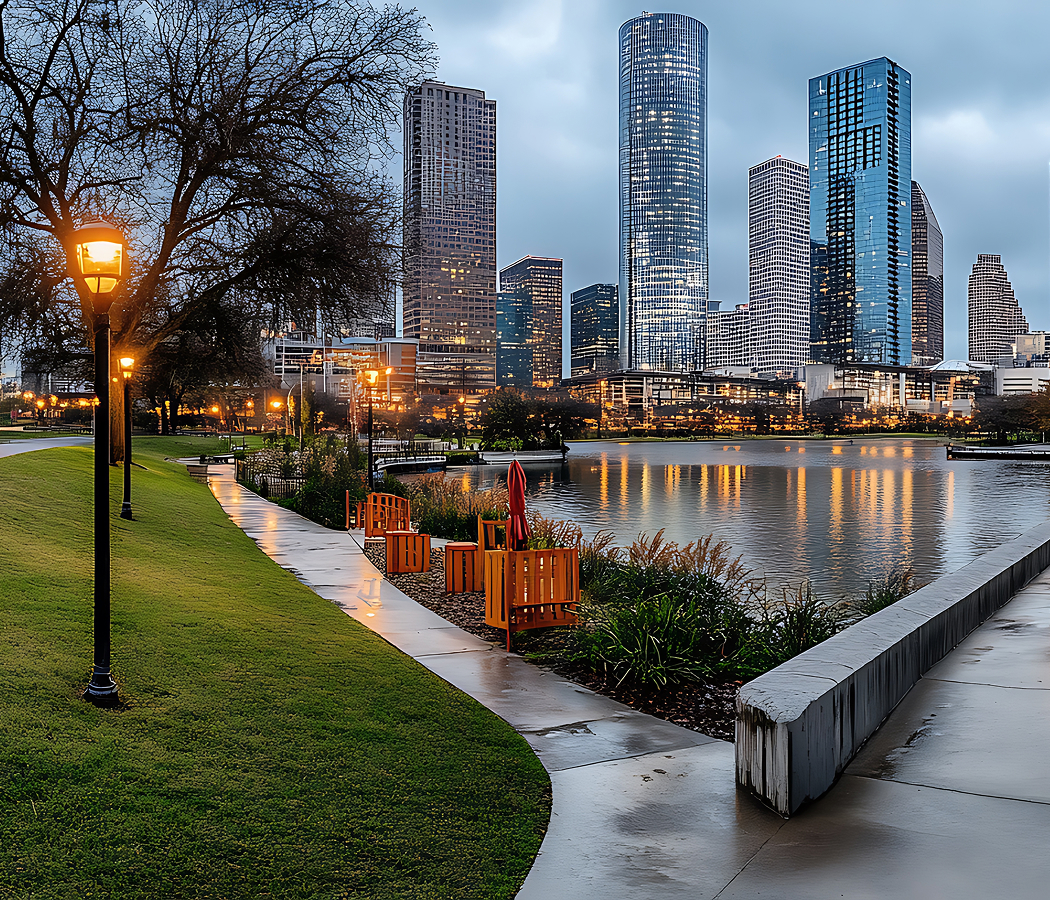
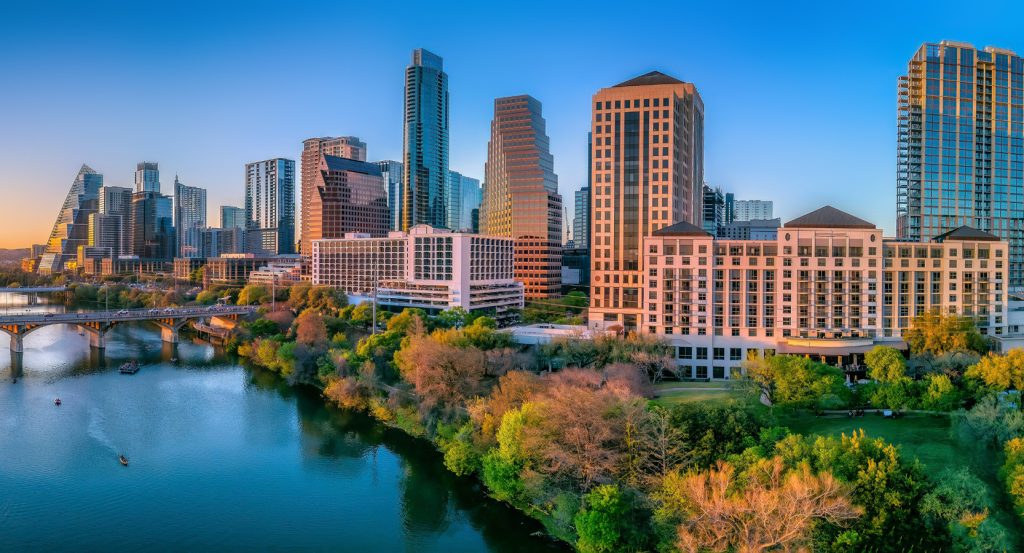
Running through Downtown between East Cesar Chavez and Central East Austin, the corridor links government centers, university districts, commercial hubs, entertainment neighborhoods, and historic communities that collectively demonstrate Austin's remarkable evolution from state capital to global technology center. Towering office buildings, civic institutions, historic neighborhoods, contemporary skyline views, and constant regional movement establish a setting that reflects the city's expanding influence across Texas. Decades of growth have layered commerce, education, government, and culture along the roadway while continually reshaping the urban landscape surrounding it. The result is an experience defined by metropolitan scale, historical importance, and one of Austin's most influential corridors.
What defines Interstate 35.
Interstate 35 is best known for serving as the principal north-south artery through Austin after becoming part of the Federal-Aid Highway Act of 1956, with major construction through the city occurring during the late 1950s and 1960s upon the earlier alignment of U.S. Highway 81. The highway forms part of the 1,568-mile Interstate 35 corridor extending from Laredo, Texas, to Duluth, Minnesota, establishing one of North America's most significant trade and freight routes while connecting Austin with San Antonio, Dallas-Fort Worth, Oklahoma City, Kansas City, Des Moines, and Minneapolis-Saint Paul. Through Austin, Interstate 35 has profoundly influenced urban development, regional mobility, commercial investment, demographic patterns, and economic expansion while functioning as the city's primary transportation spine for millions of annual travelers. The corridor also serves as a nationally significant freight route supporting interstate commerce, advanced manufacturing, technology industries, higher education, government operations, and international trade associated with the United States-Mexico-Canada Agreement, while the Texas Department of Transportation's I-35 Capital Express Program represents one of the largest transportation infrastructure investments in Central Texas history. Collectively, the corridor's federal origins, engineering scale, interstate connectivity, economic significance, transportation history, and continuing modernization establish Interstate 35 as Austin's defining transportation corridor.
The Texas Department of Transportation, established in 1917 as the Texas Highway Department, continues directing long-term planning, engineering, and mobility improvements across the corridor while managing one of the nation's largest state highway systems. Interstate 35 also crosses the Balcones Fault Zone, where abrupt geological transitions between the Edwards Plateau and Blackland Prairie have influenced roadway engineering, drainage design, and long-term maintenance throughout Central Texas. Federal highway designation under the Dwight D. Eisenhower National System of Interstate and Defense Highways permanently integrated Austin into a nationwide transportation network whose strategic, commercial, and defense functions continue shaping regional development decades after its creation. Together, these statewide institutions, geological systems, and federal transportation initiatives demonstrate how Interstate 35 reflects a corridor where engineering, public investment, and national infrastructure continue reinforcing one another.
How Interstate 35 fits.
Interstate 35 works as an exploration of Austin's urban evolution, civic identity, and regional connectivity.
Begin at Texas Capitol, where the expansive granite complex introduces the governmental foundations that established Austin as Texas' capital and created the administrative importance that ultimately demanded a modern interstate transportation network. Continue to The University of Texas at Austin, where historic academic buildings, research institutions, museums, and one of the nation's largest public universities expand the experience by illustrating the educational and economic forces that have fueled the city's sustained growth. Conclude at Mexic-Arte Museum, where exhibitions exploring Mexican, Latino, and Latin American art provide the historical payoff by celebrating the diverse cultural traditions that continue shaping communities connected by Interstate 35 throughout Central Texas. The progression moves naturally from state government to higher education before culminating in cultural expression, revealing how Interstate 35 connects the institutions and communities that define modern Austin.
Where your story begins.
Foresyte Travel reveals places that feel extraordinary long before you arrive.
Enjoy editorial crafted for luxury travelers.
Foresyte may earn a commission when you book.