Why Iolani Palace matters.
Iolani Palace in Honolulu stands as a living tribute to Hawaii's royal heritage, the only official royal residence on U.S. soil and the beating heart of the Hawaiian monarchy's enduring story.
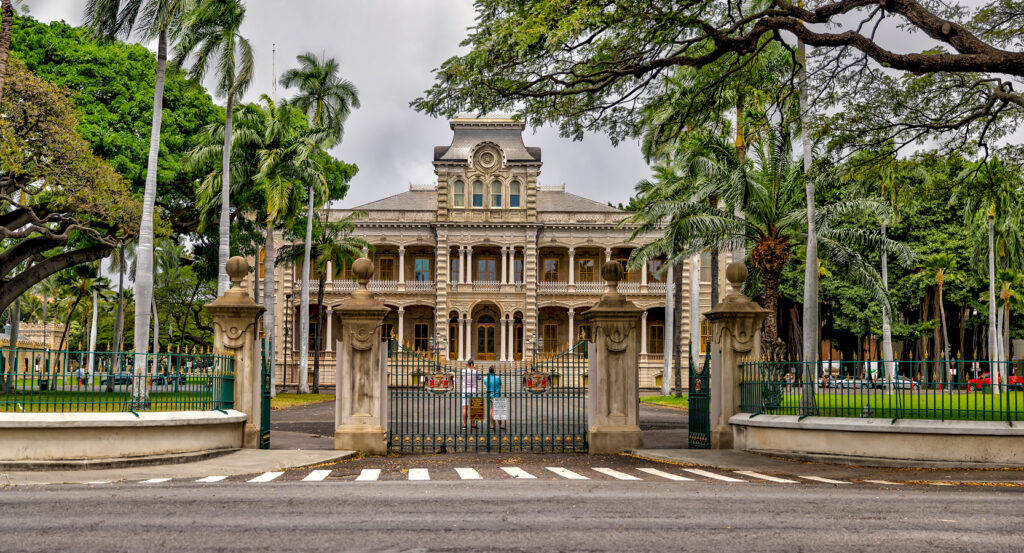
Set amid the lush banyan-lined grounds of Downtown Honolulu, this majestic structure captures both the splendor and sorrow of a kingdom caught between tradition and transformation. Completed in 1882 under King Kalākaua, Iolani Palace was the centerpiece of a visionary monarch's quest to modernize his nation while preserving its soul. Its design, an exquisite fusion of Italianate and native Hawaiian architectural influences known as American Florentine, gleams with elegance: grand colonnades, ornate woodwork, and imported crystal chandeliers that rival Europe's finest palaces. Yet beyond its beauty, Iolani Palace radiates a deeper energy, one that speaks of pride, resistance, and cultural rebirth. Walking its corridors feels like stepping into a heartbeat slowed by history: the throne room, where King Kalākaua and Queen Kapiʻolani hosted foreign dignitaries; the music room, where the king composed melodies that still echo through Hawaiian song; and the upstairs chamber where Queen Liliʻuokalani was imprisoned following the overthrow of her monarchy. Today, restored to its 19th-century glory, Iolani Palace is more than a museum, it's a sacred site of remembrance and identity, a place where Hawaii's past stands tall and unbroken in the face of time.
What defines Iolani Palace.
Iolani Palace's story is one of resilience, a tale of royal ambition, political upheaval, and the quiet endurance of a people who refused to forget.
When King David Kalākaua commissioned the palace, his vision extended far beyond architecture. He wanted a symbol of sovereignty and sophistication, proof that the Hawaiian Kingdom stood equal among the great nations of the world. Equipped with electricity and telephones before even the White House, Iolani Palace represented the forward-thinking spirit of a ruler who celebrated both progress and Polynesian pride. But the splendor was short-lived. In 1893, a group of American businessmen and missionaries, with the backing of U.S. forces, orchestrated the overthrow of Queen Liliʻuokalani, Hawaii's last reigning monarch. The new Provisional Government claimed the palace as its headquarters, stripping it of royal furnishings and using it for bureaucratic offices for decades. Yet the walls held memory. In 1969, after nearly seventy years of neglect, the Friends of Iolani Palace led a painstaking restoration effort, piecing together historical records, photographs, and even auctioned royal artifacts from around the world to restore the palace's grandeur. Today, more than 80% of the palace's interior furnishings have been returned, including the queen's personal writing desk, King Kalākaua's state sword, and original portraits of the royal family. The Hawaiian flag still flies high above the palace grounds, not as a relic, but as a declaration that the legacy of the aliʻi (Hawaiian royalty) remains alive. Visitors often overlook that the name Iolani means “royal hawk,” a bird sacred in Hawaiian culture and symbolic of guardianship, a fitting name for a place that continues to watch over the heart of Honolulu.
How Iolani Palace fits.
Visiting Iolani Palace is more than a historical stop, it's a resonant pilgrimage into the soul of Hawaii.
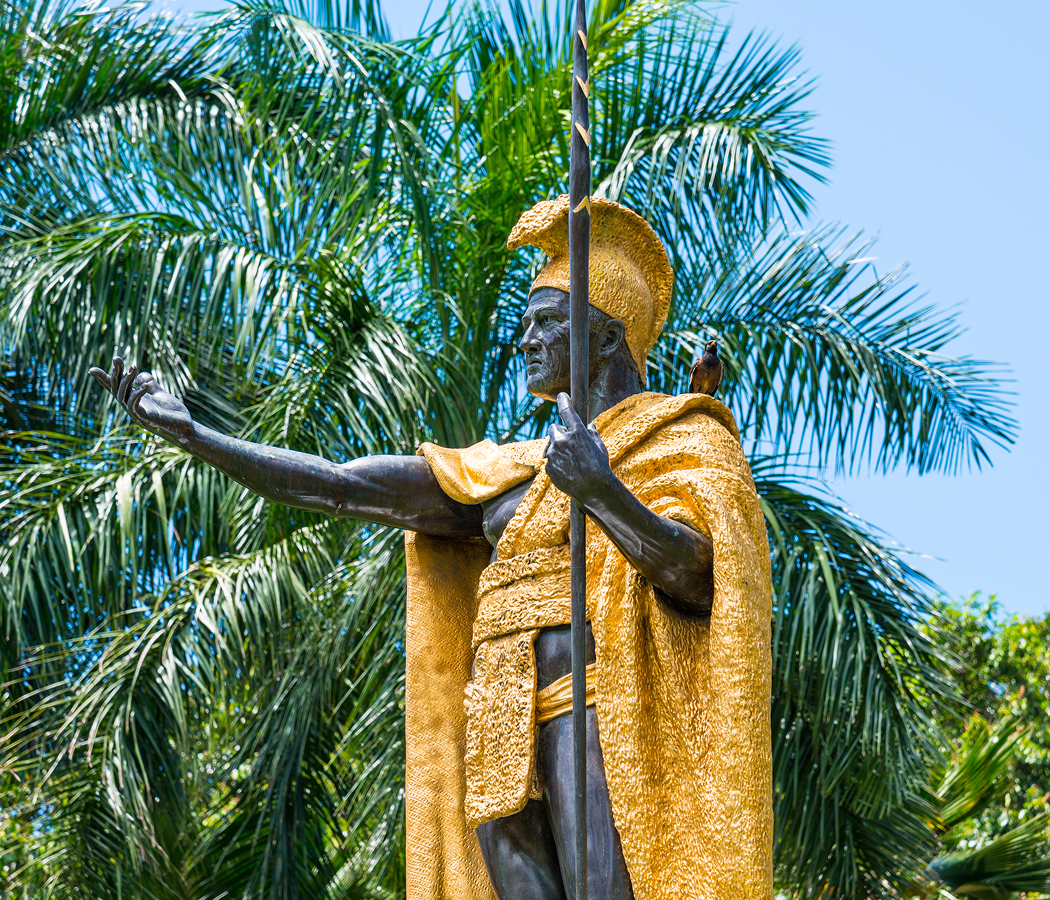
Begin your journey early in the day, when the sun filters through the canopy of banyan and monkeypod trees that shade the palace lawn. The building's honey-colored façade gleams softly in the morning light, its flag fluttering against the skyline of Downtown Honolulu. Start with the self-guided audio tour, available in multiple languages, which allows you to move at your own pace through the grand halls and intimate chambers. The Throne Room is a highlight, its crimson and gold decor evoking the dignity of royal gatherings, while the Blue Room and Queen's Imprisonment Room offer more introspective glimpses into the personal side of monarchy. Don't miss the basement galleries, where exhibitions chronicle Hawaii's constitutional evolution, the overthrow, and the subsequent annexation. Outside, take time to stroll through the surrounding Capitol District - Aliʻiōlani Hale stands directly across the street, its King Kamehameha statue saluting the palace, while Kawaiahaʻo Church and the Mission Houses Museum complete the historical narrative of the era. For a serene interlude, rest on the grass near the front gates, where locals often pause in quiet reflection. If you visit on a Friday, you might hear the Royal Hawaiian Band performing on the palace grounds, a living tradition dating back to King Kalākaua's reign. Every note carries history. Every breeze through the banyan trees feels like a whisper from the past. To experience Iolani Palace is to feel Hawaii's story in full, its majesty, its heartbreak, and its unyielding grace. It's not just a landmark; it's the conscience of a nation, standing with poise and pride at the center of the Pacific.
Where your story begins.
Foresyte Travel reveals places that feel extraordinary long before you arrive.
Enjoy editorial crafted for luxury travelers.
Foresyte may earn a commission when you book.