Why you should experience Mauna ʻAla - Royal Mausoleum in Hawaii.
Mauna ʻAla - Royal Mausoleum in Honolulu is the sacred cradle of a nation's soul.
Set in the tranquil Nuʻuanu Valley, surrounded by towering palms and banyans that seem to bow in reverence, the grounds radiate a deep serenity that humbles even the most casual visitor. Here, the air feels thick with history, a blend of birdsong, rustling leaves, and the quiet dignity of generations who shaped Hawaii's destiny. This is the final resting place of the aliʻi, the Hawaiian chiefs and monarchs who led with courage, compassion, and vision. Among them rest King Kamehameha II through V, Queen Emma, King Kalākaua, and Queen Liliʻuokalani, the last reigning monarch of the Hawaiian Kingdom. Walking through the iron gates, you feel the shift immediately; it's as if time slows, inviting you to tread softly on sacred earth. The mausoleum chapel, a simple Gothic structure built of coral block and lava rock, stands as a poignant symbol of both Western influence and Hawaiian heart. Sunlight filters through stained-glass windows, illuminating royal insignias, while the surrounding lawns hold centuries of lineage and legacy. Mauna ʻAla is not a tourist attraction, it's a place of pilgrimage, of quiet communion with Hawaii's royal past.
What you should know about Mauna ʻAla - Royal Mausoleum.
The story of Mauna ʻAla begins with love, loss, and a nation's reverence for its leaders.
Commissioned by King Kamehameha IV and Queen Emma in 1863 after the death of their young son, Prince Albert, the mausoleum was intended as a place where the royal family could be laid to rest together. The site was chosen for its natural peace, tucked in Nuʻuanu Valley, where gentle rains nourish the land year-round, symbolizing eternal renewal. Originally, the remains of Hawaiian monarchs rested within the coral-block chapel itself, beneath the polished koa floors, until 1901, when they were moved to the adjacent tombs to accommodate future generations. The grounds are divided into sections honoring different royal lines, the Kamehameha Tomb, the Kalākaua Tomb, and smaller plots for notable chiefs and consorts. Each bears plaques inscribed in Hawaiian, preserving the language and titles of those who once ruled the islands. In a rare acknowledgment of Hawaii's sovereignty, the United States government officially recognizes Mauna ʻAla as neutral ground, not subject to state or federal jurisdiction, in perpetual honor of the aliʻi interred here. Few realize that on certain anniversaries, descendants of the royal families gather to pay tribute in quiet ceremonies, bringing fresh lei and chanting mele in the old tongue. It remains one of the few places in Hawaii where tradition, monarchy, and spirituality coexist untouched by modernity.
How to fold Mauna ʻAla - Royal Mausoleum into your trip.
Visiting Mauna ʻAla is an experience that calls for reverence.
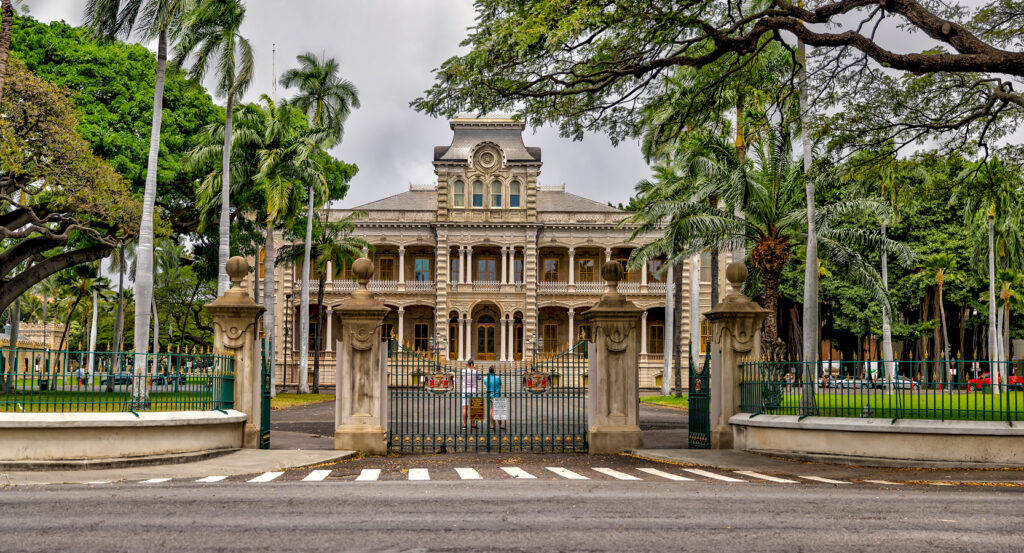
Located just a few miles from Downtown Honolulu, Royal Mausoleum can be reached by a short drive through the lush Nuʻuanu district. When you arrive, pause at the ornate wrought-iron gates bearing the royal crown, a gift from Queen Victoria of England, and take a moment before stepping inside. Photography is limited, and voices instinctively lower here; even the wind seems to whisper softly through the trees. Walk slowly along the paths lined with royal palms, stopping to read the plaques and trace the family lines of Hawaii's great monarchs. The chapel, usually closed to the public, occasionally opens for ceremonial events or guided visits that share the deeper stories behind each burial site. To gain context, consider visiting ʻIolani Palace beforehand, understanding the lives of those rulers makes Mauna ʻAla all the more moving. Bring flowers or a lei if you wish to pay respects, but above all, bring stillness. The Royal Mausoleum Grounds are not about performance, they are about presence. As you stand beneath the shade of ancient trees, you may feel what many locals describe as mana, the quiet, spiritual power that still emanates from this place. Mauna ʻAla is not only a burial ground but a living bridge to Hawaii's royal heart, steadfast, eternal, and immeasurably sacred.
Where your story begins.
Foresyte Travel reveals places that feel extraordinary long before you arrive.
Experience premium editorial crafted for luxury travelers.