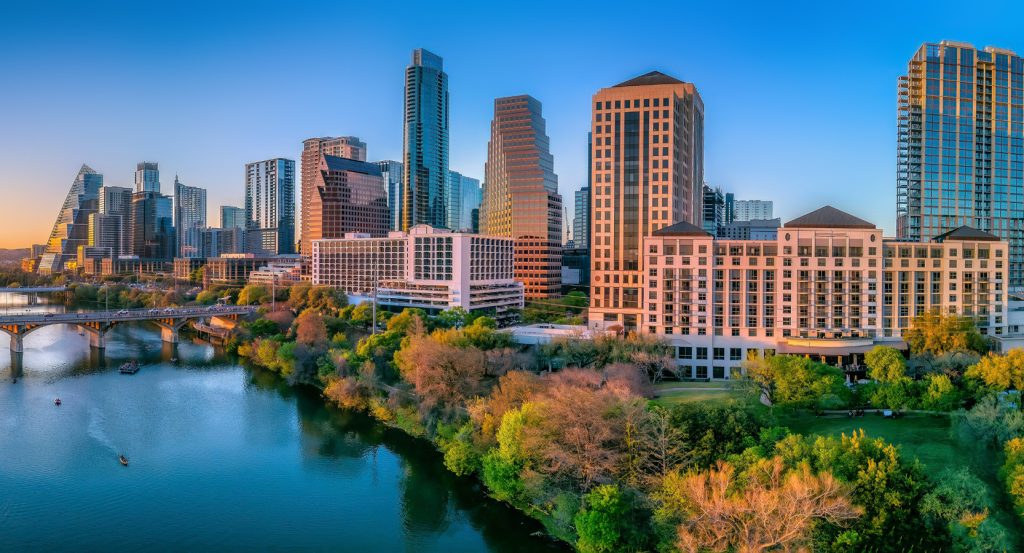
Why you should experience Jesse E. Segovia Street in Austin, Texas.
Jesse E. Segovia Street is a welcoming corridor where East Cesar Chavez's cultural heritage, neighborhood resilience, artistic expression, and longstanding community character create one of East Austin's most meaningful streets.
Running through East Cesar Chavez between Holly and Govalle, the corridor connects historic residential blocks, neighborhood businesses, civic spaces, community organizations, and tree-lined streets that reflect generations of East Austin's evolution. Restored cottages, colorful murals, mature pecan trees, locally owned establishments, and thoughtfully renewed streetscapes reinforce a setting where history and contemporary creativity remain closely connected. Successive generations of investment have strengthened the surrounding community while preserving the neighborhood's deeply rooted cultural identity. The result is an experience defined by authenticity, continuity, and one of East Cesar Chavez's most distinctive corridors.
What you should know about Jesse E. Segovia Street.
Jesse E. Segovia Street is best known for honoring Jesse E. Segovia, a respected East Austin civic leader and educator whose decades of public service reflected the neighborhood's enduring commitment to community leadership, while the corridor itself occupies part of one of Austin's oldest east-side residential districts established during the late nineteenth century following subdivision beyond Waller Creek. Residential growth accelerated after electric streetcar expansion during the 1890s and early twentieth century, producing a rich collection of Craftsman bungalows, style cottages, early brick commercial buildings, and modest postwar residences that continue defining the surrounding streetscape. The neighborhood became one of Austin's most significant centers of Mexican American cultural life during the twentieth century, fostering generations of civic organizations, family-owned businesses, religious institutions, artists, musicians, and entrepreneurs whose influence extends throughout the city. Mature live oak, pecan, cedar elm, Mexican sycamore, Texas mountain laurel, and native riparian vegetation reflect the corridor's proximity to the Colorado River watershed while contributing to one of Central Austin's most established urban tree canopies. Collectively, the corridor's commemorative significance, architectural heritage, cultural legacy, neighborhood evolution, and environmental character establish Jesse E. Segovia Street as one of East Cesar Chavez's defining corridors.
The George Washington Carver Museum, Cultural and Genealogy Center, established in 1980, preserves extensive archival collections documenting African American history, genealogy, visual arts, and community heritage across Austin. Nearby, Our Lady of Guadalupe Catholic Church, founded in 1907, has remained a central institution in East Austin through generations of religious, educational, and cultural leadership within the city's Hispanic community. The French Legation, completed in 1841 as the oldest surviving diplomatic structure in Texas, preserves one of Austin's earliest surviving residences while documenting the diplomatic history of the Republic of Texas. Together, these cultural institutions, historic buildings, and archival collections demonstrate how Jesse E. Segovia Street reflects a corridor where education, heritage, and historical preservation continue reinforcing one another.
How to fold Jesse E. Segovia Street into your trip.
Jesse E. Segovia Street works as an exploration of East Austin's cultural heritage, neighborhood creativity, and historic character.
Begin at Comal Pocket Park, where shaded green space, neighborhood gathering areas, and public art introduce the intimate community atmosphere that defines the streets surrounding Jesse E. Segovia Street while establishing a relaxed foundation for the outing. Continue to Plaza Saltillo, where contemporary public spaces, local businesses, and transit-oriented development expand the experience by illustrating how East Austin continues evolving while maintaining strong connections to its historic identity. Conclude at Mexic-Arte Museum, where exhibitions celebrating Mexican, Latino, and Latin American art provide the historical and cultural payoff by connecting the neighborhood's living traditions with Austin's broader artistic narrative. The progression moves naturally from neighborhood-scale public space to contemporary urban vitality before culminating in an institution that celebrates the cultural legacy woven throughout East Austin.
Where your story begins.
Foresyte Travel reveals places that feel extraordinary long before you arrive.
Experience premium editorial crafted for luxury travelers.