Why La Villa Mahana matters.
La Villa Mahana is an intimate gastronomic restaurant where Anau's village setting meets chef Damien Rinaldi-Dovio's French culinary craftsmanship, the ingredients of French Polynesia and a highly personal approach to fine dining on Bora Bora.
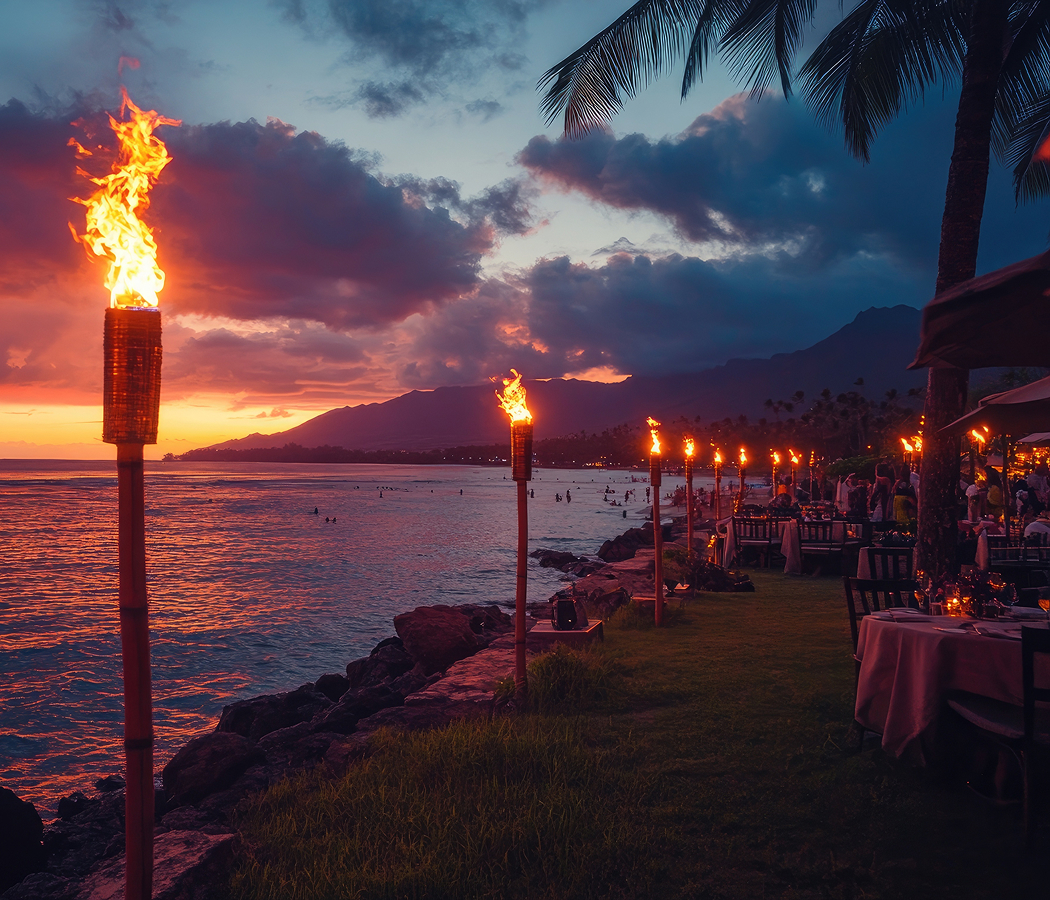
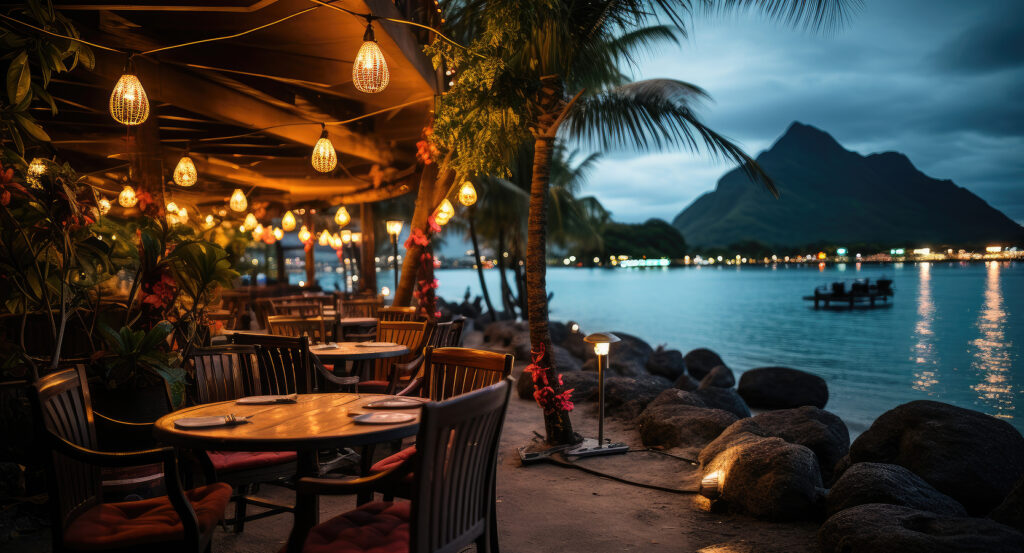
Set along the eastern coastal road in Anau, the restaurant occupies a secluded villa near Bora Bora's mountainous interior, where tropical gardens, residential properties and the island's lagoonfront road create a quiet setting removed from the principal resort districts and Vaitape's commercial waterfront. A small courtyard connects the entrance with dining areas arranged around the property's domestic architecture. Warm lighting, carefully spaced tables and surrounding vegetation establish the intimacy of a private residence. The limited seating concentrates activity within a compact dining environment, placing the kitchen's preparations at the center of the evening. The result is a distinctive restaurant whose residential scale, chef-directed cooking and carefully controlled dining format have established an enduring place in Bora Bora's gastronomic scene.
What defines La Villa Mahana.
La Villa Mahana is best known for chef Damien Rinaldi-Dovio's establishment of an independent gastronomic restaurant that brought French fine dining into a secluded residential setting on Bora Bora. Rinaldi-Dovio was born in France and developed his professional background through European culinary training before pursuing opportunities in international hospitality. His work eventually brought him to French Polynesia, where the availability of Pacific seafood and tropical ingredients provided a different foundation for classical cooking. In 2003, he established La Villa Mahana, creating a small restaurant organized around his direct involvement in menu development and preparation. The venture departed from the large dining operations associated with Bora Bora's international resorts, concentrating service around a limited number of reservations. Rinaldi-Dovio developed a culinary approach combining French sauces, precise protein cookery and ingredients associated with the Society Islands. His wife, Fanny, became closely associated with the restaurant's hospitality and service, reinforcing its character as a family-directed establishment. The couple's involvement established a close relationship between the kitchen and dining room, with the scale of the operation permitting individualized attention throughout the meal. The restaurant developed tasting menus that allowed the chef to structure a sequence of courses around complementary ingredients and changing preparations. Its reputation expanded through international travel coverage and recommendations among diners seeking gastronomic experiences beyond Bora Bora's resort properties. The establishment became particularly associated with advance reservations, reflecting the small number of tables available during each service. Its secluded location contributed to a dining format built around an extended evening, careful pacing and direct engagement with the chef's cooking. More than two decades after its founding, La Villa Mahana remains associated with the independent culinary ambitions of its founder and the intimate restaurant model he introduced to Bora Bora.
How La Villa Mahana fits.
La Villa Mahana works as the gastronomic centerpiece for a Bora Bora outing connecting the island's Polynesian ceremonial heritage, its ancient volcanic landscape and the accessible southern shoreline that links local communities with the surrounding lagoon.
Begin at Marae Fare Opu, an archaeological site associated with Bora Bora's pre-European religious and ceremonial history. Traditional marae served as important gathering places for worship, chiefly authority and community ceremonies throughout the Society Islands. Their stone platforms and associated structures preserve the relationship between Polynesian religious practices and the organization of ancestral settlements. Bora Bora's ceremonial sites formed part of a wider landscape connecting chiefly families with sacred places and inherited political responsibilities. The surviving archaeological remains provide a perspective on the island's history before European colonization and international tourism. Continue to Mount Otemanu, the jagged volcanic summit dominating Bora Bora's central mountain mass. Rising 727 meters above sea level, the mountain preserves the eroded remains of the ancient volcano responsible for the island's formation. Its steep basaltic cliffs and exposed ridges reveal the effects of prolonged weathering on the original volcanic structure. Tropical vegetation covers portions of the lower slopes, contrasting with the exposed rock above. Guided excursions through accessible lower terrain provide perspectives on the island's geological development and the relationship between its mountainous interior and surrounding reef. Conclude at Matira Beach, the extensive public shoreline occupying Bora Bora's southern peninsula. Its fine coral-derived sand descends gradually into shallow turquoise water protected by the surrounding barrier reef. Coconut palms border sections of the beach, and local restaurants connect the waterfront with the adjoining residential district. The western shoreline provides expansive sunset views across the lagoon. Its accessible coastal setting demonstrates the accumulation of marine sediments along the protected margins of tropical volcanic islands. The progression moves from Marae Fare Opu's Polynesian ceremonial heritage through Mount Otemanu's volcanic geology and culminates at Matira Beach's sheltered shoreline, connecting La Villa Mahana with the cultural and natural foundations of Bora Bora.
Where your story begins.
Foresyte Travel reveals places that feel extraordinary long before you arrive.
Enjoy editorial crafted for luxury travelers.