Why Lafayette Cemetery No. 1 matters.
Lafayette Cemetery No. 1 isn't just a resting place, it's the soul of the Garden District, where the elegance of New Orleans meets the intimacy of its past.
Founded in 1833, this hauntingly beautiful “city of the dead” captures the essence of Southern Gothic charm, equal parts history, art, and quiet reverence. Rows of whitewashed family tombs rise like miniature mansions beneath canopies of oak and magnolia, their plastered walls cracked by time yet softened by the golden Louisiana light. Iron fences twist in intricate curls, and ivy trails lazily across marble angels that seem to breathe with the weight of memory. Here, beauty and decay coexist gracefully, the craftsmanship of 19th-century artisans enduring through centuries of flood, heat, and rebirth. The air feels heavy but tender, as if the city itself is exhaling its stories through the moss. Lafayette Cemetery No. 1 isn't about death, it's about lineage, identity, and the rhythm of a city that refuses to let its past go silent.
What defines Lafayette Cemetery No. 1.
Behind its ornate gates lies one of the most elegant and ingeniously designed burial grounds of its time.
Unlike the private Catholic cemeteries of old New Orleans, Lafayette was established as a municipal cemetery, open to people of all faiths, classes, and nationalities. Immigrant families from Ireland, Germany, and Italy built many of its vaults, infusing the landscape with craftsmanship that blends European design and Creole flair. Roughly 1,100 family tombs hold thousands of souls, often generations deep, their “oven vaults” designed to reuse space naturally in the city's heat. Each tomb tells a layered story: epidemics, duels, triumphs, and the unyielding will to endure. Hollywood has long been drawn to its melancholy beauty, filming scenes from Interview with the Vampire and Double Jeopardy among its tombs, but its true power lies in silence. Preservationists have worked tirelessly to stabilize the delicate structures, ensuring that this open-air archive of culture and architecture survives the centuries. Beneath every crack and shadow lies proof that memory here is built to last.
How Lafayette Cemetery No. 1 fits.
To experience Lafayette Cemetery No. 1 is to feel the living pulse of the Garden District through the stillness of its stones.
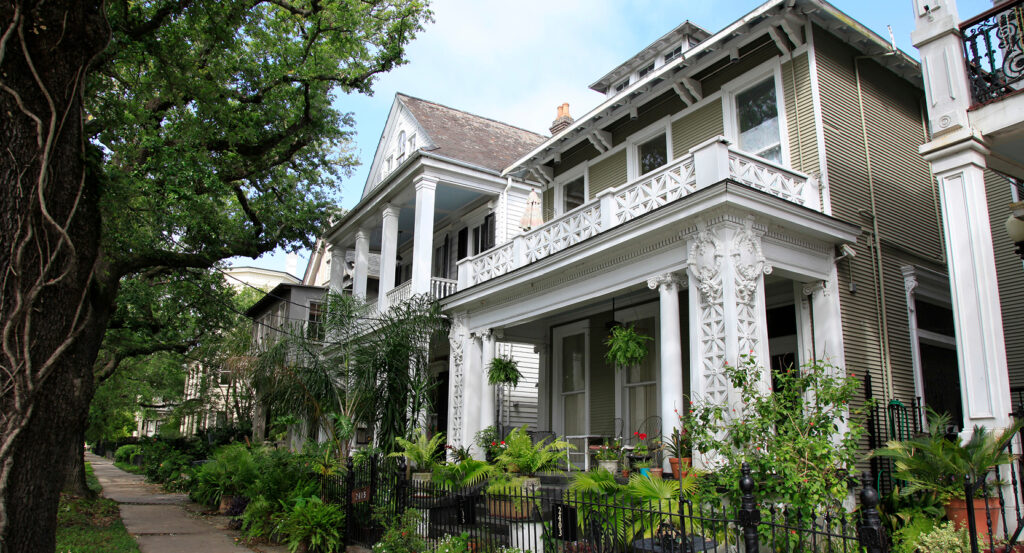
Begin your visit on Washington Avenue, just across from the iconic Commander's Palace, the contrast between the laughter of brunch and the hush beyond the gates perfectly captures New Orleans itself. Enter beneath the wrought-iron archway and wander the narrow brick paths slowly, letting your eyes trace the texture of plaster, iron, and vine. Pause at the oldest tombs in the center of the grounds, where inscriptions have faded into near illegibility, and imagine the families who once stood here, dressed in linen and lace beneath the same sun. Even if public access remains limited for preservation, the view through the fence tells volumes, the geometry of grief rendered in stone and light. Surround your visit with a walk through the Garden District's grand homes and flowering sidewalks; the cemetery is its heartbeat. Come early in the morning or near dusk, when the oaks cast long shadows and the air hums with warmth. Lafayette Cemetery No. 1 isn't just a stop, it's an awakening, a reminder that in New Orleans, even silence has a song.
Where your story begins.
Foresyte Travel reveals places that feel extraordinary long before you arrive.
Enjoy editorial crafted for luxury travelers.
Foresyte may earn a commission when you book.