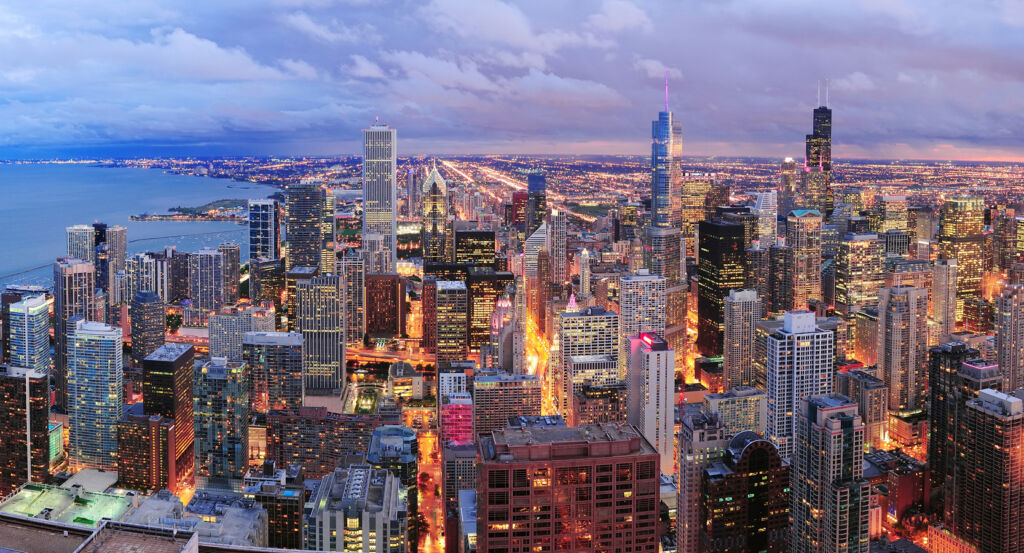
Why you should experience Lake Park Avenue in Chicago, Illinois.
Lake Park Avenue is a historic South Side corridor where architectural innovation, academic influence, and cultural legacy converge along one of Chicago's most distinguished streets.
Running through Hyde Park between Kenwood and Woodlawn, this historic avenue connects landmark residences, academic institutions, cultural destinations, public parks, neighborhood businesses, and civic landmarks that have shaped city life for generations. Historic mansions, Prairie School architecture, university-affiliated institutions, community gathering places, landscaped streetscapes, and architecturally significant buildings create an environment defined by intellectual energy and historical depth. The corridor developed rapidly during the late nineteenth and early twentieth centuries as Hyde Park emerged as one of Chicago's most influential residential and academic communities. Architects, educators, scholars, civic leaders, and residents helped establish a reputation rooted in innovation, learning, and cultural significance. The result is a street defined by architectural excellence, educational impact, and neighborhood character.
What you should know about Lake Park Avenue.
Lake Park Avenue is best known for passing through the neighborhood that became the birthplace of the Prairie School movement, a revolutionary architectural philosophy led by Frank Lloyd Wright that fundamentally reshaped residential design in the United States and influenced modern architecture around the world.
During the late nineteenth century, Hyde Park attracted a generation of architects experimenting with new approaches to residential design that rejected historical imitation in favor of forms inspired by the American landscape. The neighborhood became an early laboratory for architectural innovation, producing ideas that would later define one of the most influential design movements in history. Many of these pioneering concepts emerged within walking distance of Lake Park Avenue and helped establish Chicago as a global center of architectural thought. The district's built environment continues to reflect this remarkable legacy today. Few urban neighborhoods anywhere can claim such a foundational role in the development of modern architecture.
How to fold Lake Park Avenue into your trip.
Lake Park Avenue works as an exploration of Chicago's architectural heritage, academic legacy, and cultural significance.
Begin at The University of Chicago, where the avenue's defining relationship with scholarship, innovation, and civic influence immediately comes into focus. Continue toward Robie House, whose architectural significance reveals the creative and intellectual forces that helped shape the district across generations. From there, make your way to The Museum of Science and Industry, where one of Chicago's most celebrated institutions provides a broader perspective on the scientific achievement, educational traditions, and cultural vitality that continue to define the area today. Along the route, you'll encounter historic architecture, cultural institutions, public gathering places, academic landmarks, neighborhood destinations, civic treasures, and celebrated streetscapes that showcase the avenue's remarkable depth. The progression moves naturally from world-renowned university to architectural masterpiece to iconic museum, revealing the forces that transformed Lake Park Avenue into one of the city's most consequential corridors. Lake Park Avenue remains one of Chicago's most rewarding streets, preserving a distinctive balance between historical significance, intellectual influence, and everyday livability.
Where your story begins.
Foresyte Travel reveals places that feel extraordinary long before you arrive.
Experience premium editorial crafted for luxury travelers.