
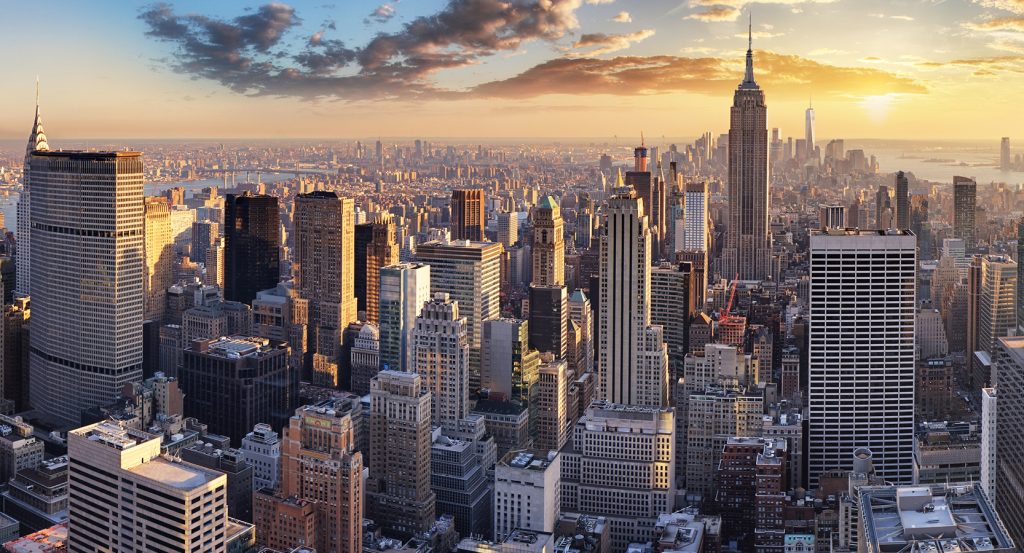
Why you should experience LUMA Hotel Times Square in New York, NY.
LUMA Hotel Times Square is a luminous boutique hotel where Midtown's architectural compression, Bryant Park sophistication, fashion-district creativity and restless metropolitan energy converge within a slender glass tower carved into one of Manhattan's densest blocks.
Set along West 41st Street near Broadway and just steps from Bryant Park, the hotel rises between two prewar buildings as a transparent glass silhouette designed by Peter Poon, turning an unusually constrained Midtown site into a vertically organized property filled with natural light. Peter Poon Architects set the tower back from the surrounding street wall and used floor-to-ceiling glazing to open guestrooms toward Manhattan, while CCS Architecture collaborated on the public spaces and Cass Calder Smith personally directed a lobby concept centered on illumination. Italian limestone floors, black granite accents and the building's glass envelope give the lower floors a material style that continues the architectural emphasis on light. The result is a hotel where Peter Poon, Cass Calder Smith and CCS Architecture translate Midtown's density into a hospitality character defined by verticality, transparency and carefully controlled light.
What you should know about LUMA Hotel Times Square.
LUMA Hotel Times Square is best known for opening on May 2, 2017 as the first LUMA Hotels property, introducing 130 guestrooms inside a newly constructed tower designed by Peter Poon Architects for Stanford Hotel Properties. PPA Architects records the project at 68,000 square feet, identifies Lin-Lih Lin as project architect and Peter Poon as project designer, and describes a tower rising 257 feet from an exceptionally compact West 41st Street site. The accommodation floors contain only a small number of rooms per level, while seven-foot floor-to-ceiling windows use the narrow tower's vertical proportions to draw daylight deep into guestrooms and maintain outward views across Manhattan. CCS Architecture designed the ground-floor lobby and collaborated with PPA on the public interiors, with Cass Calder Smith developing the illumination-centered concept that established LUMA's visual character as an independent hospitality brand. Stanford Hotel Properties, Peter Poon, Lin-Lih Lin, Cass Calder Smith and the 68,000-square-foot program collectively turned an infill parcel between older Midtown buildings into the architectural foundation for a new hotel company.
James Beard Award-winning chef José Garces established the property's original culinary character through Ortzi, a Basque-inspired restaurant and bar conceived specifically for LUMA and integrated into CCS Architecture's ground-floor design. Garces brought a national restaurant career and Iron Chef profile to Ortzi, connecting the independent hotel's debut with a chef whose portfolio had already extended well beyond New York. Chef Charlie Palmer now leads AperiBar, shifting the property's restaurant authorship toward an Italian-inspired concept while preserving a chef-driven dining program as a defining component of the hotel. Together, José Garces, Ortzi, Charlie Palmer and AperiBar trace a continuous culinary strategy at LUMA Hotel Times Square in which nationally recognized chefs have given the compact property a restaurant character disproportionate to its 130-room scale.
How to fold LUMA Hotel Times Square into your trip.
LUMA Hotel Times Square works as the anchor for an afternoon tracing literary collecting, Beaux-Arts architecture and Broadway performance through the blocks surrounding Bryant Park.
Begin at New York Public Library, where Carrère and Hastings designed the 5th Avenue building around the consolidated Astor, Lenox and Tilden collections, creating a marble composition whose grand reading spaces made scholarship an architectural performance at the eastern edge of Bryant Park. Continue to Stephen A. Schwarzman Building's neighboring Bryant Park landscape before moving to Belasco Theatre, where producer David Belasco commissioned architect George Keister to create a Broadway house with Tiffany lighting, extensive woodwork and an apartment for Belasco above the auditorium. Conclude at New Amsterdam Theatre, where architects Herts & Tallant collaborated with interior designer George Gray Barnard on an elaborate Art Nouveau environment that later became closely associated with Florenz Ziegfeld and his rooftop theatrical productions. The progression moves from Carrère and Hastings's architecture of scholarship through George Keister's intensely authored theatrical interior into the Ziegfeld history of New Amsterdam Theatre, revealing the literary and performance culture surrounding LUMA Hotel Times Square.
Where your story begins.
Foresyte Travel reveals places that feel extraordinary long before you arrive.
Experience premium editorial crafted for luxury travelers.







































































































