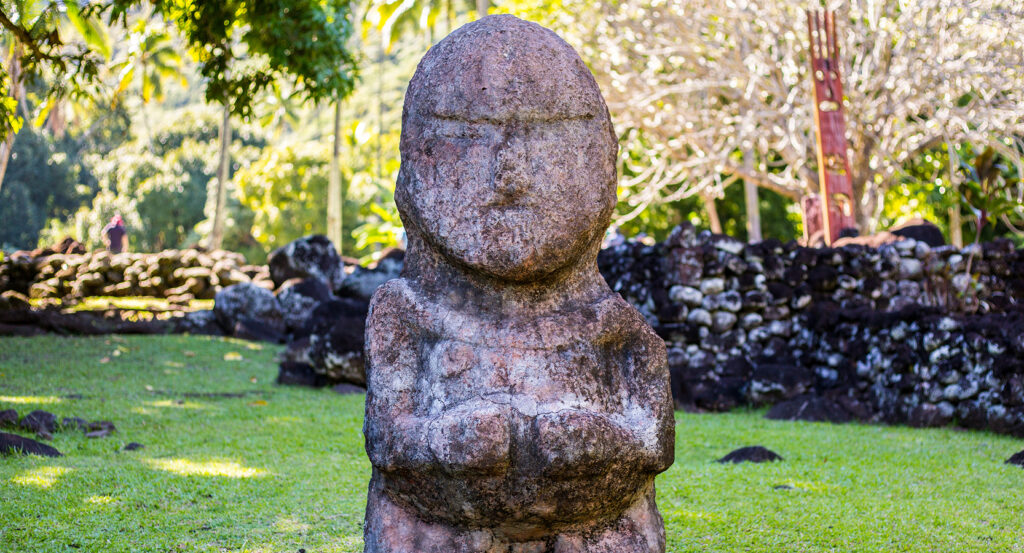
Why Marae Taputapuatea matters.
Marae Taputapuatea, or Taputapuātea Marae, in Raiatea is the spiritual center of Polynesia, a sacred stone temple where history, mythology, and ancestral power converge in silence and awe.
Perched along the southeastern coast of Raiatea, this UNESCO World Heritage Site feels less like a destination and more like a pilgrimage. The site opens to the lagoon, framed by ironwood trees and the whisper of the Pacific, as if the ocean itself still bows to the gods once worshipped here. Constructed over 1,000 years ago, the marae, a ceremonial gathering ground of coral and basalt stones, served as the beating heart of Polynesian civilization. It was here that ancient navigators from across the Pacific came to offer sacrifices, seek guidance, and forge spiritual connections before embarking on voyages that would shape the Polynesian Triangle. The stones themselves seem to hum with memory. Standing among them, you can feel the weight of centuries, chants once carried on the wind, the scent of tiare flowers drifting through the sacred air. The site's scale is both intimate and monumental, evoking reverence. Taputapuātea is not about grandeur; it's about connection, to land, to lineage, and to the divine forces that bound the islands together long before maps ever existed.
What defines Marae Taputapuatea.
Taputapuātea is often described as the birthplace of Polynesian culture, a title earned not by myth, but by migration, ritual, and diplomacy.
For centuries, Raiatea was known as Havai'i Nui, the “Great Havai'i,” considered the ancestral homeland of many island nations across the Pacific. The marae at Taputapuātea was its spiritual anchor, the site of coronations, religious councils, and international ceremonies uniting the ancient Polynesian world. Chiefs and priests from Tahiti, the Cook Islands, Hawai'i, Aotearoa (New Zealand), and beyond would sail here to exchange genealogies, songs, and celestial knowledge. From these gatherings came shared traditions, navigation routes, and the sacred belief that all islands were branches of the same cosmic tree. Archaeologists have identified six major marae structures across the complex, including Ahu Rā'iātea, dedicated to Oro, the god of war, peace, and fertility. Offerings once included food, flowers, and symbolic artifacts, each ritual reaffirming the bond between humanity and the divine. When European explorers arrived in the 18th century, many local rituals were suppressed, and Taputapuātea fell into disrepair. Yet the site endured in spirit. In recent decades, descendants of those early voyagers have returned to honor their ancestors, reviving traditional ceremonies and navigation practices. The UNESCO designation in 2017 wasn't just an acknowledgment of the site's history, it was a recognition of the living culture that continues to flow from its sacred ground.
How Marae Taputapuatea fits.
Visiting Taputapuātea isn't simply an excursion, it's an initiation into the soul of Polynesia.
To reach the site, drive or join a guided tour from Uturoa, Raiatea's main town. The journey southward takes 45 minutes, winding through lush valleys and coastal villages before revealing the open expanse of the sacred shoreline. Upon arrival, pause at the entrance before stepping onto the marae, local tradition asks that you approach with quiet respect, as this is still considered living ground. Guides often begin with a karakia (blessing) to honor the ancestors and invite visitors into a space of reverence. Take time to walk slowly between the stone platforms, each one aligned to celestial markers that mirror ancient Polynesian navigation principles. The largest ahu faces directly toward the sea, symbolizing the outward voyages that once connected the Pacific. Nearby, informational panels detail the archaeological significance, but it's the atmosphere, the wind, the stillness, the sense of presence, that leaves the greatest impression. After exploring, continue down the coast for a picnic by the lagoon or visit the nearby cultural center, where you can see replicas of voyaging canoes and learn about star-based navigation. For those who stay until evening, the sunset here feels almost transcendent: golden light spilling over the stones, the ocean reflecting the sky's slow surrender to night. Taputapuātea isn't just a monument to the past, it's a living compass, guiding all who visit back to the origins of wonder, faith, and the shared spirit of the Pacific.
Where your story begins.
Foresyte Travel reveals places that feel extraordinary long before you arrive.
Enjoy editorial crafted for luxury travelers.
Foresyte may earn a commission when you book.