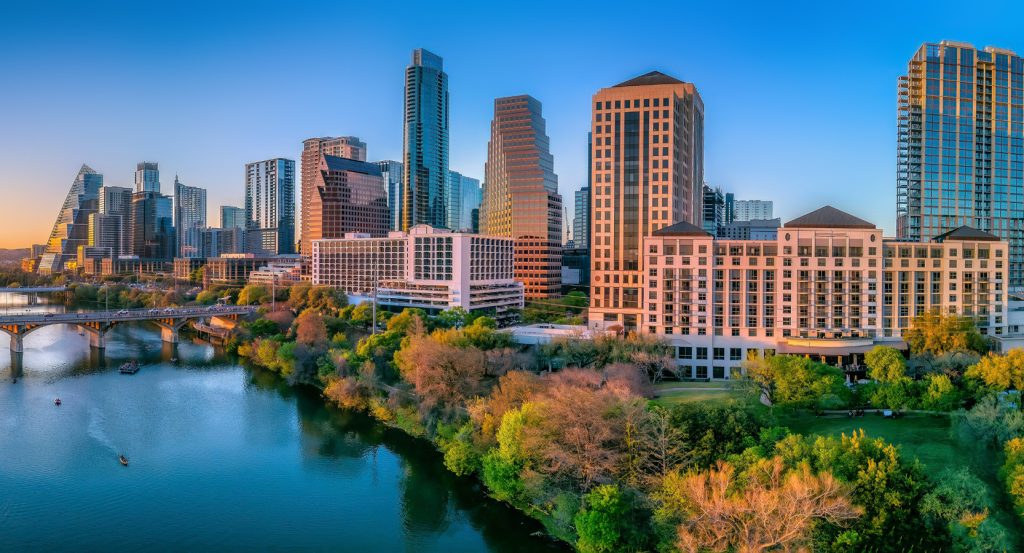
Why Martin Luther King Jr. Boulevard matters.
Martin Luther King Jr. Boulevard is a distinguished Central Austin corridor where civil rights history, higher education, and civic life converge along one of the city's most significant streets.
Running through Central East Austin between Downtown and Cherrywood, this historic corridor connects landmark civic institutions with architecturally significant university buildings, celebrated museums, thriving cultural destinations, welcoming public spaces, and enduring neighborhood landmarks that collectively showcase Austin's remarkable commitment to education, public service, and social progress. Broad tree-lined avenues, thoughtfully preserved historic architecture, energetic academic activity, celebrated cultural institutions, flourishing local businesses, and enduring civic traditions create an environment where generations of students, educators, activists, residents, and visitors have experienced one of Central Texas's defining urban corridors. Martin Luther King Jr. Boulevard continues to unite Austin's educational, cultural, and civic districts while honoring one of America's most influential civil rights leaders. The result is a corridor defined by historical importance, educational excellence, and lasting cultural significance.
What defines Martin Luther King Jr. Boulevard.
Martin Luther King Jr. Boulevard is best known for serving as the ceremonial gateway to the University of Texas at Austin, where the boulevard leads directly to the iconic UT Tower, among the most recognizable university landmarks in the United States and a lasting symbol of higher education in Texas.
Originally known as 19th Street before being renamed to honor Dr. Martin Luther King Jr., the boulevard evolved into one of Austin's most important civic corridors, linking East Austin with the state's flagship university. Its prominent approach to the UT Tower reinforces the boulevard's role as a symbolic connection between education, civic leadership, and the broader community. Today, the corridor remains central to university life, cultural events, and public ceremonies while reflecting Austin's continued commitment to honoring both educational achievement and civil rights. That extraordinary civic role has established Martin Luther King Jr. Boulevard as one of the city's most historically significant corridors.
How Martin Luther King Jr. Boulevard fits.
Martin Luther King Jr. Boulevard works as an exploration of Austin's educational heritage, civic landmarks, and cultural institutions.
Begin along Martin Luther King Jr. Boulevard, where the grand civic streetscape immediately establishes the corridor's defining identity. Continue toward the UT Tower, where one of the nation's most recognizable university landmarks provides broader perspective on the boulevard's extraordinary educational legacy. From there, make your way to the Bullock Texas State History Museum, where nationally significant exhibitions provide a memorable conclusion while celebrating Austin's enduring blend of education, history, and public service. Along the way, you'll encounter architecturally significant university buildings, welcoming public plazas, thriving cultural destinations, beautifully landscaped streetscapes, celebrated civic landmarks, and energetic gathering places that reveal Central Austin's exceptional depth. The progression moves naturally from a defining civic corridor to Austin's most iconic academic landmark to the state's premier history museum, demonstrating how Martin Luther King Jr. Boulevard connects education, community life, and historical discovery.
Where your story begins.
Foresyte Travel reveals places that feel extraordinary long before you arrive.
Enjoy editorial crafted for luxury travelers.
Foresyte may earn a commission when you book.