Why Milwaukee Avenue matters.
Milwaukee Avenue is a renowned urban corridor where transportation history, immigrant heritage, and creative culture converge along one of Chicago's most influential streets.
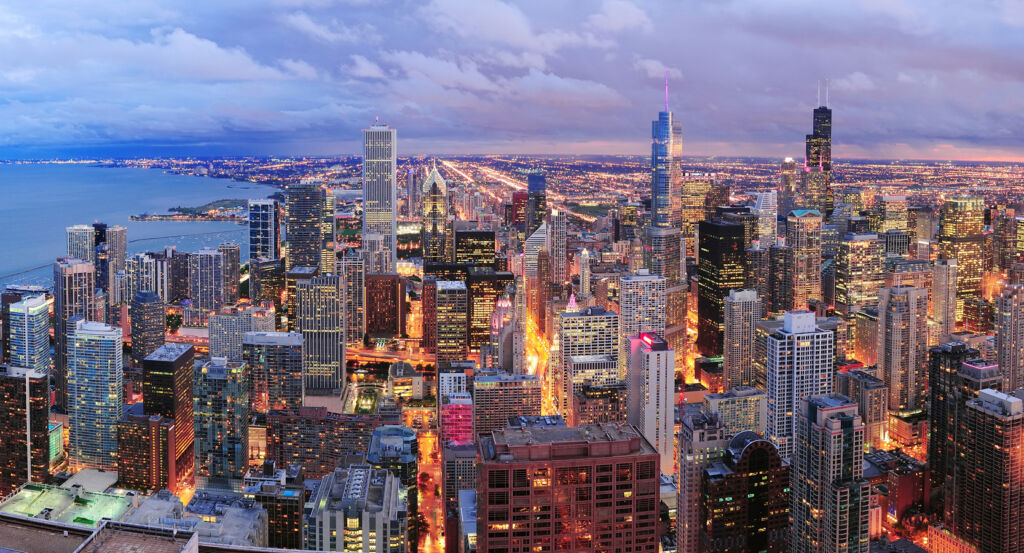
Stretching diagonally from Downtown through neighborhoods including Wicker Park, Logan Square, Avondale, and Jefferson Park, this historic avenue connects residential communities, cultural institutions, commercial districts, entertainment destinations, public parks, and civic landmarks that have shaped city life for generations. Historic storefronts, converted industrial buildings, neighborhood businesses, music venues, public gathering places, and energetic streetscapes create an environment defined by movement and reinvention. The corridor traces its origins to an early transportation route that predates much of Chicago's modern street grid, helping guide development across the city's Northwest Side. Immigrants, entrepreneurs, artists, laborers, civic leaders, and residents helped establish a reputation that continues to attract creativity and investment today. The result is a street defined by connectivity, cultural diversity, and urban energy.
What defines Milwaukee Avenue.
Milwaukee Avenue is best known for following the route of an historic Indigenous trail that evolved into one of Chicago's most important transportation corridors, shaping development patterns across the city for more than a century.
Long before Chicago emerged as a major metropolis, Native American communities used the route as part of a broader regional network connecting waterways, settlements, and trading paths throughout the Midwest. As the city expanded, Milwaukee Avenue became a critical commercial and transportation artery supporting residential growth, industrial activity, and immigrant settlement. Its distinctive diagonal alignment remains a visible reminder of its origins and distinguishes it from much of Chicago's rigid street grid. Generations of businesses and neighborhoods flourished along its path, helping define the character of the Northwest Side. Few Chicago streets are associated with a transportation route that has influenced the city for such a long period of time.
How Milwaukee Avenue fits.
Milwaukee Avenue works as an exploration of Chicago's creative culture, neighborhood diversity, and transportation heritage.
Begin at The 606, where the avenue's defining relationship with urban reinvention, connectivity, and public life immediately comes into focus. Continue toward Logan Square, whose historic boulevard landscape reveals the civic and cultural forces that helped shape the corridor across generations. From there, make your way to Wicker Park, where one of Chicago's most celebrated neighborhood destinations provides a broader perspective on the artistic energy, local businesses, and community character that continue to define Milwaukee Avenue today. Along the route, you'll encounter historic architecture, cultural institutions, public gathering places, entertainment venues, neighborhood businesses, creative spaces, and celebrated streetscapes that showcase the avenue's remarkable depth. The progression moves naturally from adaptive-reuse landmark to civic centerpiece to cultural district, revealing the forces that transformed Milwaukee Avenue into one of Chicago's most consequential urban corridors. Milwaukee Avenue remains one of Chicago's most rewarding streets, preserving a distinctive balance between historical significance, cultural innovation, and contemporary city life.
Where your story begins.
Foresyte Travel reveals places that feel extraordinary long before you arrive.
Enjoy editorial crafted for luxury travelers.
Foresyte may earn a commission when you book.