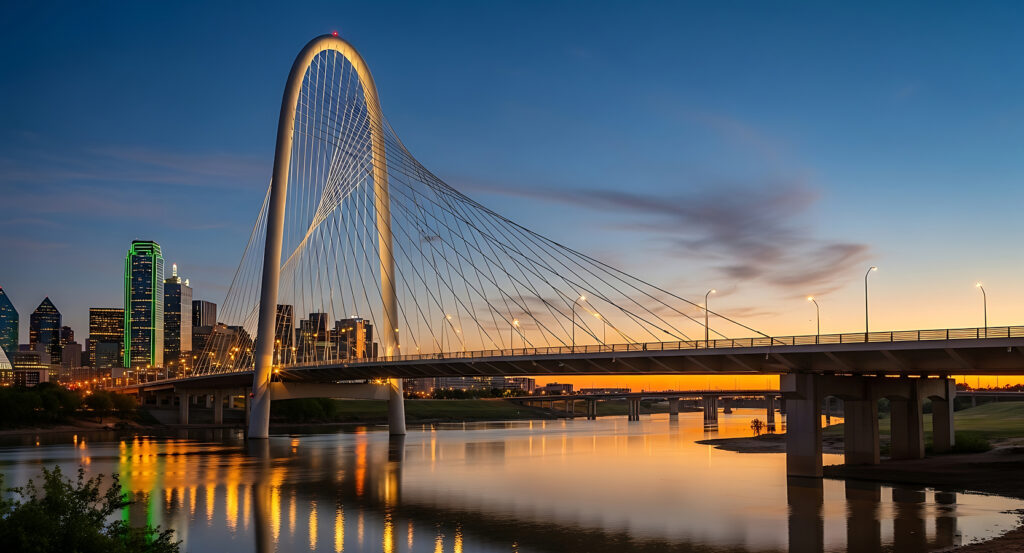
Why you should experience Munger Boulevard in Dallas, Texas.
Munger Boulevard is a graceful corridor where Old East Dallas' residential heritage, architectural distinction, civic legacy, and neighborhood stewardship create one of the city's most admired streets.
Running through Old East Dallas between Swiss Avenue and Junius Heights, the boulevard links nationally recognized historic neighborhoods, early twentieth-century residences, churches, and mature parkways that reflect Dallas' emergence as a prosperous metropolitan center. Each successive block reveals broad landscaped medians, Prairie School homes, Classical Revival residences, towering live oaks, and carefully preserved brick streetscapes that reinforce the boulevard's enduring residential character. The defining moment arrives as Munger Boulevard demonstrates how thoughtful planning, architectural craftsmanship, and sustained preservation have protected one of East Dallas' defining residential environments. The result is an experience defined by historic elegance, architectural continuity, and one of Old East Dallas' most memorable corridors.
What you should know about Munger Boulevard.
Munger Boulevard is best known for serving as the centerpiece of the Munger Place Historic District, among Dallas' earliest prestigious residential subdivisions developed after 1905 by Robert S. Munger, whose investment established a carefully planned neighborhood inspired by nationally prominent residential park developments. Construction throughout the 1900s, 1910s, and 1920s introduced distinguished examples of Prairie School, Craftsman, Classical Revival, Colonial Revival, and Mission Revival architecture featuring brick masonry, limestone detailing, broad front porches, low-pitched roofs, decorative woodwork, art glass windows, and substantial landscaped setbacks that continue defining the boulevard's architectural identity. The district earned listing on the National Register of Historic Places in 1975, recognizing both its architectural integrity and its importance within Dallas' residential development. The boulevard's generous landscaped median, consistent building orientation, mature tree canopy, and cohesive streetscape preserve the original planning principles established during the neighborhood's formative decades. Preservation efforts by residents and the City of Dallas have maintained the boulevard's historic fabric while encouraging compatible reinvestment across successive generations. Collectively, the corridor's planned development, nationally recognized architecture, preservation achievements, and enduring residential landscape established Munger Boulevard as one of Old East Dallas' defining historic corridors.
The Munger Place Homeowners Association continues supporting neighborhood preservation, educational programming, and community initiatives that reinforce the boulevard's architectural integrity while encouraging sensitive restoration of historic residences. The City of Dallas Landmark Commission oversees local historic protections affecting the surrounding district, helping preserve original architectural features and guiding compatible rehabilitation throughout the neighborhood. Native live oaks, cedar elms, magnolias, ornamental hedges, limestone curbs, and the boulevard's expansive landscaped median create a layered streetscape that complements the historic residences while preserving the corridor's distinctive visual rhythm. Together, these preservation organizations, regulatory stewardship, and enduring landscape traditions demonstrate how Munger Boulevard continues retaining its historic character through long-term community commitment and careful conservation.
How to fold Munger Boulevard into your trip.
Munger Boulevard works as a leisurely exploration of East Dallas' residential architectural heritage.
Begin at Munger Place Historic District, where meticulously preserved early twentieth-century residences establish the boulevard's architectural story while naturally introducing one of Dallas' most celebrated historic neighborhoods. Continue to Swiss Avenue Historic District, where grand estates and nationally significant residential design deepen appreciation for East Dallas' remarkable concentration of historic architecture before guiding the experience toward its cultural conclusion. Conclude at Hall Arts Hotel Dallas, where contemporary design, public art, and refined hospitality provide the historical payoff by illustrating how Dallas continues pairing architectural ambition with evolving cultural expression. The progression moves naturally from planned residential heritage to landmark preservation before culminating in a modern destination that reflects the city's continuing architectural evolution.
Where your story begins.
Foresyte Travel reveals places that feel extraordinary long before you arrive.
Experience premium editorial crafted for luxury travelers.