Why North Avenue matters.
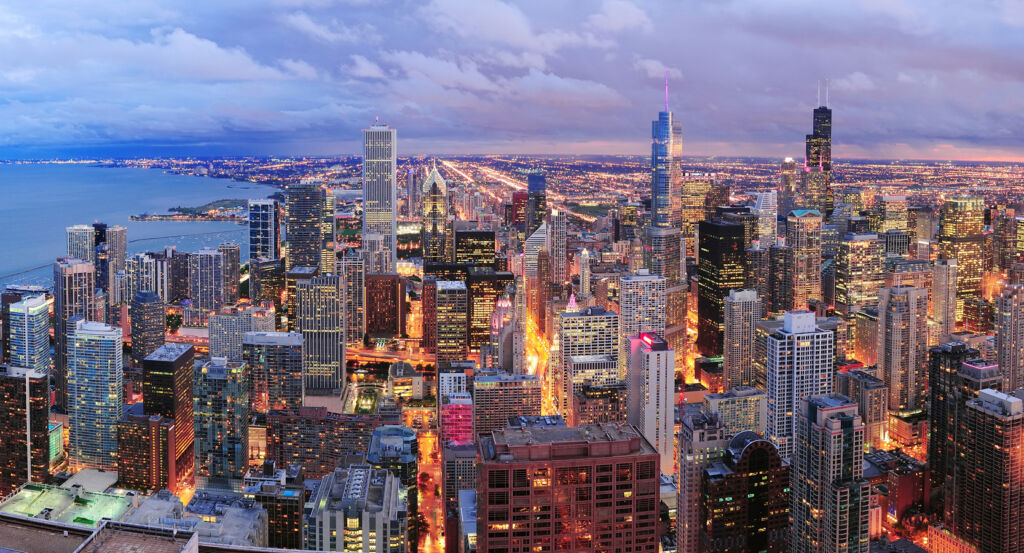
North Avenue is a historic cross-city corridor where transportation history, neighborhood diversity, and urban evolution converge along one of Chicago's most important east-west streets.
Stretching from Lincoln Park on the lakefront through neighborhoods including Wicker Park, Humboldt Park, and Austin, this influential avenue connects residential districts, commercial corridors, public parks, cultural institutions, educational centers, and civic landmarks that have shaped city life for generations. Historic storefronts, architectural landmarks, neighborhood businesses, public gathering places, community institutions, and dynamic streetscapes create an environment defined by connectivity and reinvention. The corridor developed alongside Chicago's expansion during the nineteenth and twentieth centuries, serving as a vital artery linking diverse communities across the city. Entrepreneurs, immigrants, educators, artists, civic leaders, and residents helped establish a legacy that continues to influence Chicago today. The result is a street defined by movement, cultural richness, and urban vitality.
What defines North Avenue.
North Avenue is best known for serving as one of Chicago's original major east-west transportation corridors, helping guide the city's growth from a lakeside settlement into one of America's largest metropolitan centers.
Established as part of the city's early street structure, North Avenue became a critical commercial and transportation route connecting emerging neighborhoods to downtown and regional markets. Businesses, residential districts, and institutions flourished along its path as Chicago expanded westward and northward. The avenue's extraordinary geographic reach provides a cross-section of Chicago's social, cultural, and economic history. Over generations, it evolved into a corridor that reflects the city's diversity, resilience, and continuous reinvention. Few Chicago streets have played such a sustained role in shaping urban development across multiple parts of the city.
How North Avenue fits.
North Avenue works as an exploration of Chicago's neighborhood diversity, cultural heritage, and urban history.
Begin at North Avenue Beach, where the avenue's defining relationship with Lake Michigan, recreation, and city life immediately comes into focus. Continue toward The 606, whose innovative design reveals the civic and cultural forces that helped shape communities along the corridor across generations. From there, make your way to Humboldt Park, where one of Chicago's most celebrated public landscapes provides a broader perspective on the recreational traditions, cultural heritage, and community character that continue to define the avenue today. Along the route, you'll encounter waterfront destinations, historic architecture, public gathering places, cultural institutions, neighborhood businesses, community landmarks, and celebrated streetscapes that showcase the avenue's remarkable depth. The progression moves naturally from iconic shoreline destination to adaptive-reuse landmark to historic parkland, revealing the forces that transformed North Avenue into one of the city's most consequential urban corridors. North Avenue remains one of Chicago's most rewarding streets, preserving a distinctive balance between historical significance, cultural diversity, and contemporary city life.
Where your story begins.
Foresyte Travel reveals places that feel extraordinary long before you arrive.
Enjoy editorial crafted for luxury travelers.
Foresyte may earn a commission when you book.