Why you should experience Prairie Avenue in Chicago, Illinois.
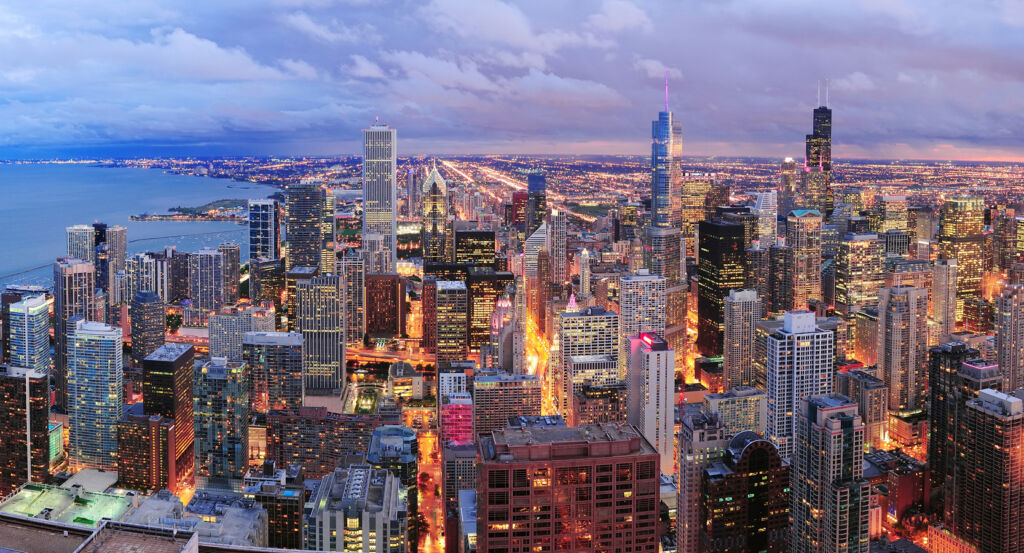
Prairie Avenue is a storied corridor where Near South Side's industrial wealth, architectural innovation, Gilded Age ambition, and Chicago's emergence as a global metropolis remain vividly preserved.
Running through the Near South Side between the South Loop and Bronzeville, Prairie Avenue passes stately mansions, restored nineteenth-century residences, churches, museums, and tree-lined streets that recall the period when many of Chicago's most influential industrialists chose this neighborhood as their home. Successive blocks reveal an urban landscape where remarkable architectural craftsmanship remains inseparable from the city's commercial ascent following the Great Chicago Fire. The corridor gradually unfolds as a living record of Chicago's transformation into one of America's foremost centers of manufacturing, commerce, and civic leadership. The result is a corridor distinguished by architectural excellence, historical depth, and one of the city's richest collections of nineteenth-century residential heritage.
What you should know about Prairie Avenue.
Prairie Avenue is best known for serving as Chicago's premier residential address during the late nineteenth century after the Great Chicago Fire of 1871 accelerated development south of downtown, attracting many of the city's leading industrialists, merchants, and civic figures. Residents included Pullman Palace Car Company founder George M. Pullman, International Harvester president Cyrus Hall McCormick II, meatpacking entrepreneur Philip D. Armour, merchant Marshall Field, and numerous executives whose fortunes helped establish Chicago as the nation's principal railroad, manufacturing, and agricultural distribution center. Architectural commissions along the corridor featured nationally significant designers including Henry Hobson Richardson, Solon Spencer Beman, Richard Morris Hunt, Burnham & Root, and Howard Van Doren Shaw, producing distinguished examples of Richardsonian Romanesque, Queen Anne, Second Empire, and Classical Revival architecture. Recognition of Prairie Avenue's historical importance culminated in designation of the Prairie Avenue District as a Chicago Landmark in 1979, while contributing properties also became part of the Prairie Avenue Historic District listed on the National Register of Historic Places, preserving one of the nation's most significant concentrations of Gilded Age residential architecture.
Preservation efforts gained renewed momentum through the establishment of the Prairie District Neighborhood Alliance, whose advocacy has supported restoration initiatives, historical interpretation, and stewardship of the corridor's surviving nineteenth-century streetscape. Historic institutions including the Glessner House, completed in 1887 by Henry Hobson Richardson, introduced revolutionary residential planning concepts that profoundly influenced Frank Lloyd Wright and the subsequent Prairie School movement. Nearby Clarke House Museum, constructed in 1836 for Henry Brown Clarke before its relocation to protect it from demolition, remains Chicago's oldest surviving house and documents the city's earliest residential development preceding Prairie Avenue's Gilded Age expansion. Together, these preserved residences, civic organizations, and architectural achievements demonstrate how Prairie Avenue continues illustrating the evolution of domestic architecture, historic preservation, and urban development across nearly two centuries of Chicago history.
How to fold Prairie Avenue into your trip.
Prairie Avenue works as an exploration of Chicago's architectural heritage, Gilded Age history, and nineteenth-century residential design.
Begin at Glessner House, where Henry Hobson Richardson's influential 1887 residence introduces the architectural innovation that redefined elite American domestic design before continuing along Prairie Avenue. Continue to Clarke House Museum, whose 1836 Greek Revival residence preserves Chicago's oldest surviving house while providing valuable insight into the city's earliest years of settlement. Conclude at Women's Park and Gardens, where thoughtfully designed green space and interpretive exhibits commemorate the generations of women whose civic, cultural, and social contributions shaped Chicago's development. The progression moves naturally from architectural innovation to early city history before concluding within a landscape dedicated to civic remembrance, revealing why Prairie Avenue remains one of Chicago's defining historic corridors.
Where your story begins.
Foresyte Travel reveals places that feel extraordinary long before you arrive.
Experience premium editorial crafted for luxury travelers.