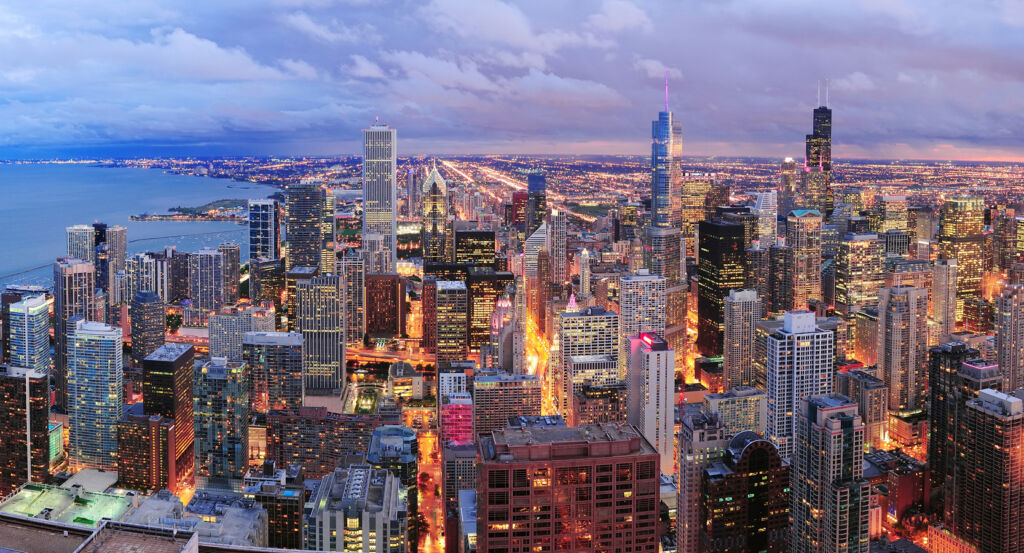
Why you should experience Record Row in Chicago, Illinois.
Record Row is a renowned cultural corridor where music history, entrepreneurial innovation, and artistic influence converge within one of the most important recording and retail districts in American music history.
Set along South Michigan Avenue near East Cermak Road and just steps from Motor Row, this historic corridor anchors a remarkable chapter of Chicago's cultural legacy while connecting record labels, music publishers, recording studios, retail storefronts, artistic innovation, and community life through a district that helped shape the sound of twentieth-century America. Historic commercial buildings, preserved facades, cultural landmarks, creative enterprises, community institutions, and architecturally significant streetscapes create an environment defined by creativity and influence. During the mid-twentieth century, the corridor emerged as a center for the production, distribution, and promotion of recorded music. Musicians, producers, entrepreneurs, retailers, engineers, and cultural leaders helped establish a legacy rooted in innovation, artistic expression, and commercial success. The result is a landmark defined by cultural significance, musical heritage, and enduring artistic impact.
What you should know about Record Row.
Record Row is best known for serving as the headquarters district for renowned record companies including Chess Records, whose recordings helped launch the careers of Muddy Waters, Howlin' Wolf, Chuck Berry, and other artists who transformed blues, rock and roll, and popular music worldwide.
Beginning in the 1940s and continuing through subsequent decades, South Michigan Avenue became home to an extraordinary concentration of recording studios, record distributors, music publishers, and record retailers. The district played a pivotal role in the development and dissemination of Chicago blues while helping shape the evolution of rock and roll and modern popular music. Its influence extended far beyond Chicago, impacting artists and audiences across the globe. Few urban corridors in America can claim such a direct connection to the creation and commercialization of multiple foundational musical genres.
How to fold Record Row into your trip.
Record Row works as an exploration of Chicago's musical heritage, entrepreneurial legacy, and cultural influence.
Begin at Chess Records at 2120 South Michigan Avenue, where the district's defining relationship with recording history, artistic innovation, and city life immediately comes into focus. Continue toward Motor Row Historic District, whose preserved commercial architecture reveals the economic and cultural forces that helped shape the area across generations. From there, make your way to Clarke House Museum, where one of Chicago's oldest surviving structures provides a broader perspective on the historical continuity, neighborhood evolution, and civic character that continue to define the district today. Along the route, you'll encounter historic recording sites, cultural landmarks, architectural treasures, community institutions, educational resources, neighborhood destinations, and celebrated streetscapes that showcase the corridor's remarkable depth. The progression moves naturally from iconic recording studio to landmark historic district to preserved city history site, revealing the forces that transformed Record Row into one of the city's most consequential cultural corridors. Record Row remains one of Chicago's most rewarding destinations, preserving a distinctive balance between historical significance, musical innovation, and contemporary community life within Motor Row.
Where your story begins.
Foresyte Travel reveals places that feel extraordinary long before you arrive.
Experience premium editorial crafted for luxury travelers.