Why Restaurant Saint James matters.
Restaurant Saint James is a distinguished lagoonfront restaurant where Vaitape's maritime character meets French gastronomic traditions, Polynesian seafood and the intimate waterfront dining culture of Bora Bora's principal island settlement.
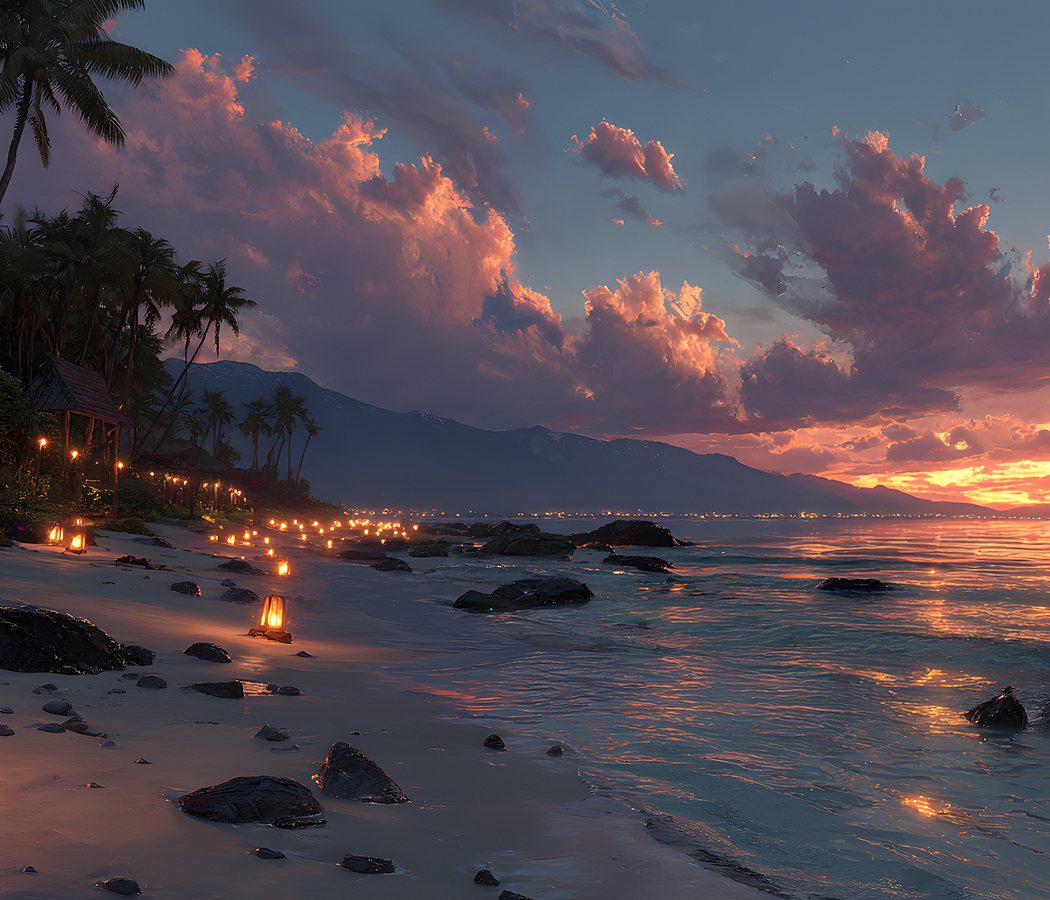
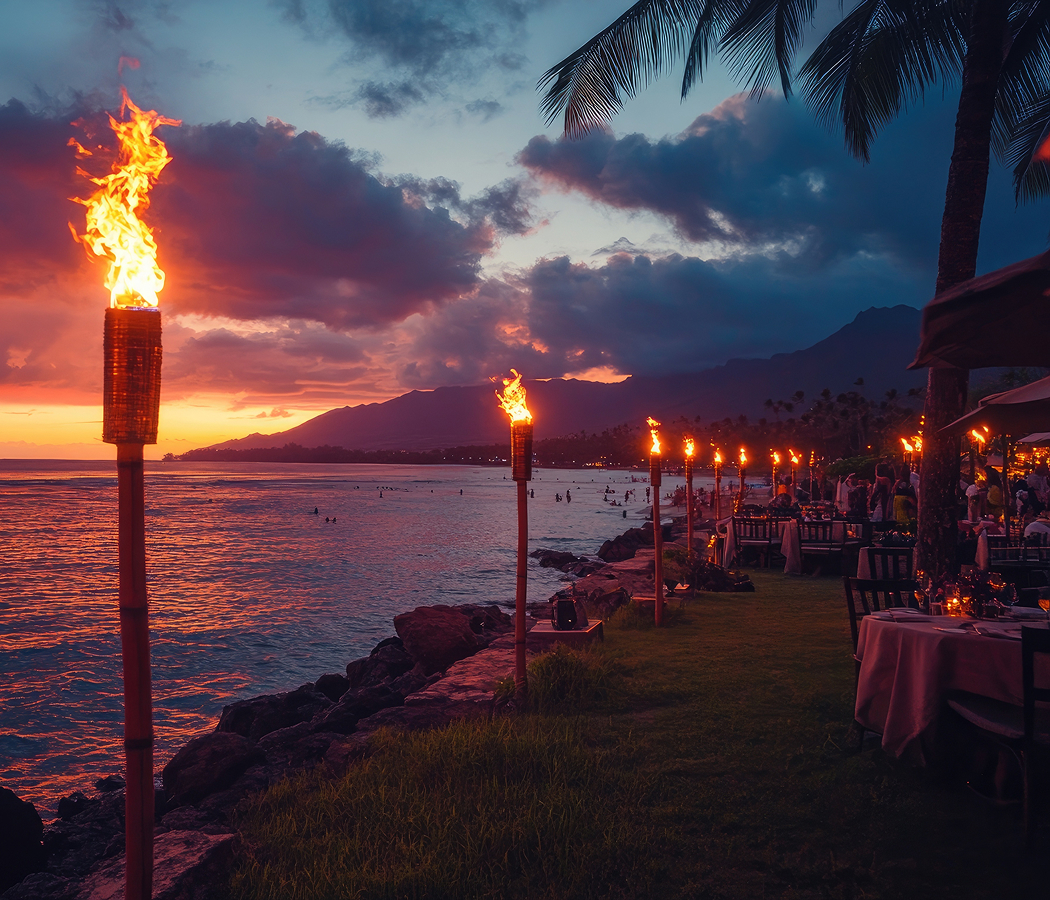
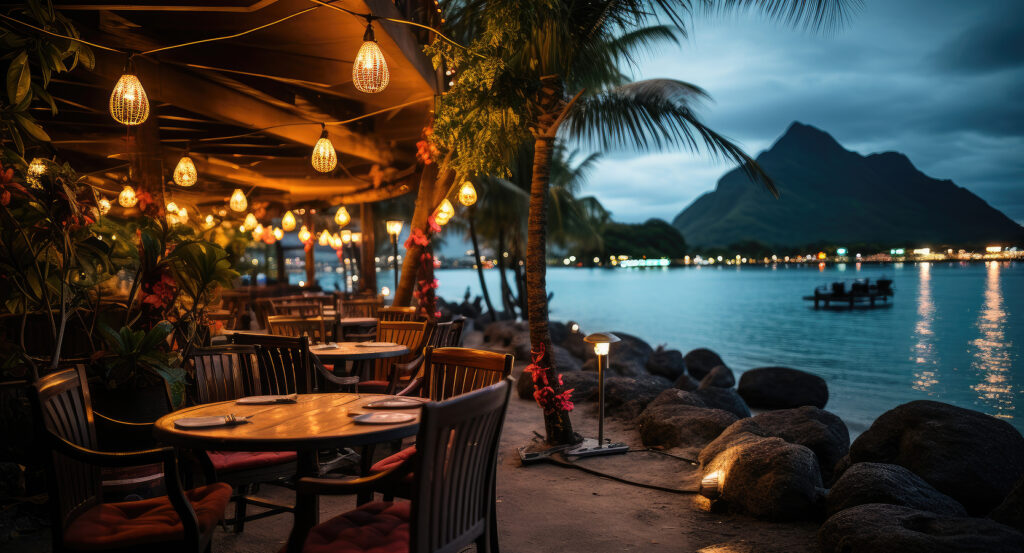
Set within Centre Hélène Bay on Vaitape's western waterfront, ten minutes on foot from the village center, the restaurant occupies a shoreline property overlooking Bora Bora's sheltered lagoon, with a waterside terrace extending toward the turquoise basin and its surrounding volcanic scenery. Open-air seating brings diners close to the water, establishing an immediate connection with the island's coastal geography. The adjoining cocktail bar provides a separate gathering area for drinks and small plates. Interior dining areas accommodate meals throughout the day, with the waterfront becoming particularly prominent during sunset service. The result is a restaurant whose accessible village location, French-Polynesian cooking and direct relationship with the lagoon distinguish it within Bora Bora's dining scene.
What defines Restaurant Saint James.
Restaurant Saint James is best known for its refined French cuisine incorporating Polynesian ingredients, its lagoonfront terrace and its established place in Bora Bora's independent restaurant scene. Its development belongs to the growth of Vaitape as the island's principal commercial center, where local businesses serve residents alongside an international resort economy. Bora Bora's hospitality industry expanded substantially during the second half of the twentieth century as aviation and resort development increased international access to the Leeward Islands. The emergence of overwater accommodation strengthened the island's reputation for luxury travel, creating demand for restaurants beyond individual hotel properties. Saint James developed its reputation around French restaurant cooking presented in a comparatively informal waterfront environment. Its position within the village's commercial district connected that culinary approach with the established residential and maritime community. French gastronomy supplied the foundation for composed seafood dishes, classical sauces and an extensive wine selection. Polynesian ingredients introduced tropical fruit, coconut, locally available fish and regional produce into those preparations. The restaurant's culinary approach joined two food traditions with longstanding connections to French Polynesia. Its menu evolved around lunch and dinner service, incorporating fresh seafood, selected meats and desserts prepared in the French tradition. A substantial wine cellar supported the restaurant's gastronomic ambitions through selections intended to accompany different courses. The adjoining bar broadened its appeal through cocktails and smaller dishes served outside the principal dining periods. Tahiti Tourisme included Saint James in its September 2023 selection of Bora Bora restaurants, emphasizing its French cooking, fresh local produce and terrace overlooking the lagoon. The establishment subsequently developed a broader all-day format encompassing breakfast, lunch, evening dining and cocktail service. Its continued operation within Vaitape distinguishes it from Bora Bora's private-islet resort restaurants, maintaining a direct connection with the island's commercial waterfront.
How Restaurant Saint James fits.
Restaurant Saint James works as the culinary centerpiece for a Bora Bora outing connecting the island's Polynesian cultural heritage, its volcanic mountain landscape and the publicly accessible beaches that distinguish its southern coastline.
Begin at Marae Fare Opu, an archaeological site associated with Bora Bora's pre-European religious and ceremonial history. Traditional marae served as important gathering places for worship, chiefly authority and community ceremonies across the Society Islands. Their stone platforms and associated structures preserve the relationship between Polynesian religious practices and the organization of ancestral settlements. Bora Bora's marae formed part of a wider ceremonial landscape connecting chiefly families with sacred places and inherited political responsibilities. The surviving archaeological remains provide a perspective on the island's history before the development of its international tourism economy. Continue to Mount Otemanu, the jagged volcanic summit rising above Bora Bora's central mountain mass. Reaching 727 meters, the mountain preserves the eroded remains of the ancient volcanic structure responsible for the island's formation. Its steep basaltic cliffs and exposed ridges define views across the surrounding coastal settlements. Tropical vegetation covers portions of the lower slopes, creating a pronounced contrast with the summit's exposed rock. Guided excursions through accessible lower terrain introduce the geological development of the island and the relationship between volcanic erosion and its mountainous topography. Conclude at Matira Beach, the extensive public shoreline occupying Bora Bora's southern peninsula. Its pale coral-derived sand descends gradually into shallow turquoise water protected by the surrounding barrier reef. Coconut palms border sections of the coast, and small restaurants connect the beach with the adjoining residential district. The western shoreline provides expansive views across the lagoon during sunset. Its accessible swimming areas preserve an important recreational connection between Bora Bora's local community and the marine environment supporting the island's tourism economy. The progression moves from Marae Fare Opu's Polynesian ceremonial heritage through Mount Otemanu's volcanic geology and culminates at Matira Beach's sheltered shoreline, connecting Restaurant Saint James with the cultural and natural history of Bora Bora.
Where your story begins.
Foresyte Travel reveals places that feel extraordinary long before you arrive.
Enjoy editorial crafted for luxury travelers.